#WinItWednesday

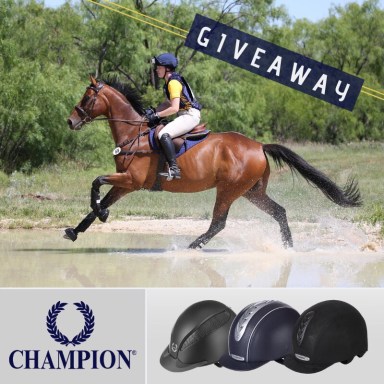
If you follow Riding Warehouse on social media (I have to assume that you do, because if not you’re missing out on all kinds of things), you may have noticed their ongoing #WinItWednesday campaigns. As you can probably guess from the name, they give cool stuff away pretty much every Wednesday to one Riding Warehouse follower. This week I’m really excited to team up with them for a big giveaway – you could win a Champion helmet of your choice!

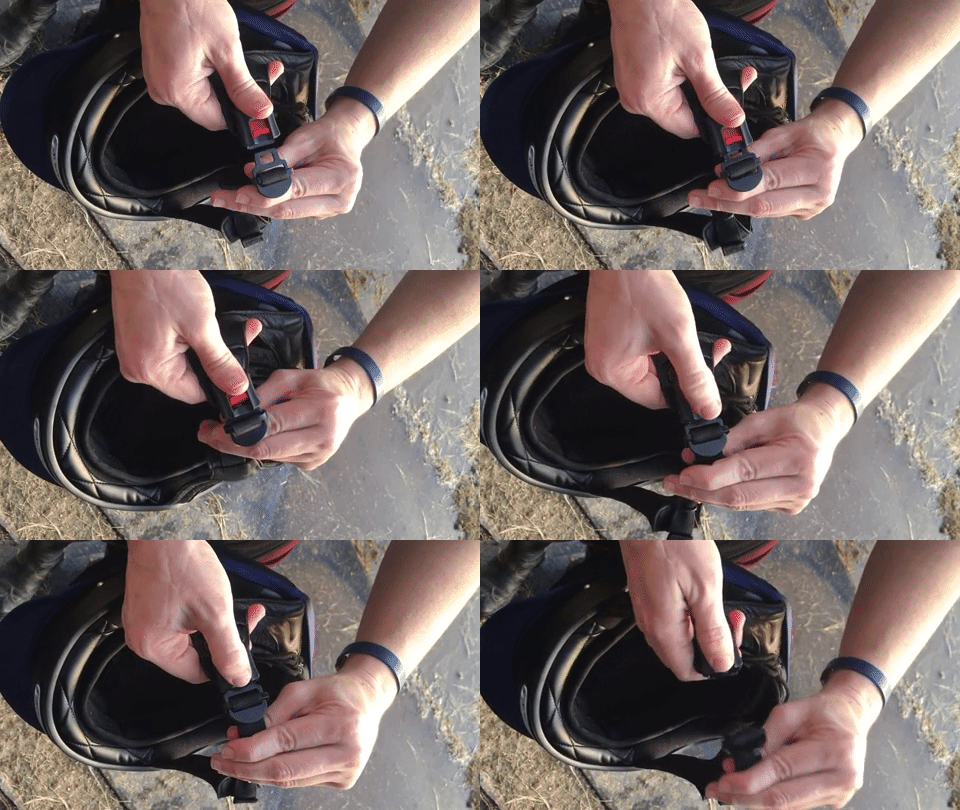
Some of you may remember my Champion skull cap review from January, and I’ve really continued to love my Pro-Ultimate SNELL skull cap. It’s comfortable, very ruggedly-made, and I love all the little features like the metal safety buckle, removeable liner, and extra ventilation.

buckle up bitches

There are only 4 equestrian helmets in the world that carry a SNELL certification and Champion Pro-Ultimate skull cap is one of them. It definitely gives me a little more peace of mind to know that I’m wearing one of the safest helmets on the market.

For those who don’t need a skull cap, Champion has a variety of other styles to choose from as well. The brand is just now starting to establish themselves in the US, but they’ve been a leading brand in the UK for a long time and have a great reputation for safety and high quality construction.

championhelmet
What else would you wear when accepting your medal from the Queen? #britishAF

How to enter? There are two ways! Check out the facebook post here:

Or the Instagram post here:

You can enter on both, if you choose!

If you don’t want to take your chances with the giveaway, ALL Champion helmets are 15% off exclusively at Riding Warehouse through this Sunday, June 16th! I really can’t say enough good things about mine, it is by far the best skull cap I’ve ever owned.

HHschooling6

Questions Surrounding Air Jacket Safety

If you were on social media the past few days, you may have seen the new data analysis study regarding air jacket safety. If not, see this link (be aware, this is the summary… you have to have a subscription for access to the full paper). Basically the authors analyzed FEI fall data, and from this data concluded that “Riders wearing an air jacket had 1.7 times (95%CI 1.14–2.64) increased odds of sustaining a serious or fatal injury in a fall compared to riders not wearing an air jacket.”.
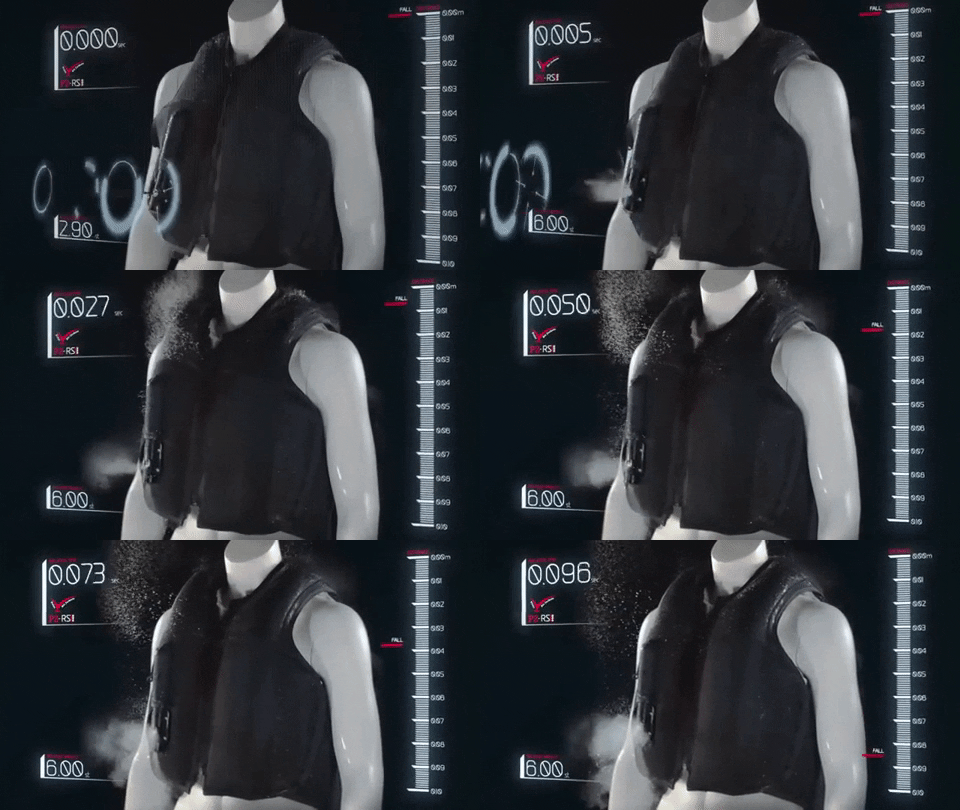
While I’ve been questioning air jacket safety and the lack of research surrounding them for years, I think it’s important to recognize what this study is really telling us before anyone gets too up in arms or jumps to a conclusion about air jackets or the study. The conclusion of the study states:

Riders wearing an air jacket were over represented in the percentage of serious or fatal injuries in falls compared to riders who only wore a standard body protector. Further research is needed to understand the reason(s) for this finding. It is recommended that additional data on injury outcomes, rider characteristics and the biomechanics of falls be examined in future analyses, and that air jacket and body protector characteristics be further investigated.

So really, this study says “hmmm… we need to research this to figure out why we’re seeing this trend in the numbers.”. Which we do. While correlation does not equal causation, the data we do have definitely raises some questions and highlights the need for more and better data. There has been very little research done regarding air jackets as they relate to equestrian usage, and we really don’t know anything about failure rates, their influence on fall trajectory and direction of impact, potential destabilization of injuries, the risk of burst fractures, potential differences between inward inflation and outward inflation, any possible mental/risk-taking factors, other rider-related factors that might come into play with their use, etc etc. There are a lot of unanswered questions.

Image result for fei

It’s also important to recognize that the FEI data itself is not very complete. Since it’s from FEI, it is all upper level competition data, but it’s not giving us particularly specific information about the types of injuries or how they occurred. I personally would be very interested to know what kind of body protector was worn under the air jacket in these cases, because it sure seems like people love to throw them over a 10+ year old cardboard-thin Tipperary and call themselves safe. (On my sandbox for a minute asking people to PLEASE invest in a good quality BETA 3 approved vest and replace it every 4-5 years, whether you wear an air jacket or not… we know for a fact that those work)

One of the authors of the study, Lindsay Nylund, commented on social media with a bit more information:

Thank you all for your comments and questions in relation to this study. I cannot respond to them individually as the debate has progressed, so I will try to address some of the major points raised. Firstly, the conclusion was, “riders who wear air jackets are over represented in the number of serious/fatal injuries in falls.” The results of the data analysis revealed a 1.7 times increase in relative risk. The probability that this finding was due to chance is less than 1 in 100 (p=0.009).

Nowhere does the study conclude that air jackets are the cause and no recommendation is made that riders should or should not wear an air jacket. Unfortunately the data available to the authors could not establish the reason(s) for the finding and hence why it is suggested that further research and investigation be carried out. The discussion section of the paper, explores some of the possible reasons for the finding to provide some focus on where future research efforts could be focused, but these should not be confused with the conclusions or imply causation. The reason(s) must either be due to air jacket characteristics (such as lanyard pull forces – reported in a Swiss study to be in the range of approx. 20 to 60 kg, or possible restriction of torso movement transferring injury risk to the head/neck, etc.), AND/OR due to rider characteristics (such as riders who wear air jackets having increased risk of injury in falls due to rider anthropometric characteristics or fitness levels, or pre-existing injuries, more rotational falls, etc.), that were different from the cohort of riders who fell not wearing an air jacket.

The analysis was limited to injury outcomes in falls (expected versus actual), not differences in fall rates for riders wearing/not wearing an air jacket – we did not have data on the number of starters wearing an air jacket. If 55% of the 3,305 riders who fell were wearing an air jacket, then you would expect 55% of serious/fatal injuries to be for riders wearing air jackets (if air-jackets were doing no good or no harm). While there may well be confounding factors that are unrelated to air jackets, the counter-intuitive finding in the data suggests that the matter needs to be investigated.

Indeed, the study raises more questions than it provides answers, however it does highlight the need for further research and investigation. It is up to each rider to decide whether they think the benefit of wearing an air jacket outweighs the potential risk that it may be increasing their overall serious injury risk, but wouldn’t you prefer to know that there may be a problem and make your own decision? It is fine to speculate about possible reasons and this can assist researchers to identify the data that needs to be collected and analysed. Important questions which need to be answered are: What are the rider, air jacket, and body protector characteristics that we need to collect data on? What is the best way to collect this data? How and when can it be obtained? How can we as riders, instructors, and industry bodies support the research that is needed to understand the reason(s) for the finding? What is it going to cost and how can it be funded? How quickly can further research be carried out? Thanks again for your comments and questions.
img_8393

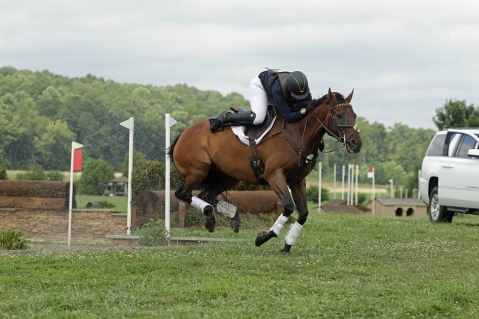
It has always bothered me how our industry has swallowed this item as a safety revolution, hook line and sinker, without having any actual research to back that up. It also concerns me that it seems as though most people think that the air jacket is more important than the body protector underneath. Or that the large majority of wearers do  not follow the recommended service, maintenance, and inspection protocol. For example, Point Two’s policy says “We recommend you have your vest or jacket serviced yearly or after six inflations. Your safety depends on it.”. I don’t think I know anyone who actually does that. Some companies don’t even offer any kind of servicing or maintenance protocol. If you like wearing an air jacket, by all means please use it. But understand what it’s meant to do, what it’s not meant to do, and understand how to care for the equipment properly. And, ya know… put a good quality body protector underneath.

So why, in this FEI data, do we see such a disproportionate number of injuries with riders wearing air jackets? We don’t know. Could be so many reasons. Maybe air jackets are safer in some instances or not others. Maybe they have an effect that we don’t know about. Maybe there are other factors at play that would change the data completely and show that air jackets really do help prevent injury. The bottom line is that we have no idea. This data analysis just illustrates how little we DO know, and how much we need some solid research into the air jacket safety equipment so that we can understand how/if it really works. The next question is: how do we get those answers?

Gallons of Sweat

I sweated so much this weekend that I feel like a walking piece of beef jerky today. With temps in the mid-upper 90’s with high humidity and a heat index in the 100’s, it was just disgusting. There’s no other word for it. Welcome to Texas summer. It’s gross, I hate it.

img_6682-2
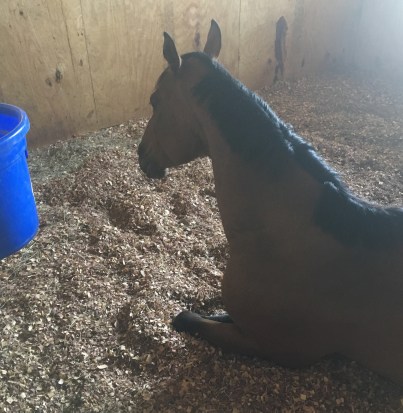
all about those morning naps

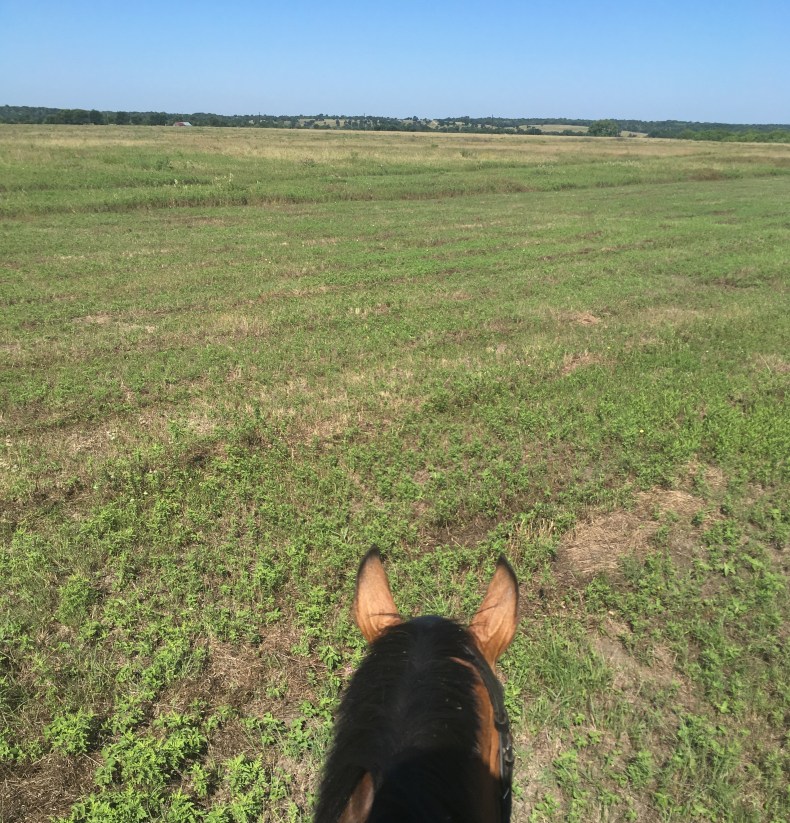
I also had a lot of outside plans for the weekend, so the heat was unavoidable. We’re still waiting for the back hay field to get cut (could it stop raining for just like a week please?), since right now the grass is too high and thick to safely ride out there. In the meantime we’ve been exploring the neighborhood, looking for other open, already mowed spaces where we could also ride. The neighbors are nice, and we met one on Saturday morning that is happy to let us do conditioning work around his big field. We still need to stalk/hunt down talk to the guy across the street with the HUUUUUUGE pasture, but we’re making friends and progress.

img_6673.jpg
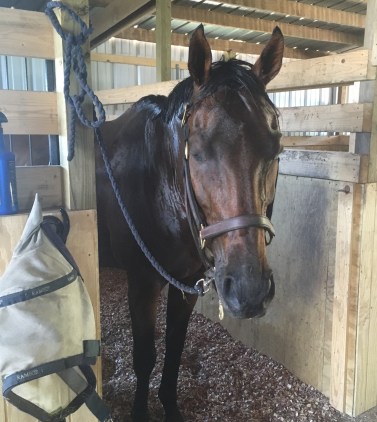
Hello beautiful

On Saturday most of my outdoor activities were limited to riding and running errands, so I was hot and sweaty and gross, but not too bad. On Sunday I was perhaps a bit too ambitious. I was up early for a 7am bike ride with my dad… since I busted my ankle I had to stop running and cycling for a few weeks, and it was getting annoying. Especially because I had already started the Nessie race, logged exactly two workouts for it, and then hurt myself. Grrr. But that stupid ankle is mostly back to normal again, so while we didn’t do quite as many miles as usual, we did log almost 16. Now I’m only 4 miles away from finishing Nessie. If I’d known I was that close I would have just kept pedaling, but lord it was SO humid and gross yesterday morning, we were both ready to be done. Sweat was dripping off every inch of my body and puddling on the asphalt. I’ll wrap up Nessie this week, when it’s maybe slightly less miserable outside.

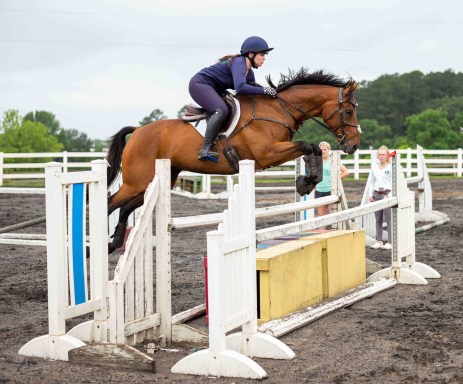
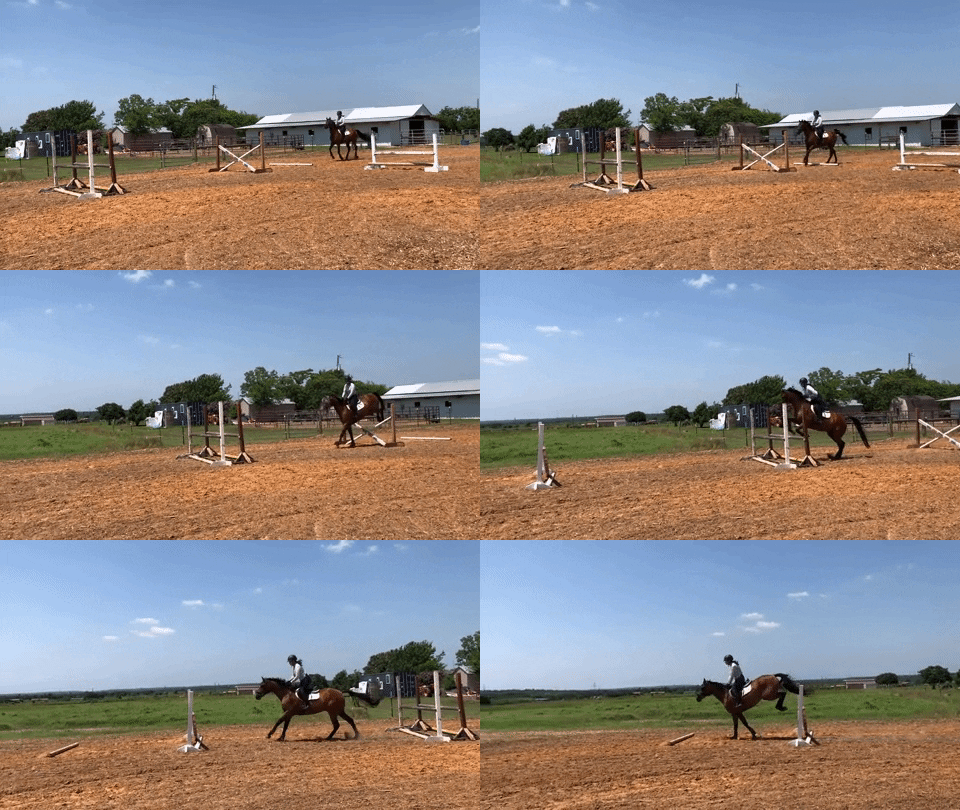
After the bike ride I headed out to the barn. I haven’t jumped since we were at Holly Hill a few weeks ago, and somehow we now find ourselves only 3 weeks out from leaving for Coconino, so uh… guess it was finally time to set up a few jumps in the new arena and get back in the full swing of things. It felt like it took forever and approximately 5000 trips back and forth for Hillary and I to set up some jumps (if you board/ride at a place where you never have to lug jumps in and out of the ring and set courses, be grateful! I always took that for granted…) and by that point we were both dripping sweat before we even got on our horses. Heat index: 104 degrees.

Hillary jumped Dobby first while I set jumps for her (Dobby did his first grid!), then we switched roles. Henry was REALLY EXCITED to be jumping again. And kinda rude. And cocky. And full of himself. The heat kind of worked in my favor in that regard, as soon as he started getting hot he suddenly became a lot more rideable. He really needs to get out for a good long gallop this week and get some of the HENNY out of his system. He had a really light few weeks while I was out of commission with my various injuries, and you can tell he’s a little wild.

img_6678
Well… while I’m riding, at least.

After I was done riding I drove down to do a bodyclip, where I added lots of horse hair on top of the multiple layers of sweat and dirt that I had already accumulated. By the time I got home around 5, I was feeling quite gross. And quite thirsty. And quite spent.

A cold front blew through last night in quite dramatic fashion (complete with tornadoes and hail) so we’ve got a little respite from the severe heat for a few days at least, with highs only in the 80’s. It’s only 59 at Coconino right now. SIGH.

Image result for daydreaming gif


Pioneer Boots: Initial Impressions

After spending over two weeks stuck in customs, my Pioneer boots finally showed up on Monday!

Technically these are semi-custom. All Pioneer boots are made to order, but I am pretty average size and was able to order a size combination from their standard size chart – 39 foot, A height (tall), +4 calf (the biggest calf option they offer in stock sizing, so if you need bigger they become full custom). I went off of their size chart and my own measurements, hoping they were both right.

I chose to order from Equizone, since a) they had one of the best prices b) I’ve ordered other things from them in the past and had good experiences. They’re based in Germany, so it was maybe a little bit riskier if they weren’t right, but they also do a TON of these boots and I’ve yet to hear anything negative about the company. The model I liked most, the Atena, came with a patent leather top, which I don’t really care for. I emailed to ask about other options for the top and their customer service people were helpful in narrowing down my options and giving me the price differences for each. I will say, there aren’t any good swatches for all the Pioneer options online. They have little ones that are hard to see, so I did the best I could to scour the internet for pictures but ultimately just had to go with my gut and hope it all looked good together. In the end I decided to go with the darker brown leather, black sole, and brown lace top. The final price was 365 Euro all in, since Equizone has free shipping on purchases over 270 Euro.

cde578d0-5aff-4792-a98c-5ef7294d7e46

My order went in on April 10th, and my boots left Germany on their way to me on May 14th. Considering they had to submit to order to Pioneer, then the boots had to be made and shipped from Italy to Germany, then prepared to be forwarded to me, I thought the turnaround time was very quick. The shipping from Germany to my door took almost as long as making the boots did, thanks to customs.

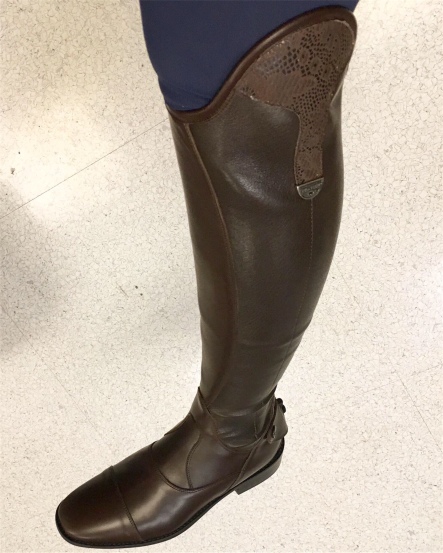
I chose the Atena because they were a soft, close-fitting dress boot. I like the clean slim look and those seemed to fit the bill. The outside panel was said to be made in “stretch leather”, which I didn’t really fully understand until I got them. The outside panel is literally elasticized leather. I’ve never seen anything quite like it.

 
I’m pleasantly surprised by the overall quality of the boot. For the price I kind of expected a lower end leather, and while they aren’t as nice as my Tuccis (which, to be fair, cost 3x as much), they’re pretty darn nice. Nicer than the similarly priced Ariats or Ego7, for sure.  They seem well-made, with some nice details like a double position spur rest and a rear zipper guard at the ankle. The zipper is a little bit small, and there’s no tab on the zipper pulls, so zipping them up the first time was a little challenging. If they were super tight I would probably have concerns about the longevity of the zipper.

1f86804f-1817-410e-a97e-10a56fc2036b
First zip! Or mostly zip… couldn’t quite get them up all the way at first.

The foot feels a touch smaller than my Tuccis which are the same size, so if you’re in between sizes I might size up in the foot. The calf and height seem totally spot on with the size chart, and fit perfectly. Like for real, they fit like custom. That outer elastic panel definitely helps with that, it molds the whole thing to my leg. The first zip was a little difficult, and I wasn’t able to get them all the way up until the ankle broke in a bit, but once they did it was like magic. For new boots they’re quite comfortable, no rubs or blisters anywhere despite lots of walking.

img_6616

Aside from that outer stretch panel the rest of the boot is a regular leather, not super thin but not super thick. I’m optimistic that they will wear pretty well, but we’ll see over time. Overall I’m super pleased with the ordering process and how the boots turned out, especially for the price. So far they’ve exceeded expectations. Pioneer has about a bajillion different boot and leather and color options and you can customize literally anything you can imagine. Considering how affordable these things are, this could be the beginning of something dangerous…

ULR insight

With all the driving I do, one of my more recent addictions is the podcast Major League Eventing. They interview upper level riders, asking about their background, how they run their programs, what their future plans are, etc. I’m not much of an ULR groupie, but I do think it’s really interesting to hear how people got their start in the sport, and how they run their programs now.  Sometimes there are good little nuggets of wisdom in there, or things I hadn’t thought about.

Image result for major league eventing

I haven’t made it through all the episodes yet, but I’ve covered all the ones that originally caught my eye. People I was curious about, or liked, or in a few cases… disliked. In some cases the interviews made me some of them more, and in a few cases, less. It’s especially interesting to hear what drives people – for some it’s the love of sport and competition, for others it’s the love of the horse.

A few days ago I was scrolling through on my drive to the barn and saw a Kim Severson episode. She’s always been one of my favorites, so it was a no-brainer choice of entertainment for the day. Kim’s episode was short, but one of the most interesting so far. At least to me.

Y’all remember Kim’s epic save at Pine Top a few years ago? PC Hoof Clix

All of Kim’s horses live out 24/7, unless there’s a medical reason that they have to be inside. This seems pretty rare for an upper level rider. It’s kind of rare for any show horses in general. Her reasoning? Horses are meant to be horses, they’re designed to live outside where they’re healthier and happier. I totally agree, mine would definitely live outside if it was an option. Her whole “horses are meant to be horses” theory was kind of the recurring theme of Kim’s entire program… she values horsemanship above all else. A few other riders have said something similar, but you could tell that Kim really lives and breathes it, from how her horses live to how their careers are managed to how they’re trained.

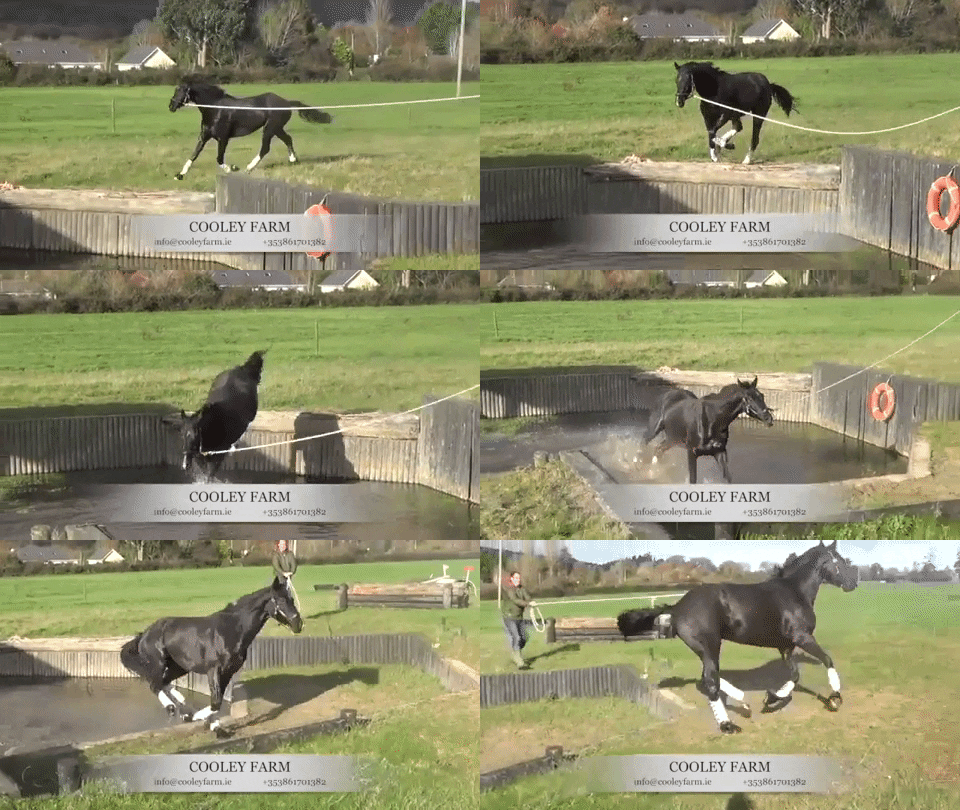
They also asked if she has a particular liking for the Cooley horses, since she’s had several. Kim said that she really likes how they’re brought along/developed in the Cooley program, and mentioned that she thinks there is a lot of benefit to how Cooley incorporates a lot of in-hand cross country work in their horses’ training (you can see some video here). I’ve always really loved this about their program as well, and have emulated it with my own. Kim thinks that with this method the horses really learn to think for themselves and figure out where their feet are, and I agree. Liz Halliday-Sharp also made the same observation about the Cooley program on her episode, too.

The other interesting, and different, thing that Kim mentioned was that generally she is the one who initially approaches her sponsors. That it’s important to her that she likes and believes in the things that she’s representing. Most riders seem pretty hungry for any and all sponsors that would be willing, which I totally get, this business is tough. And Kim isn’t exactly lacking in sponsors. Still though, it’s refreshing to hear.

It’s possible that I have a slightly bigger girl crush on Kim after that. I was sad that the interview was so short, because I would have liked to hear more about her program.

Anyone else been listing to the MLE podcast, or maybe Eventing Radio Show? Any “must listen episodes”? Or have there been any interviews or tidbits that you thought really stood out from the crowd?