I mentioned a couple weeks ago how much I was enjoying reading through the trainwreck of comments on an Eventing Nation post on facebook that featured some 4 year old event horses for sale. I said I would circle back eventually to give my thoughts on the whole thing, so ta-da here we go. It seems I’m not the only one who’s attention was captured by this debate though, as a string of posts on the subject have now appeared on COTH in the past few weeks. I thought that Sarah Lorenz and Lauren Sprieser, who both have extensive experience with young horses, both wrote intelligent, well thought out posts on the subject.
In the comments section of the original facebook post, there were a wide range of different opinions. Some people thought you shouldn’t sit a horse at all until it was 5 or 6, or jump any fences at all until the horse was completely done growing at age 7 or 8. Others had no issue with riding 2yo’s and jumping courses on 3yo’s. Most people probably fall somewhere in between those two extremes, and I think if nothing else we can all agree on one thing: all horses are different. What is the right path for one is not the right path for another.
I think we can also probably all agree that there are a lot of different factors that go into deciding when to start a horse, and how to get it going over fences and in a show career. Some mentally need more work, where others can’t handle it. Some need more time to grow into gangly bodies, where others are already more mature. I think that’s the biggest part of being a good baby raiser and young horse starter – being able to set your own ego and preconceived notions aside and recognize what the horse really needs.

Your opinions on this subject may start out as a personal feeling, or something you read, or something you were told, but over time they tend to become molded more by your own personal experiences. I’ve spent the majority of my life as an equestrian raising or riding young horses. I’ve been the first person to swing a leg over 7 of them, and I’ve owned or worked for a lengthy amount of time with about a dozen horses that were just starting their careers over fences. I’m not saying that to try to prove that I’m right or that I know something, because in the grand scheme of things that isn’t very many horses at all. I’m throwing that out there only to tell you that the one thing I know for sure about that group is that not a single one of them was the same, or followed the same timeline, or needed the same things.
Those horses and my own personal experiences have shaped my feelings on the subject a lot. Most of it, I’m pretty flexible about. On other things, I have developed pretty strong personal beliefs. Most times I hesitate to even say these things out loud (much less put them to paper), because I understand 100% that there is no such thing as a hard and fast rule, that there will always be exceptions, and that my opinions are just that: mine. But, for better or worse, here are my personal philosophies.
- I think that the best time to back a sporthorse for the first time is late 2yo or early 3yo year. For some this may entail taking a few months to put on a basic w/t/c, for others this may just be a handful of rides mostly at the walk, learning to steer. After that they get some time off to let the lessons soak in and keep developing. But I do like to get the job/idea imprinted in their mind relatively early, before they’ve developed strong feelings about a life of leisure, and before they’re ungodly huge. I don’t think it’s a coincidence that the two horses I’ve had with the worst work ethic, and the only ones I’ve ever had plant their feet and refuse to participate, are the two that weren’t started under saddle until they were 4/5.
- I think that before a horse can start “serious” under saddle work, it needs to spend a lot of time hacking out and developing the proper muscles to support a rider, learning to go forward and move their bodies freely over varied terrain or footing. I think that’s especially important with a horse that’s still growing. Too many are just thrown into work without being properly conditioned, mentally or physically, and they end up sour and/or sore.
- I agree with Lauren’s general approach of “3yo’s work 3 days a week, 4yo’s work 4 days a week, 5yo’s work 5 days a week”, and I also agree with her that there are certainly exceptions to this.
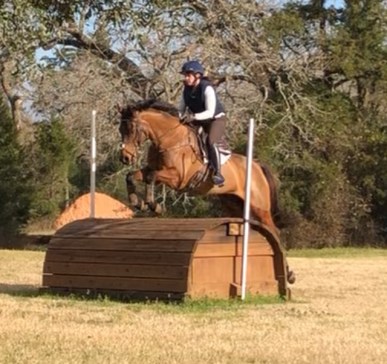
- I don’t have a problem with a horse hopping over a few small fences under saddle at 3, although IMO “real” jump training shouldn’t begin until the 4yo year, after the growth plates in the hocks are closed. How much jump training I do in the 4yo year depends on the mental and physical development of the horse. I prefer to start jump training using mostly small grids so they learn where to put their feet and how to use their body correctly, right from the beginning. For some horses that might mean a few weeks of grids, for other horses it might mean a few months.
- I think that quality vs quantity of the horse’s training MUST be taken into account. When you put really good quality work and riding into the horse, the quantity of work and the amount of riding it takes to get them to a certain level comes down. A good young horse trainer can get a horse ready for Novice with less than half the amount of jumping than someone who is less skilled.
- I think that the standard of care to which the horse is kept is what matters most when it comes to long term soundness. Good farrier work, good footing, appropriate conditioning, excellent feed, lots of turnout, and proper care on a day to day basis – those things are IMO by far the biggest factors when it comes to longevity.
The caveat to all of these is to repeat: these are my personal preferences, for my own horses, based on my own experiences. It’s okay if you don’t prefer it for your own.
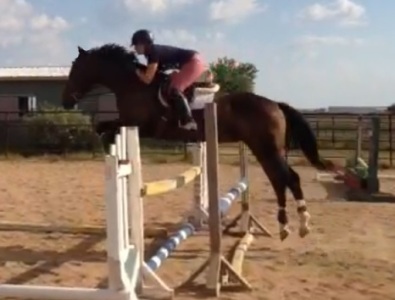
We do know for sure, proven via several studies, that gentle “stress” on a horse’s hard and soft tissues when they’re still developing is proven to help make them stronger as adults. Just like humans, early conditioning (not overuse – there’s a difference!) tends to make stronger adult athletes. For some horses, they might be able to get that kind of conditioning in a pasture. But unless you’ve got a hell of a lot of varied terrain and footing, and the horses are traveling pretty far distances on their own every day, at all gaits, most sure won’t. At that point it’s up to us to help develop the horse correctly, while being careful not putting an excessive amount of wear and tear on them.
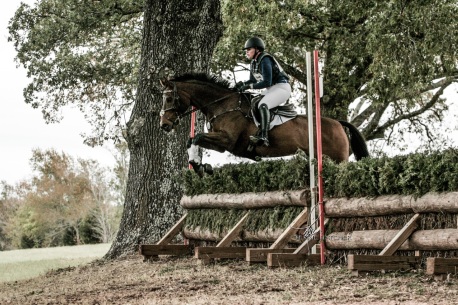
I also don’t have a problem with the young horse classes. They are NOT for every horse, for sure. If you have one that is going to be pretty maxed out at 1*, it’s very unlikely to be running that level as a 6yo unless you’ve pushed it a lot, and it’s body would be stretched to it’s limits. If you have one that is very slow to mature, or one that will require a lot more work to get going, the 4yo YEH series is probably going to be too much. On the other hand, if you have one that is a baby genius and can hop confidently and easily around Novice after just a couple of XC schools (and is clearly headed for the upper levels), that’s the horse for YEH. This is where horsemanship and personal responsibility come into play, and knowing what’s right for your horse. Just because a class exists doesn’t mean they have to enter it.
![Didi 1[1]](https://breedrideevent.com/wp-content/uploads/2019/01/didi-11.jpg?w=395&h=321)
Of course, we have to admit that most of us are not exceptional riders. Michael Jung or Doug Payne or Ingrid Klimke are guaranteed to bring a young horse up the levels more quickly and with far less wear and tear than I would. We also have to ask what becomes of the horses who disappear from the radar after the young horse classes. I spent a lot of time looking at horses from our own YEH series from years past and found the vast majority of them carrying amateurs and young riders around the lower levels, or even some in the h/j/equitation rings. Of course, there are the ones that succumb to bad luck, as horses love to do, or the ones that don’t hold up to the mental or physical stress. From my research, they are a small minority.
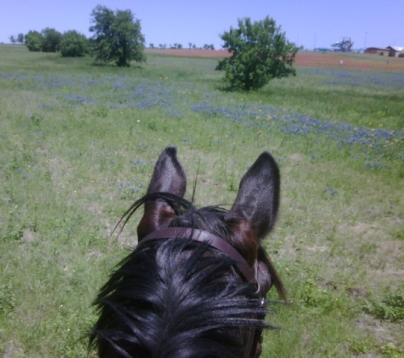
I’ve had horses that were 4yo and could canter around a 3′ course with a lead change after just a couple months. I’ve also had those that took a year to be able to do a course at 2’6″ with the same training schedule. So I’m careful not to jump to conclusions when I see a 4yo doing Novice. I’d want to know more about the horse’s history, who’s riding it, what it’s day to day schedule looks like, and how it’s kept. In my opinion those things matter a lot more. Are there people out there pushing horses to do more than they’re ready for? Definitely. 100%. Absolutely. Across every discipline and every age, it happens. It’s terrible and it’s sad. But what is “pushing” for one is not pushing for another, nor is it limited to a certain age group. I think it’s just as bad to see a 10yo being run into the ground and used up. I also think it’s more detrimental to wait until the horse is older to start it and then skip through the slow conditioning work, or rush it up the levels, than it is to start them younger and do it more methodically.
At the end of the day, I just don’t think that the idea of when to start a horse under saddle or over fences is a black and white issue, with hard and fast rules. Many roads lead to Rome. But I do think that it’s important to know more about a situation before making an assessment, either way. No matter where you stand on the issue, we can probably all agree that horses in general are better off when we listen to them and adjust our expectations accordingly, whatever that may look like.