There are certain perils that come along with living in Texas. It’s a little bit like Australia in that there are a lot of things that want to sting you, bite you, eat you, or stab you, whether they be animals or plants. For animals it runs the gamut from rattlesnakes (I’ve had a horse bitten by a rattlesnake before, it’s NO FUN) to scorpions to those giant disgusting freaky feral hogs. *shudder* The plant life isn’t always much better, with lots of mesquite and those stabby little sandburs that hurt like fuck, and of course cactus.
When you say cactus a lot of people picture the big tree-size ones you see out in the desert if you go further west. Here in this part of Texas we’re kind of at the point where the west meets the east. Drive a few hours west, you hit desert. Drive a couple hours east and you’re deep in pine forests. That means we have a mix of landscape and vegetation, which gives us this interesting juxtaposition of things like super rocky soil but also pretty decent pasture grass, or big oak trees but also cactus. Mostly a few different types of little ones, which grow here and there but aren’t particularly noteworthy or noticeable. The horses tend to be very smart about avoiding them, and aside from Presto accidentally jabbing a mesquite thorn into his head once (because of course he would) I’ve never really had a horse tangle with any of the stabby vegetation we do have.
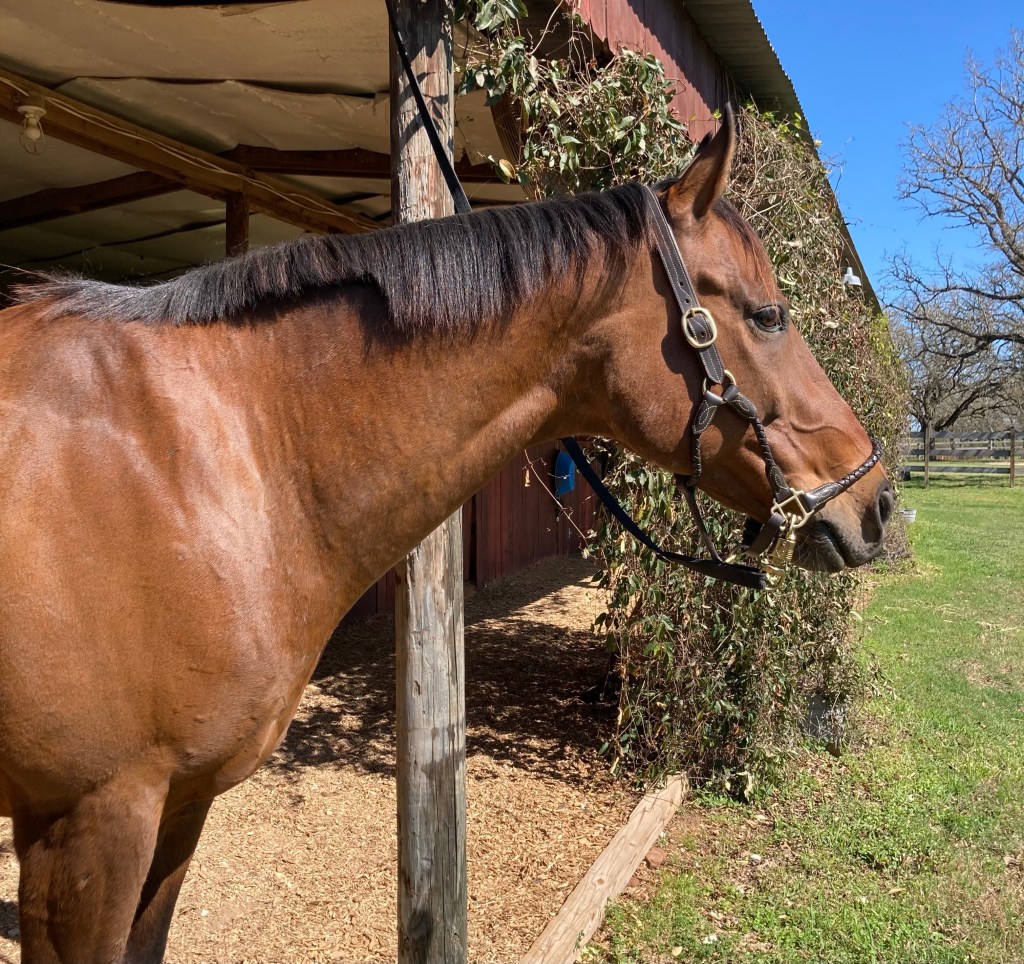
Until yesterday anyway. I went out to get Henry and he was standing by the gait very pathetically, resting a hind foot but also looking very irritated. At first I thought it was the flies – they’re starting to come out in full force – but as soon as I got closer I could see the little chunk sticking into his leg. Poor dude! Some of those thorns were really jammed in there too, at least half an inch.
First I took a good look at how many they were and where they were. Nothing in a joint or anything like that, luckily, so I tied up his tail and started the process of carefully pulling them out. There were 9 total, with a few stuck in there deeper than others. They definitely hurt, he threatened to knock my block off a couple times. I tried to just be quick about it while also trying to avoid stabbing myself in the process (wasn’t 100% successful with that, I stabbed myself once). A few spots bled quite a bit, which I figured was a good thing to help clear them out.
Glad I didn’t find him like THIS, I’d have thought he’d been bitten by a snake for sure
They stopped bleeding pretty quickly, and I scrubbed them up, ran my hands all over the area to make sure I didn’t miss any and that none of them broke off, and he seemed fine after that. I think the spots must have stung a bit because when walking through the longer grass in his pasture he hiked that leg up a bit more, but he trotted out sound and seemed no worse for wear. He’s normally pretty smart about nature in general, so I figured something must have spooked him and he flew backwards into the wrong, unlucky spot.
Then when I was grooming him I found a little swelling and a bite mark on his neck, which makes me think the neighbors horses might have been involved. There are definitely some stabby plants up near the back fenceline, and if Henry was playing bitey face with them over the fence and things went too far, he easily could have flown backwards into one.
suspicious
Henry is also zero percent stoic and extremely high drama, so he milked his multiple stab wounds for all they were worth. Plays me like a fiddle, this one. I lost count of how many cookies he had, because according to him, cookies heal all wounds. At least one cookie for every stab, that’s for sure.
moar please, I has owwie
I can honestly say this is the first time I’ve ever had to extract so many big sharp thorns from a horse, despite how long I’ve had horses in Texas and just how many stabby things we have here. Guess it was time for nature to bite back. I gave him a little bute last night just in case, and took a good look at the area this morning by flashlight, and all seems fine. No swelling, and you can’t even see the spots anymore. He walked out of his stall looking totally normal. Hopefully he stays that way.
And, uh, hopefully he keeps his chonky ass out of all the stabby stuff from now on. Lesson learned, maybe?
I got to wondering about this the other day when someone posted on facebook about having a flatwork lesson and what it entailed. Over time my general flatwork routine has definitely evolved, from horse to horse and discipline to discipline. Back in the hunter days we might do different size circles, some transitions, a little bending left and right, maaaaaaybe some shoulder-in, mostly in a stretchy trot type of outline. When I moved to the jumpers it got a bit more intense – shoulder in, leg yield, opening and closing the stride, smaller circles, etc. And then of course over to eventing, dipping our toes into actual dressageland (um, -ish…) and adding in such fun things as haunches-in, canter squares, half pass, etc.
As I’ve learned more, my overall flatwork routine has definitely evolved. Of course a lot depends on the horse you’re sat on and their level of training – I can’t just go in the ring and pop out a casual half pass on the 4yo for funsies. But he did get a lot of things introduced to him earlier on than some of my other horses, because I have more of an “established” (lolhelpme) background in flatwork fundamentals. I’m still shit at it, but… ya know. A little less shit?
Anyway, I think a lot of us probably have a “typical” flatwork routine for most of our horses. Like, let’s say, it’s just a regular ol’ work day, not a lesson day or anything, and you’re flatting your horse just to push some buttons and keep them moving and tuned up. I’m curious – what does that look like for you with your own horse, whatever their stage of training or discipline?
Sometimes I feel like I’ve spent our entire eventing career struggling against his conformation
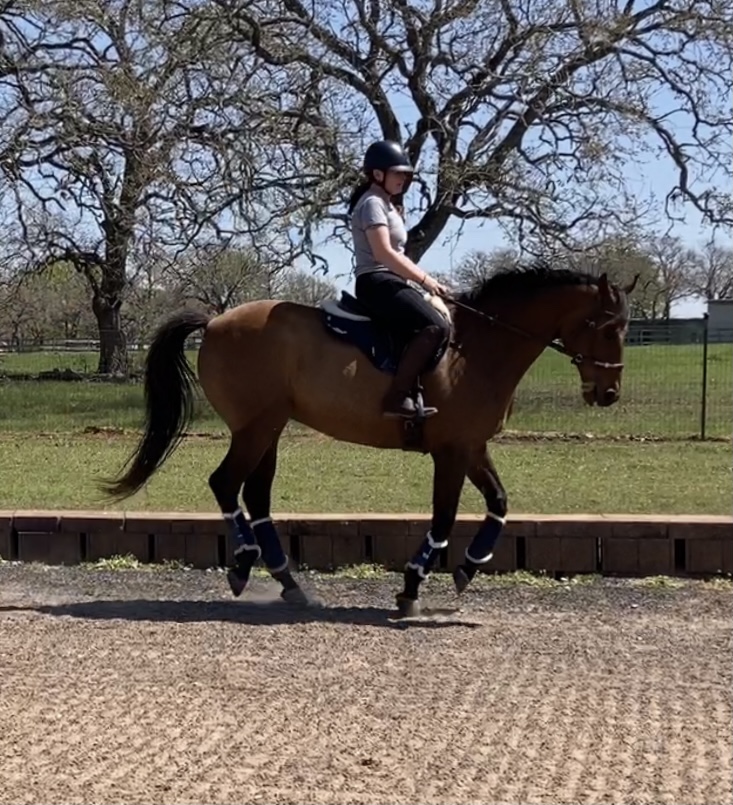
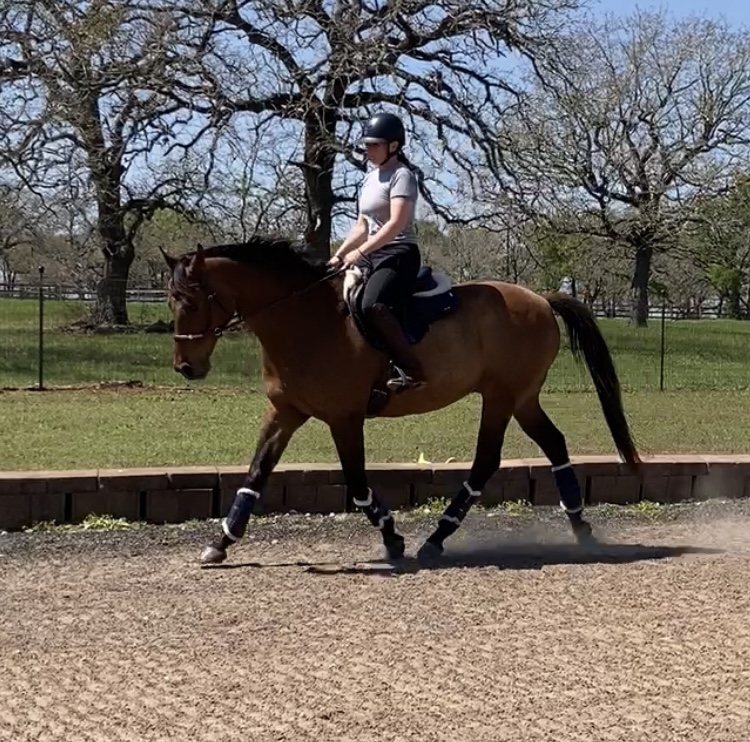
For example, mine: Henry was a Prelim event horse but we don’t really seem to show anymore (at the moment anyway). I can’t tell you the last time I put a dressage saddle on him, but we still do flatwork several times a week. I push all the same buttons I spent so long installing, both to keep him tuned up in case we ever do make it to a show again, and to keep his body stronger and more gymnasticized. So for him, just a regular ol’ not-at-all-special day of flatwork starts at the walk, usually going back and forth from freewalk to contact, opening and closing the stride, and doing figure 8’s on 10-ish meter circles to get him bending around my leg. Then we move to trot, which he usually likes to do a big stretch before we really dig in, so we might make a few 20m circles or laps of the arena just letting him stretch before I start to put him back together a bit. From there we do a lot of lateral work – leg yield and shoulder-in are is his jam, he is always Mr. Tension and it helps him relax into the outside rein – and serpentines. I’ll play a lot with transitions within the gait – lengthening the stride, then making it small, then back to working – and going back and forth and in between. We’ll throw in a few trot/walk/trot on a circle (rapid-fire transitions have always been his “come apart” trigger, and some days they still are). Then canter, with leg yield, maybe a little baby half pass, always some counter canter loops, and most assuredly our favorite and most important exercise for an event horse – opening and closing the stride. I want to be able to go from a 10′ stride to a 14′ stride to a 12′ stride and back again at the drop of a hat while jumping, so transitions within the canter are probably the #1 thing we do and we do it EVERY ride (I think if you sit outside the jumper ring or the cross country warmup that’s probably the thing you’d see most often too). If you can’t quickly and easily adjust the canter, you’re screwed on a jumping horse.
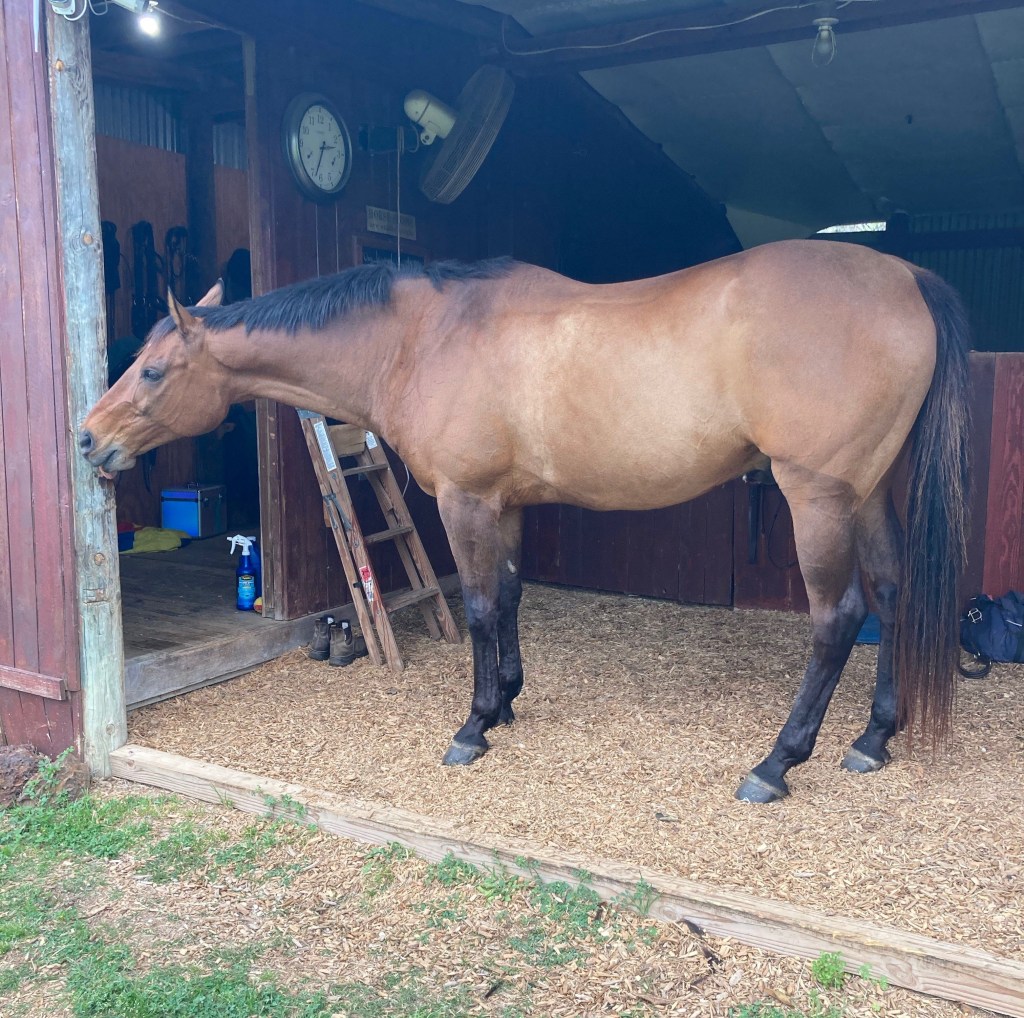
Especially when they’re built like this
Canter squares are big for us too, because Henry is a croup-high, naturally quite downhill horse, and they help get his hind end more underneath him and his front end up a bit. I’ll do a simple change here and there with him sometimes but almost never flying changes, because he loves to throw flying changes into dressage tests where they shouldn’t be. We’ll do some canter/stretchy trot/canter or some canter/walk/canter or some canter/trot/halt/rein-back/canter too, how many or which variations depend on the day and how spicy he is. After that we do some free walk, more stretchy trot, stretchy serpentines, etc, and then we’re done. It could be 20 minutes or it could be 45 minutes, depending on the day.
Presto obviously isn’t here right now and is neon green, but before he left his flatwork sessions were about 15-20 minutes and consisted of transitions between walk and trot and canter (mostly walk and trot since he was still kind of struggling with his canter balance in the dressage arena), beginning leg yield (he was actually pretty good at that), the extreme beginning of shoulder-in (less good at that), small transitions within each gait, serpentines, and figure 8’s. Nothing particularly complicated, but enough to keep him focused and thinking and paying attention to my leg/seat and not just blobbing around on endless 20m circles. At the canter he either did simple laps around or did circles. We had just started playing with opening the stride and then coming back when I sent him off for training.
starting to leg yield off the quarter line
So tell me – what does your average, not-special flatwork day look like? Discipline and level of horse? I love seeing what everyone else does and why!
Just me or are weekends way too short lately? When the sun is shining and the weather is mild, it’s extra hard to want to go back to work and spend all day in front of a computer.
It was a nice horsey weekend though, in all regards. Henry’s back up to being ridden 6 days a week now since he’s the only horse on my plate, and he’s been doing a bit more fitness work. Definitely getting some strength back and getting back into more proper shape, despite the fact that he reminds quite round. Round is a shape.
On Friday afternoon I brought him in for a fun little conditioning hack out in the back (where he inevitably always turns into a dolphin at some point during the canter laps) and realized he was looking a little… ranchy. So I got out my scissors and my rake and got rid of a lot of that mane, which kind of just makes him look even rounder and chonkier. Whatevs, he’s owning his figure.
Sometimes when I’m feeling cheeky I’ll make little challenges for us, like the time I set the two little piggies up as a bending line of skinnies. On Friday after we finished our canter sets I was like… I wonder if I can put both reins in one hand, canter down the alley, hang a 180 turn through the gate and under the tree, and jump the little log. While holding my phone to video, of course. Tis the Instagram era. Henry, bless him, has been dealing with my weird shit for so long now that he’s not even phased. He was in his sidepull, but no matter, we cantered down one-handed, made the turn through the gate, under the tree (just about dropped my phone ducking under branches) and popped over the log. Sometimes the little random goofy stuff like this is really the highlight of my rides. It’s fun, and it’s spontaneous, and doing weird shit just for the sake of it is totally my jam. I like testing all the buttons that have been put on my horse over the years, and he seems to enjoy doing different stuff.
Saturday was Henry’s day off, and was split between barn chores, errands, and stalking Mason on the Carolina live feed. He looked like he was having a GRAND time galloping around that track, ears pricked and full of running all the way through. He crossed the finish looking like he could have happily gone around again.
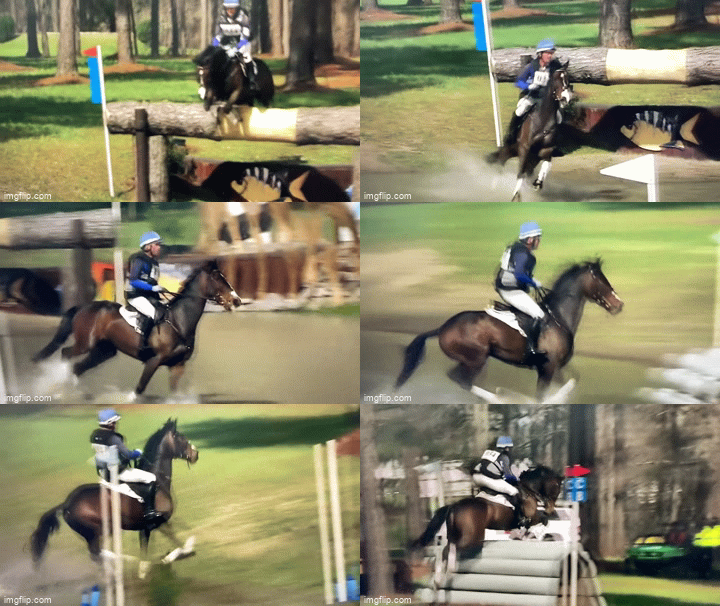
He’s entered at Kentucky for his first 5* so fingers crossed that everything goes well and he gets to go. #1 fan right here, for sure. I just love watching him go around… his enthusiasm, his gallop, his balance, the way he hunts the fences like he’s just having the best time… totally my type of horse. He eats cross country for breakfast, lunch, and dinner. If Presto decides to be even half the horse his doppelganger brother-from-another-mother is, I’ll be delighted.
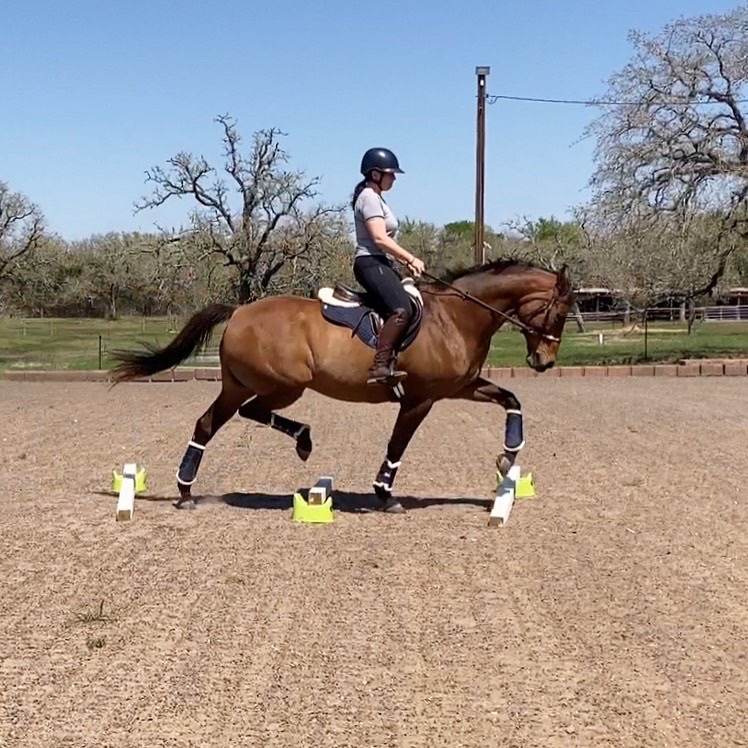
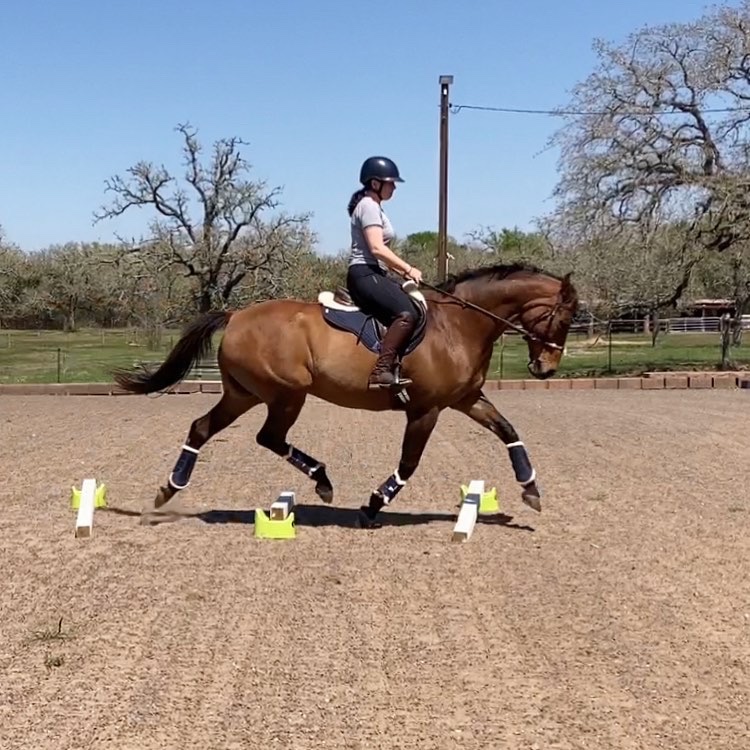
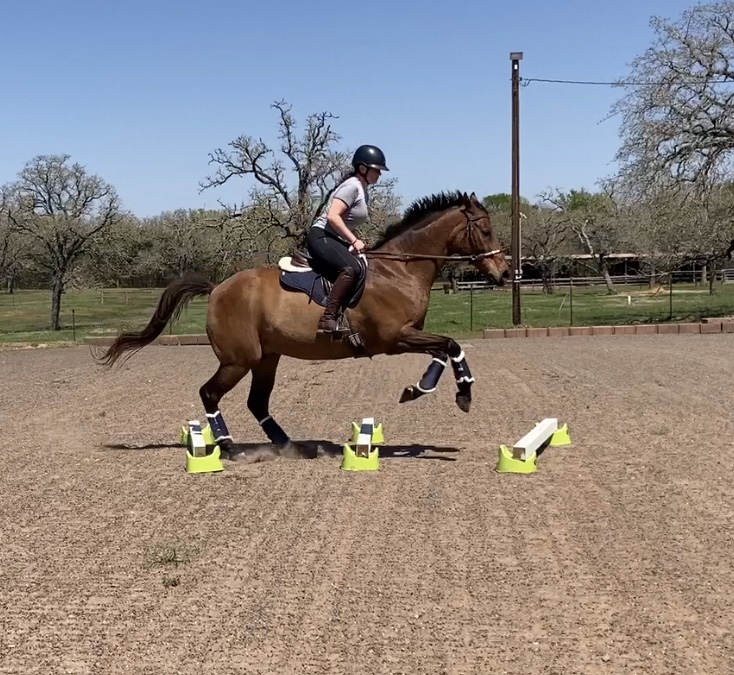
On Sunday I went out and set my cavaletti exercises back up in the arena. We’ve been working over those twice a week, trying to build Henry’s hind end and topline strength back up. This time I pulled out my rail raisers (which are actually Ikea potties) and put them on a curve to make it a little more difficult. These are my skinny rails, only 4′ wide, so it’s definitely an accuracy exercise especially when they’re on a curve. Henry was pretty good when they were half up…
But as soon as I put them up on both sides he was convinced they counted as jumps. It took 3 or 4 times through before I finally successfully persuaded him to stop trying to bounce through them. Which was… awkward. Although I guess that’s one way to get a butt workout.
Can’t blame him for trying to make some boring work a little more interesting I guess. He’ll make a jump out of anything if he can.
I’ll try to get a Presto update this week, and I’m planning a trip down to Ocala to see him sometime next month. Otherwise there’s not a whole lot going on around here. Peyton is edging her way towards baby time, she’s at 334 days today, although she doesn’t appear to be in any particular hurry to release her hostage. I dunno about y’all but I’m ready for some baby horses. Let’s do this already. I need my weekly doses of cuteness. I don’t think we’ll be getting a Foal Friday this week, but maybe next week? Feels like I’m a kid waiting for Christmas morning.
Hope everybody had a good weekend! Send Peyton some “wrap it up already” vibes so we can get this show on the road.
Time flies when the weather is nice. That’s what the saying should be anyway. Spring is the best time of year in Texas, and it’s always early and short-lived so we have to enjoy it while we can. Right now everything is green, the days are fairly mild, and the nights still have a little bit of a nip to them. The whole 10 day forecast is highs between 70-80. It’s almost enough to forgive Texas for all the bullshit it pulls the rest of the year. Almost. Anyway, at the moment we’ve got good riding weather and happy horses and beautiful pastures. Plus, ya know, I’m ALWAYS in a better mood this time of year because it’s breeding season and foaling season and there’s nothing I love more than delving into bloodlines, picking stallions for the mares, and waiting for the babies to show up (Peyton is at 331 days today! Getting close…).
And in the spirit of the season, it’s possible that WTW has acquired a new mare to add to the eventer-breeding string. My love for the sporty TB has rubbed off on Michelle, who’s spent the winter deep diving into TB performance lines. For real, y’all should see all the notes she’s gathered from the research she’s done and competition results she’s dug through, it’s a literal book. But anyway, we’ve been keeping our eyes peeled for a really good quality mare to add, and indeed I feel like we’ve seen every TB mare on the internet at this point. Lots of cute ones but none that were quite right. We found a really lovely one a few weeks ago but were about an hour too late and another eventing breeder snapped her up before we did. Lesson learned.
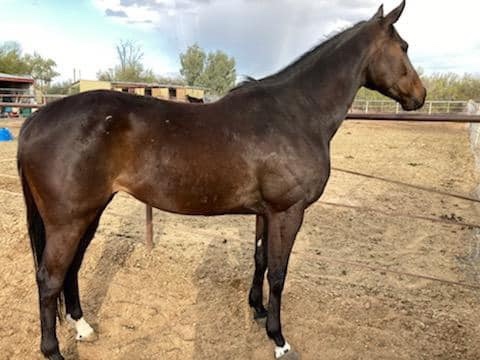
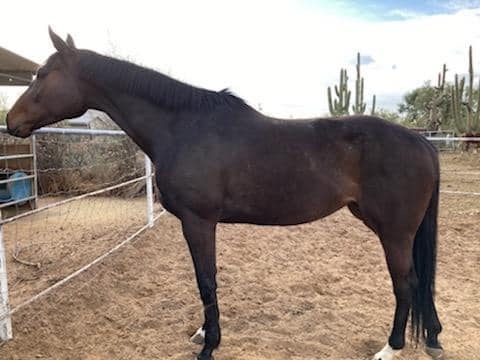
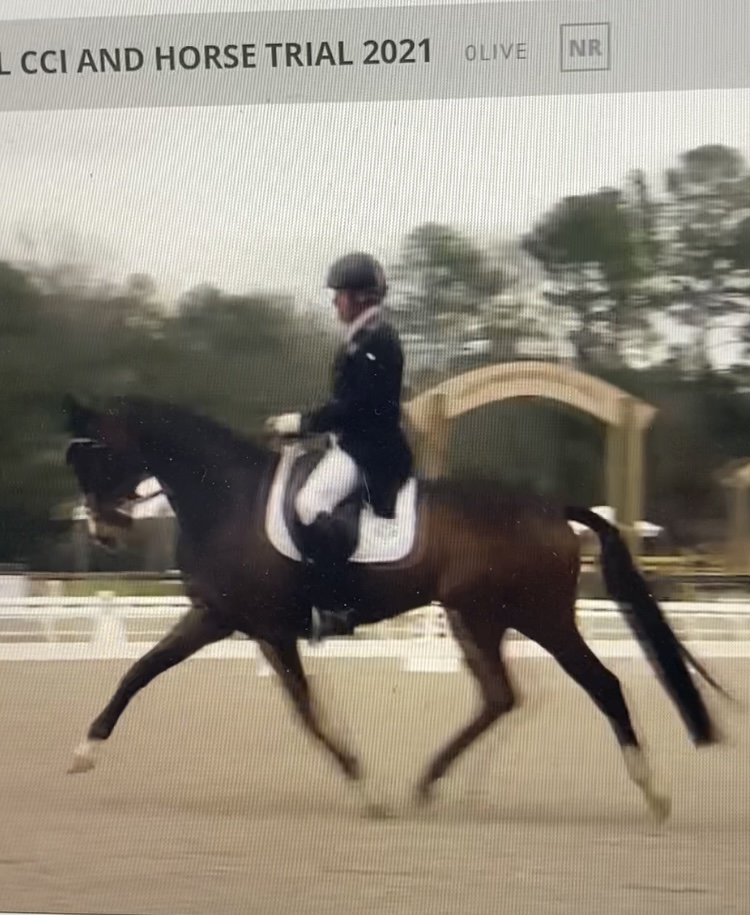
And then earlier this week we came upon this one in Arizona (much closer than Delaware, at least!).
She’s 8 years old and still racing on remarkably clean legs – selling point #1. When she decided she wanted to be fast, she was, but unfortunately that only happened once, in a turf race. Otherwise she’s seemed delighted to toodle along mid-pack. She’s reported to have a good temperament, is a nice middling size around 16h, has a great gallop, nice uphill balance, and the right kind of conformation to breed to warmbloods for sporthorses. Plus, like… look at them airplane ears. She also really ticked the pedigree checkbox – we were looking for a pretty specific handful of lines, and hers are well-suited for our purpose. Lonhro mares are hard to find and tend to go quick, his offpsring have great canters, are smart, super athletic, and forward-thinking but not idiots. Broken Vow has made a lot of super sporty ones too, and of course Lyphard and Riverman on the bottom. Definitely a nice pedigree for sport.
The discussions about who to breed her to first have already been flying, complicated a bit by the fact that a lot of frozen semen brokers are sold out and awaiting delayed shipments. Frustrating, but we’ve got a lot of good options still, so we’ll see where we settle. I’m pretty excited to have another really nice TB mare in the crew.
Along the same breeding lines, I had intended to do an In The Blood post for Carolina 4*S but I was just too busy with other stuff this week to get it done. The good news is that they have the live stream at least (granted it’s behind the H&C paid firewall) so let the stalking begin. Poor Mason was a bit wired yesterday in the dressage and had a hard time – not the only one with that problem – but Carolina isn’t a dressage contest so we’ll see how things go. I keep hearing about a new Normandy Bank on the course that’s supposed to be pretty gnarly so hopefully we’ll get to see it on the live stream.
stalker mode: engaged
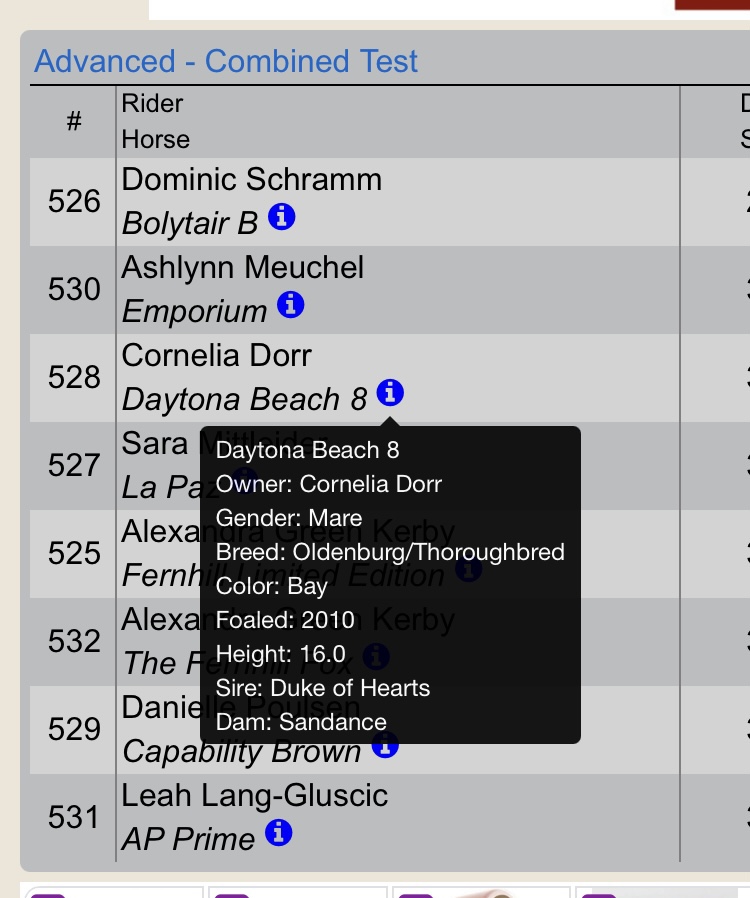
Also a big shout out to Event Entries for a really cool new feature that some of their events have. See the little blue i bubbles next to the horse’s name? Some events are actually showing breeding information right there in the results! Not a ton of them yet, but some, and a lot of it is incomplete since the USEA data is as well, but it’s definitely a step in the right direction. This screenshot is from the Ocala results. I LOVE this feature. They also show all the individual dressage marks, which fences they have rails at, and which jumps they have issues with on XC. Really cool data to poke through if you haven’t seen it yet.
Last but not least, Riding Warehouse and Better Dressage Scores have teamed up to offer an online horse show, with all proceeds benefitting the Optimum Youth Equestrian Scholarship. It’s open to USDF tests, USEA tests, and Western Dressage tests, so something for everybody. Entries aren’t due until April 8 so you’ve got some time to get your tests videoed and submitted!
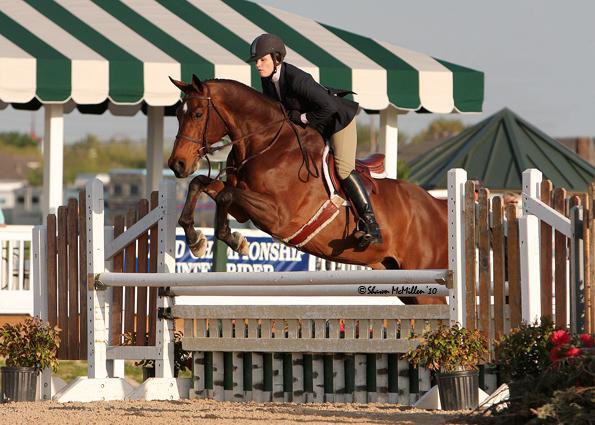
Y’all know I love me a good discussion post, and a podcast I listened to earlier this week definitely provided plenty of fodder… I’ve been thinking about it all week. Most of you probably know that I grew up in the h/j world, splitting about half and half between the hunters and the jumpers. I was always a fan of a good hunter, and indeed Sadie was bred to be a hunter. I give this background mostly to say that I’ve been in that world, I think I have a decent understanding of it, and I’m not here to just criticize it and be a dick. I genuinely want the sport to improve, because I do think it has a lot of value and good things going for it, even if I’m no longer a participant.
scenes from a different life
Anyway, on to the podcast in question. It was an episode of Heels Down Happy Hour, and they had Hope Glynn on to talk about things that could be improved when it comes to h/j. She had several points I agree with completely – especially the idea of making all jumper classes under 1m into Optimum Time (yes, omg yes, I’ve been saying this for years) and changing the judging/licensing structure for hunter judges.
The part I really want to talk about though, starts at around 44 minutes and you only need to listen for a few minutes to get the gist of it.
Basically the points she makes are that the demand for quiet, safe, low level amateur horses is so high that it drives up the prices beyond what a lot of people can afford – totally agree with this part. Hunters are SO expensive, at every level. She also says that horses end up lunged too much and medicated too much in order to make a borderline unsuitable horse into a quieter and safer and sounder one – agree with this part as well (I have never in my life seen anything in a sharps container at an event, which was kind of shocking coming from h/j where those things were full a couple days into a show). She also makes the observation that the majority of people at horse shows, the ones that really pay the bills, are the low level childrens and amateur riders, and their horses are being so used up so quickly from all the lunging and meds that they’re having to buy new ones every few years, which becomes even more exorbitant. Yep, I’ve seen that a lot too. Totally with her on her thoughts of some of the biggest issues.
Where she loses me, 100% and unequivocally, is in the proposed solution. Particularly “find a safe tranquilizer” that can be legalized to give to these horses so that they don’t have to get lunged as much or given as many other medications. I admire the fact that she’s ballsy enough to say this out loud – she’s certainly not the first that’s said it, but still it’s a controversial opinion. I just couldn’t help but massively massively massively cringe at it though. Especially because one of the big reasons I left that world is because I was so disheartened at what went on behind the scenes with regards to medication and the constant attempt to make horses into robots. If you’ve ever seen one dropped by a bad mag shot, it’s not something you easily forget. Not everyone is doing it, for sure, but most of them are very quick to reach for a liquid solution (there’s literally the term “liquid lunge”, y’all).
My real issue with this proposed solution is that it doesn’t actually fix anything. It slaps a band-aid over top of some much deeper issues. Not to mention that IMO it’s not safe AT ALL. Please do not jump tranquilized horses. Good god. And I say that as someone who grew up riding with a very Ace-happy trainer and I FOR SURE have done it many times in the days before I really understood what it meant or what it was. These days you could not pay me to jump a tranquilized horse, I’m sorry. I like my neck in one piece thanks, not to mention that it seems like a lawsuit waiting to happen. Anyway, rant over… back to the deeper issues.
As Hope mentions, part of the problem here is that many of these young fancy warmbloods are just plain unsuitable for the job of low level amateur/kids horse. They’re big and athletic and fancy. If the judging rewards big and fancy robots, then big and fancy robots are what people will bring to the ring. So, if we’re willing to say that all jumper classes under a meter should be Optimum Time, what are we likewise willing to change about the structure or standards of low level hunter classes? Would these people not be safer on less athletic, less fancy, perhaps smaller horses?
Here’s where we get to my probably very unpopular opinion. How about, let’s say, in the 2’9″ and under amateur and children’s classes, we have different standards of judging? Much like dressage tests start easier and get progressively harder, with different frames and carriage at the lower levels vs upper levels, why should a 2’6″ amateur hunter class have the same standards as a 3’6″ open class?
For example – for under 3′, why count strides? Allow people to add strides with zero impact on their score. Let the shorter strided horses safely and comfortably do the add, if that’s what makes a more appropriate picture. Gunning it for the 5 makes no sense if the horse could safely and easily do 6, and they shouldn’t score any lower because of it. This would also make it a lot easier for smaller horses or “honies” – many of which are much more size appropriate for kids and small adults.
Allow simple changes without massively impacting the score. I’m sorry but a well-executed simple change is MUCH better and safer and more correct than the floppy, crooked, front-to-back change (aka what every other discipline calls a “hunter change”, hate to break it to you) that you see so often as the kid or amateur tries desperately not to miss a lead change because they know it’ll most likely mean they’re out of the ribbons. If your priority is safe and proper riding and a well-schooled horse, then a good, quick, nicely executed simple change is perfectly fine. Take a couple points off if you want to, but certainly don’t drop the score to an automatic 55. Plus this would open up the market a lot (horses without a 100% perfect flying change could actually have a place in their world) and likely make some more affordable low level ones.
Also, at this level and for the children/adult crowd, should we really be expecting horses to jump out of their skin? Should we reward the horse that the rider can barely cling to? Is that an appropriate mount? Why not the horse that jumps consistently tidy with its knees and has a bascule congruent to fence size instead – isn’t that one actually the better horse in this particular scenario? I think in these classes that’s the that type should be rewarded more, because it’s more suitable, and leave the more extravagant knees-to-chin ones for the pros and the higher divisions.
And last but not least, please for the love of god can we stop expecting horses to plod around like a robots? A few tail swishes here, some ear flicks there… if the horse isn’t actually being naughty or rude, let it be. They’re living creatures with thoughts and emotions and reactions, trying to strive for an automaton is just unrealistic and leads down some seriously dark paths in the quest to achieve it. Aside from the obviously much worse issues of LTD (lunge to death) and drugging, have we stopped to consider how ridiculous it is that most people add weight via fake tails to make the horse’s tail be more still? It’s… an absolutely absurd concept that hints at the much deeper issue. They’re HORSES, for god’s sake, we shouldn’t punish them for acting like it.
Basically my thoughts are: instead of trying to find a “safe” tranquilizer to drug unsuitable horses to meet an incredibly difficult standard, maybe instead we should change the standard to actually suit the horses and the riders.
Hope talks about how there has been almost no growth in the hunter world over the years, and I think there are a lot of reasons why. For myself I know it was a combination of cost and all the crap going on behind the scenes that I just couldn’t stomach. Imagine if someone like me, with a cheap but extremely safe and suitable horse, could actually come in and stand a chance at doing well at the national level. That’s what eventing offered me, and that’s why it ultimately lured me away. A “quick fix” thing like making tranquilizers legal isn’t going to fix that kind of issue. It might keep some people around longer with their unsuitable horses, but I don’t think it’s going to bring people in and grow the sport. Making it more accessible and easier for the average, middle class person to actually be able to compete and do well… that’s what’s going to make the difference, and in order to get to that point, there are some big overhauls that need to be made from the ground up. In my opinion, anyway, of course.
hats off to the only hunter trainer I’ve ever really loved, who always did it the right way
It seems like these types of conversations are going on in a lot of equestrian sports right now, with many of us having to step back and start to reconsider how we do things. What are your thoughts? What changes do you think would help make all equestrian sports more accessible? And for the hunters in particular – what changes would you like to see? How would you feel about changing the drug rules to allow tranquilizers? What would help make horses more affordable again for the lower ch/ad divisions? What would help keep the horses from having to be so heavily medicated or lunged? If you’re someone that’s been lured away from that world like I have, tell us why you left. Or if you’re someone in that world now, tell us what your biggest struggles are and what would help keep you actively participating in the sport long-term.









 breedrideevent.com