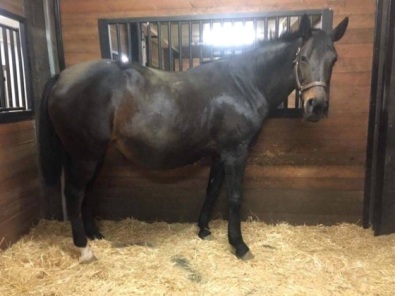
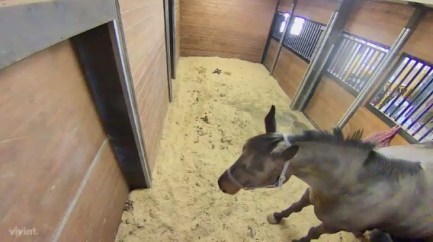
Time to rename this network. Sadie’s not just a fat mare anymore, she’s an ANGRY fat mare. And she isn’t shy about hiding the fact that she’s uncomfortable. She’s taking it out on basically any non-living thing that she can get her teeth or feet on. Stall wall, fence, water bucket… whatever’s in her way is fair game. Y’all got a glimpse of it in my post the other day but that was really just the beginning of her rage.
This is exactly what she did before she had her last foal, so this behavior is apparently standard for pre-baby Sadie. But damn, girl is pissed. Not at people, of course, or her BFF Lissa, but inanimate objects beware.
She was really raging mad on Tuesday night/Wednesday morning and stayed raging mad during the day on Wednesday, so I thought for sure we were gearing up for go time.
But then she was only kinda sorta mad on Wednesday night, pretty normal yesterday, and just sorta mad again last night. Still no change in the milk test either. Come on mare, wtf? Although her milk definitely looks like real milk now, and her udder is quite full, and her vulva is giant (sorry, TMMI – too much mare information). Physically, she’s ready.
Exactly how much more pregnant would you like to get???
I give up on trying to guess what the anger means, too. It just means she’s an angry mare, apparently, because I still ain’t got no baby.
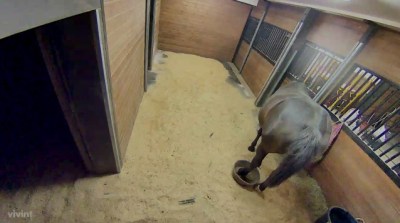
Going back through the overnight clips, I think this particular series is my favorite, where she tried to murder her feed pan.
Meanwhile Lissa is equally miserable but she tends to just lay there and grunt, or stand there and look pathetic and yet still totally beautiful. I’m starting to think they’re dragging this out on purpose because they’re drama queens.
Really this is probably all my fault, because I packed my go-bag on Tuesday and made all kinds of preparations to be gone for several days. Shouldn’t have done that. Horses can always sense when people are prepared, and they hate that crap.
Wow it’s been a remarkably long time since I did one of these posts. Probably because I finally have my riding wardrobe and tack/equipment in a really good place finally. Of course, that doesn’t stop me from bookmarking other things that I want-need-gotta have.
Aegean Blue Aqua X breeches
I’m waiting for these to hit Riding Warehouse (a couple more weeks!) and then they’ll be joining my closet. I’ve continued to be really impressed with my Aqua X breeches and want more colors. This teal color is a little bit brighter than I would normally wear, but it works with a lot of my shirts, so I say lets do it. You can only have so many pairs of navy breeches (uh… 4, to be exact).
Romfh Gabriella breeches
I’d also really like to try the new Romfh Gabriella breeches, because I love a silicone knee patch, but I don’t like any of their current colors. Maybe white to join my show breeches collection? My favorite whites are to the point where they come out of the wash looking more cream than white these days…
Brown Ego7 Orion boots
I’ve been trying to buy these damn chocolate brown Ego7’s since the day they announced their release on facebook, but so far I haven’t had any luck finding them or getting anyone to tell me when they might be available. As soon as I find them, they’re mine. My brown Mondoni’s are finally giving up the ghost, so I need new schooling boots like NOW.
Celeris navy boots
I came really close to a Treat Yo Self moment the day I saw these custom boots on Instagram. They’re not actually something I’d wear to the barn obviously, but I could live in these the rest of the time, they’re so pretty. I talked myself down off the ledge for now, but no guarantees going forward.
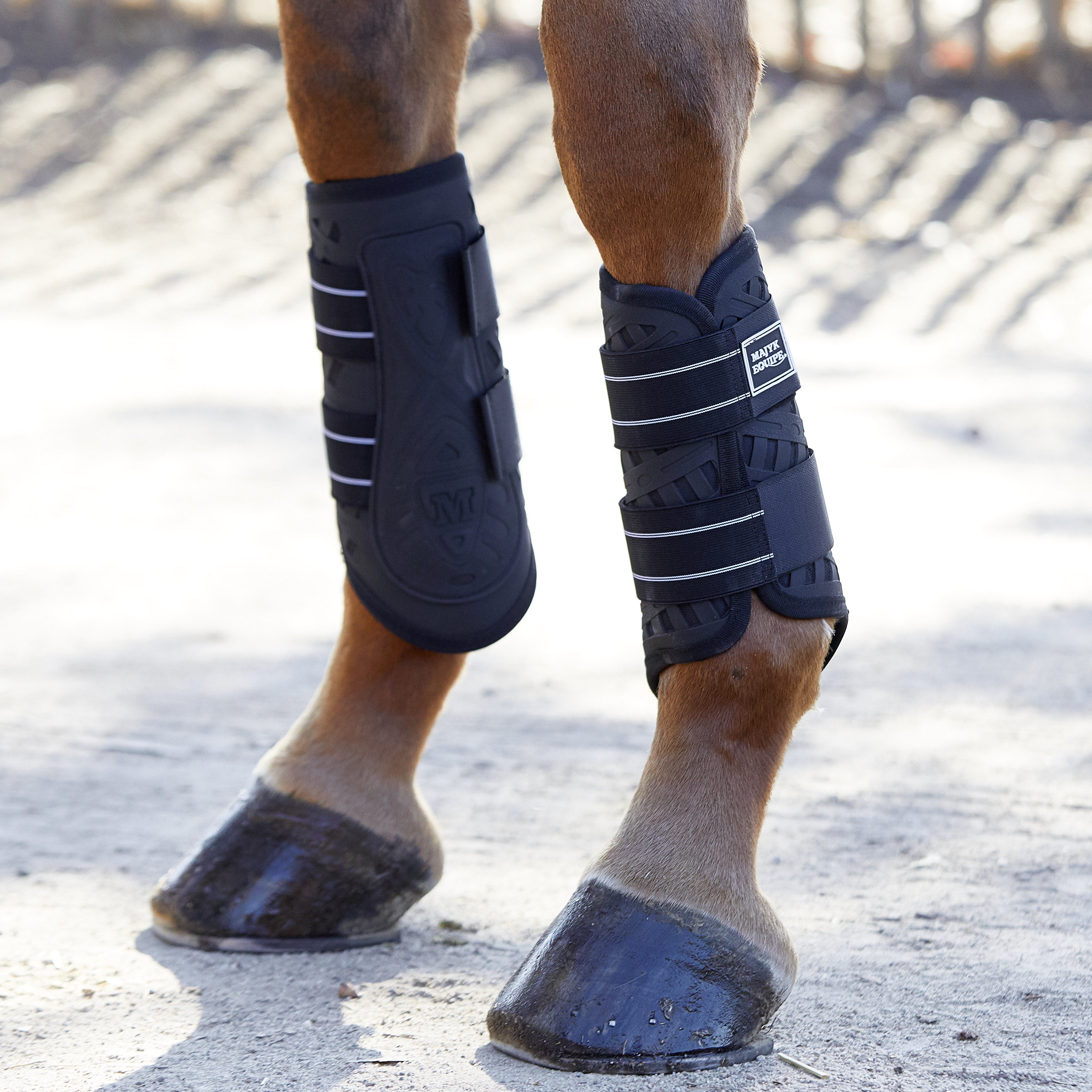
Majyk dressage boots and bell boots
The dressage boots are definitely on my list of needs for the season… Henry is wearing his old Gen 1 XC boots for dressage, and they’re starting to look quite abused. He deserves some fancy new leg wear. I’d also like to try their bells too, since Henry has actually been able to transition off of wearing his rubber bells 24/7 at this new barn. Mud-free living seems to be the key to him keeping his shoes on. I’m a bit lazy about pulling his pull-on boots off and on for riding, so maybe we’ll give the ME’s a try.
This makes zero sense, since literally nothing I own accessories-wise would go with this, but I’m really digging the french blue coats lately. The Winston Devon model above in “mid blue” is ridiculously gorgeous, and I actually like the color of the AA Motionlite (which RW carries now!!!) too. Makes me wish I had a gray horse or a chestnut.
Some things will be mine soon… others, well… we’ll see how long I hold out. What’s on your must-have list this spring?
There was kind of an informal blog hop going around about this, although I forget now who all did it (my brain is on shaky ground these days – PLEASE FOAL ALREADY, MARE) … so if you participated and want to leave a link to your post in my comments, please do. But the premise was asking who can ride your horse – both ability wise and “allowed to” wise.
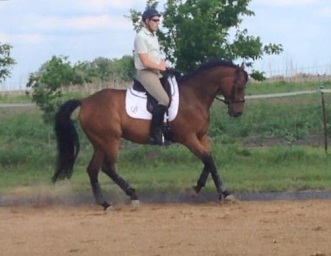
Henny with Dressage Trainer. Pretty certain I will never replicate this.
I feel like if I’ve done my job reasonably well, pretty much anyone should at least be able to get on and tootle around. I’ve spent a lot of time trying to make this horse more rideable (because I think that being really rideable is always a great thing for a horse to possess) so I like tossing someone else up there every once in a while and watching them push the buttons. Pretty much any rider should at minimum be able to get on and w/t/c and point the horse at some jumps. I harbor no delusions of grandeur about my ability as a rider: I don’t think I’m so special that I’m the only one who can ride him without messing him up. In reality he’s been putting up with my shit for quite a while, so he’s gotten to be pretty good at it by now. I have no qualms about giving just about anyone a leg up under my supervision, and most people who have experience with a forward-thinking horse should have no problem riding him.
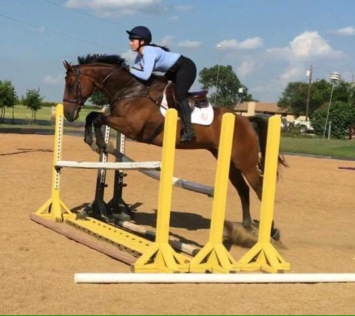
with blogger HIllary
The difference is supervised versus unsupervised. If I’m sitting there watching, I can control the situation and what the person does/doesn’t get to do. People also tend to be on their best behavior with the owner watching. So in that scenario, there are very few people who wouldn’t be allowed to ride my horse. Only exception: people with really bad hands. Y’all don’t get to come near Henny, sorry. Take up knitting or something.
with Bobby
But unsupervised rides mean that I have to trust you to have good judgment about my horse and what is appropriate. It’s one thing to trust someone to just pilot him around for fun while I watch. It’s another thing entirely to be trusted with a solo ride. The people I’d trust for that are limited mostly to the pros I’m comfortable with and friends who I know have a similar approach as I do.
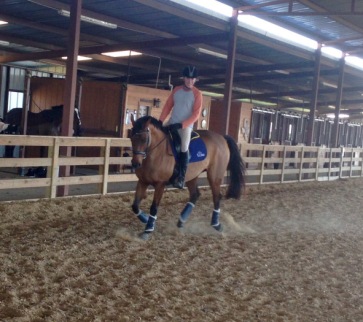
Henny with event trainer
Otherwise, as long as a situation is under my control, I feel like it’s good for my horse to get exposed to as much as possible, including different riders. What about you?
Today is 330 of Sadie’s pregnancy and she’s still hanging in there. Yesterday she started biting the stall walls a bit and smooshing her butt into things… last time she did that for about 3 days before she foaled, so I’m hoping she’s going to repeat the same pattern. Funny, because last time she went 332 or 333 days (there is some debate on breeding date) so she’s literally on the exact same schedule so far. If she foals in 2-3 days I will give her extra treats for consistency (did you hear that, mare???).
How to give both of your moms a heart attack
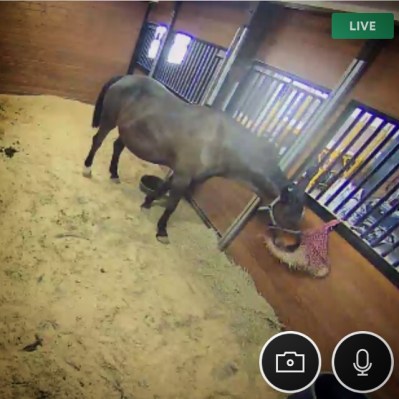
In the meantime Michelle gave me access to the stall cameras so that I can see Sadie myself (sorry, it’s all part of their home security system so I can’t give it out to everyone). Really I think it’s because at least 4 times a day I was texting her asking how Sadie was and Michelle was tired of my shit. Either way, now I can pull up Sadie’s camera whenever I want! Which has been a lot. Like… A LOT. Sometimes I can’t stop watching her. Granted, most of the day she usually stands outside in her paddock where I can’t see her, but that doesn’t stop me from checking compulsively. And then taking screenshots when she does anything remotely interesting.
like standing in her food panor visiting with her bird friendsor trying to sit in her wateror smooshing her butt into the wallor telling Michelle to text me and ask for extra cookiesor just generally looking huge and cute
It’s FatMareTV 24/7 around here! Love having the cameras though, it’s lessening my anxiety a little bit. This morning she looks even more uncomfortable, keeping her butt pressed against the back wall and alternating between biting at her sides and attacking the stall wall. It’s definitely ramping up. I swear her topline looks a bit different today too, like her shape is changing.
When they’re not feeling totally miserable, this is what she and Lissa spend most of the day doing:
I’m gonna stand on my rickety little soapbox for a minute here and preface this post with this: regardless of whether you’re a breeder or not and regardless of whether you own a young horse or not, learning how to evaluate a horse’s potential for a future career is a skill that every horseman needs. It will make you look at your horses (and any potential future horses) in a completely different way. If you ever get the chance to attend any kind of sporthorse conformation/young horse evaluation clinic – take it!
I had so much fun at Marilyn Payne’s Young Event Horse (4 and 5yos under saddle) judging clinic last fall that when I saw a Future Event Horse (yearlings through 3yos judged in hand) clinic being advertised up in Dallas, I jumped on it immediately. Baby Horse might not even be here yet, but two of my favorite things are breeding and eventing, so it’s only natural that anything FEH/YEH is right up my alley.
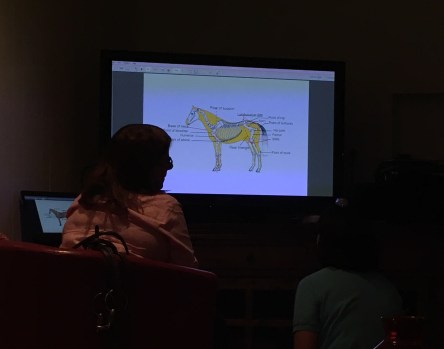
The clinician was Eileen Pritchard-Bryan, a breeder and well-known eventing/FEH/YEH judge and steward. We started on Saturday morning with a lecture on conformation and what traits you’re looking for in an event horse (vs dressage horse or jumper). There was a whole lot of technical stuff with angles and dots and lines that would take a million years to cover thoroughly, so here are just some of my notes:
The lumbosacral gap should be no more than 1-2″ behind the point of hip.
“Pillar of support” – when drawing a straight line down the groove of the forearm, the line should come out ahead of the withers on top (for lightness of forehand) and go through or just behind the heel on bottom (too close to toe: foot injuries, too far behind heel: soft tissue injuries).
Lower stifle = better gallop and more jumping ability.
The lower the point of elbow, the better (more clearance from the rib cage for galloping).
Point of shoulder to point of elbow should be barely less than 90 degrees.
Neck should be longer than the hind 1/3.
Back at the knee = deal killer
Toeing out is better than toeing in
A lot of the sporthorse conformation stuff isn’t new to me, having been around the breeding industry, but there were a few subtleties pertaining specifically to eventing that I found very interesting. I spent a lot of time that evening looking at pics of different eventing and jumper stallions (and pics of Henry, of course).
Mighty Magic
Heraldik xx
Jaguar Mail
After the conformation lecture we talked a bit about the FEH classes in particular, proper turnout, tack, apparel, etc. Then the participants went and got their babies and got to practice in-hand presentation. I have some notes about that part too:
For FEH, the walk is most important because mirrors the quality of the canter. You want lots of swing through the back, groundcover, overstep, and straightness.
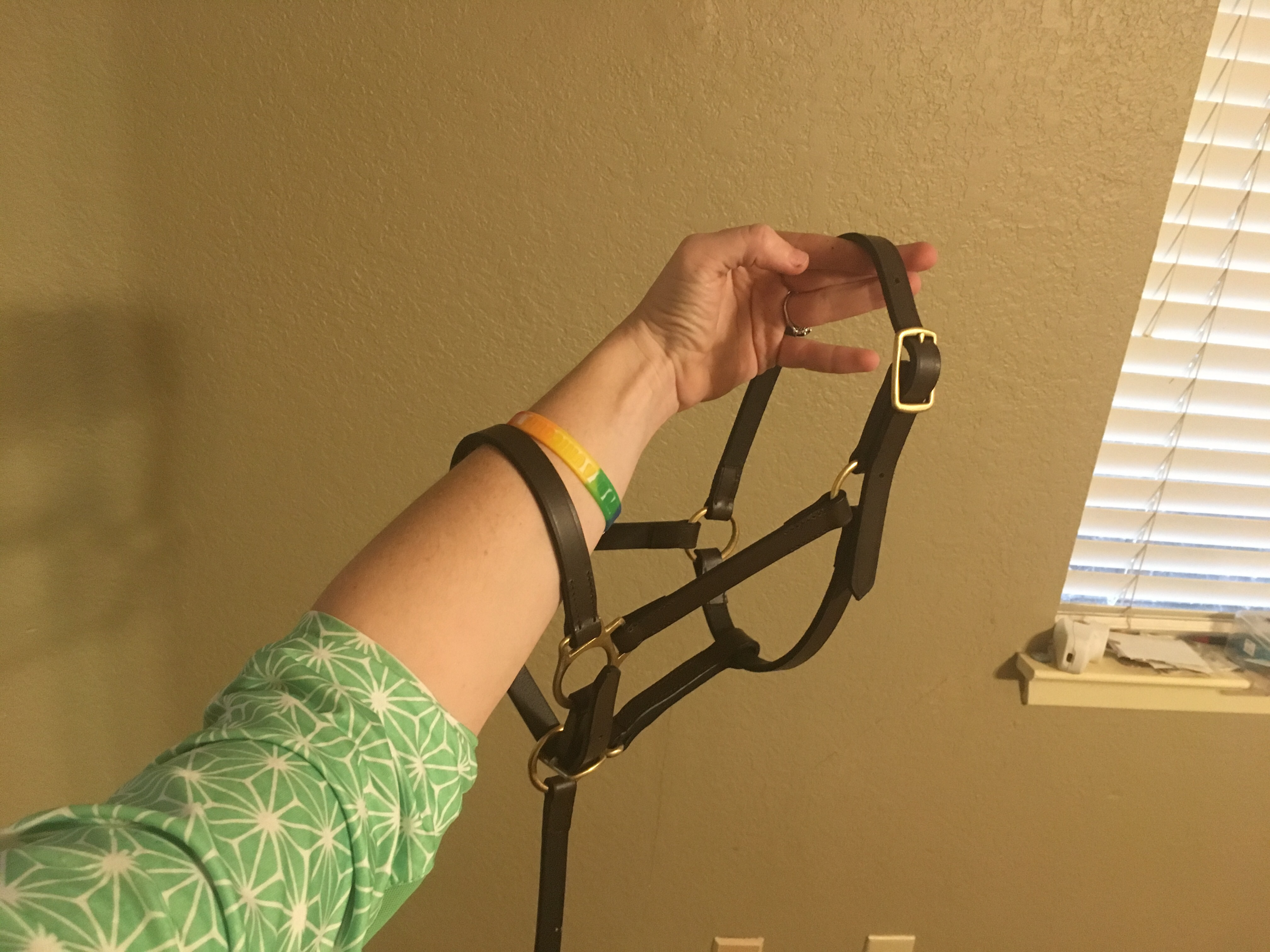
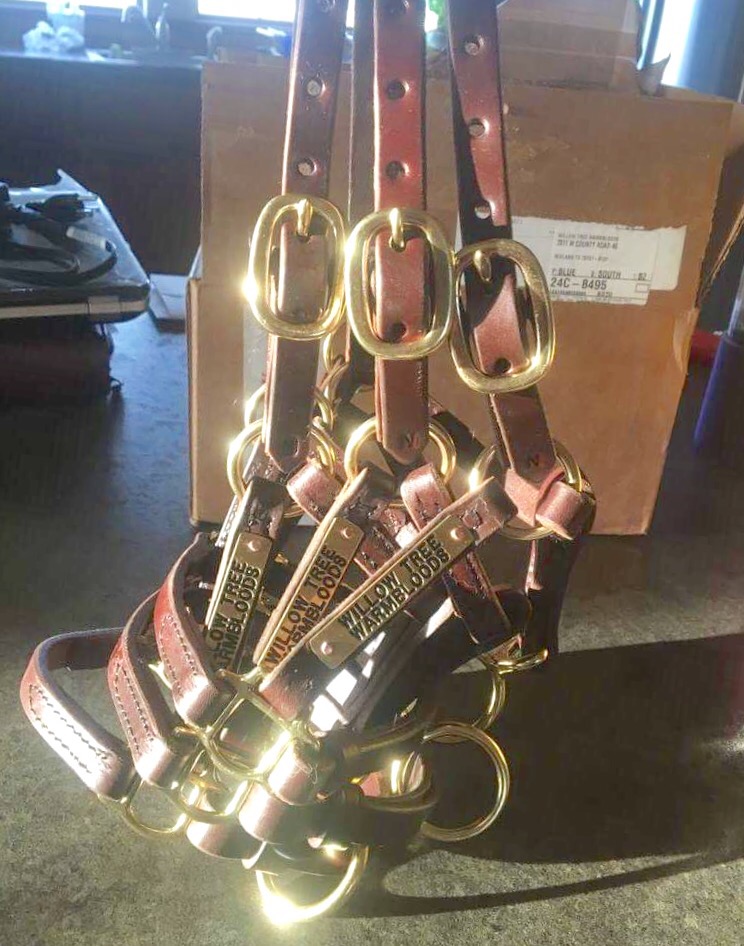
The tack and handler should be subtle. Basic bit and bridle (2yo and 3yo), no full cheeks. Khakis, collared shirt, gloves, appropriate shoes, helmet on handler. Riding attire is ok. Leather halter on yearlings with leather or dark colored lead.
To reposition horse while standing up for confo: if you need to move a hind leg, take one step forward, if you need to move a front leg, move one step back.
Always be aware of where the judge is and reposition yourself and the horse in relation as necessary.
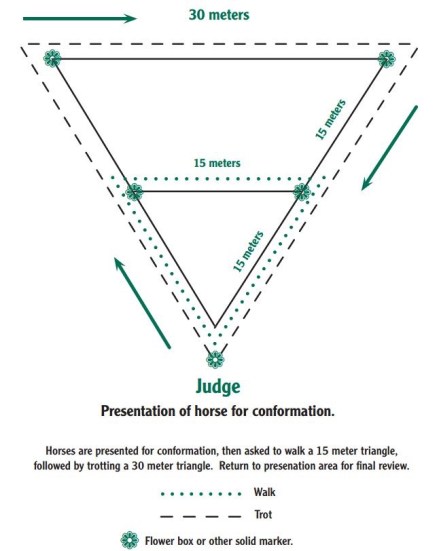
It is very important to move STRAIGHT away on the first and last leg of the triangle (a wiggling horse can sometimes make the horse look like it has a movement defect that it actually doesn’t).
Practice practice practice at home so the horse learns what to expect. Always be patient and take your time.
Just like dressage, the judge can only score what they see on that particular day. Given how quickly young horses change, this can lead to a variance in scores depending on the time of year and stage of growth.
the triangle
I think until you actually do this stuff, it seems fairly simple. You just stand there, then walk, then trot, then stand there again right? Hahahahaha. No. There’s SO much more to it. Presenting horses in hand really WELL is an art form and requires a lot of showmanship, practice, training, and knowledge. Even just a tiny tweak in how a horse is standing or how they hold their head or how straight you can get their body in the trot can make a BIG difference in the impression the horse gives to the judge. I learned a lot of this nuance last summer at Coco when we were practicing our jog-ups, but Eileen had additional useful suggestions, especially when it came to dealing with the short attention spans and sometimes overexuberant behavior of the babies.
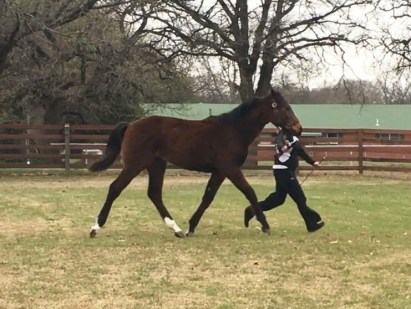
this yearling filly was very well-behaved
In the afternoon we also got to see a 4yo do his YEH dressage test and discuss it as a group, then we chatted a lot about breeding and eventing over wine and then even more over dinner. Eileen and I have similar taste when it comes to bloodlines and stallions, so it was fun to talk to her (and the other clinic participants, of course).
I also heard that there’s a new 4yo FEH class, for those who wish to move at a slower pace with their young horses. The 4yo FEH has an in-hand conformation portion followed by a group under saddle portion (cantering separately). I thought this was a BRILLIANT addition, great for horses that are a bit less mature or just not ready to be jumping courses yet. So the 4yos get to choose between FEH and YEH.
Sunday was shorter, with a “mock show”. Everyone got to apply what they learned the day before and present their horses to Eileen for judging, complete with score sheets. It was fun to stand there and hear her comments about each horse and see what her scores were and why. Definitely gives me A LOT of insight into FEH and will help me decide whether or not I want to pursue those classes with my own horse. And if we DO, now I have an excellent idea of exactly what they’re looking for and how best to prepare Baby Horse for those competitions.
It was a superb and very useful clinic! I would highly recommend something like this to ANY sporthorse breeder, owner, or rider. Totally worth the audit!











 breedrideevent.com