I’ve talked before about how I am the only eventer at my barn, and how, for the most part, it’s actually kind of nice. I’m really one of just a few people there that even rides more than a couple days a week, and definitely the only one dumb enough to show up on rainy days or days with temps below 50. Apparently normal people find those conditions to be undesirable.

Granted, if I was just riding for fun, I probably wouldn’t show up on those days either.
Nah, j/k, I totally would, I’m a glutton for punishment.

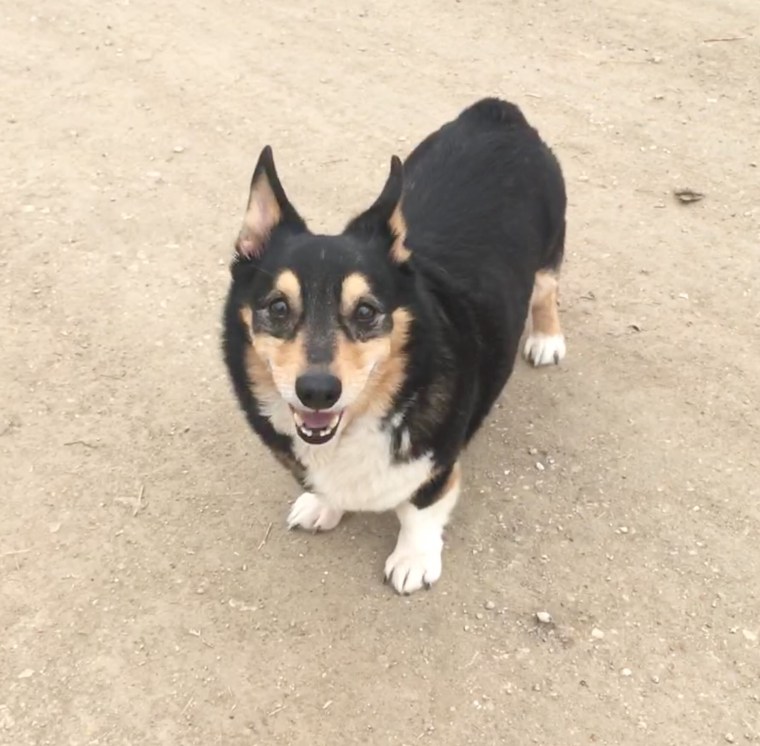
There are a lot of perks to being solitary. I have basically taken over an entire corner of the tack room. I pretty much always have the crossties to myself. I almost never share riding space with another person. I can bring the corgi sometimes and not have to worry about his goofy ass getting in anyone’s way.
The barn owner also lets me put jumps wherever I want, and once I set them, nobody else ever touches them. You know how annoying it is when you spend forever setting a good course, only to come back the next day to find everything taken down to crossrails and all the filler removed? Clearly I don’t have baggage about that kind of stuff at all. (seriously though, I will break your damn fingers)
Of course, the down side to having everything to myself is that I have to drag those damn things around and set them completely… by myself.
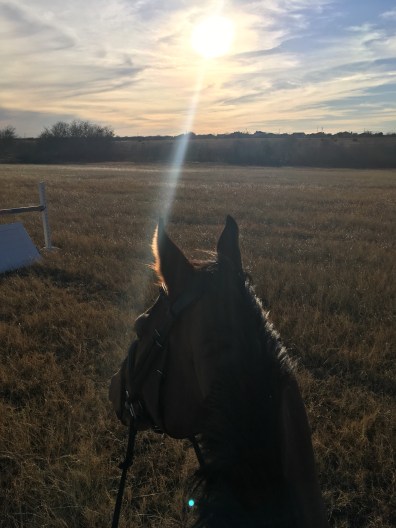
It also means that there is never anyone around when I jump. Not my favorite thing, but I let the barn workers know when I’m headed out to the jump field and tell them that if I’m not back in 45 minutes, please come get my body with the golf cart. I also always keep my phone with me, either on a standard or in my pocket if I can fit it. Not an ideal situation but it’s reality.
This also means that I basically NEVER have media of myself riding at home, unless I prop my phone up somewhere to video and then try to get screenshots later. A media-less blogger is a tough thing to be. Who even reads posts with no pics? No one. Did it happen if there’s no proof? Definitely not. #bloggerproblems
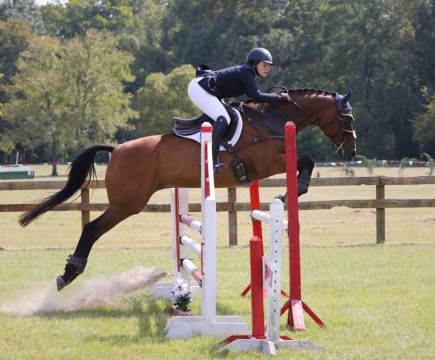
So there I was this weekend, alone, ready to jump school. I was tired of my course (I’m past due for a re-design) but too lazy to move everything around right then and there. What to do in that scenario? I dunno, I figured I’d just jack a couple of them up a few holes. Of course, I have to get off to raise the fences, so I went with the lazy man’s method of setting a 3′ warmup fence, a 3’6″ oxer, a 3’9″ gate, and a 4’3″ vertical. Options, people. Options that don’t require getting off and back on the horse several times.
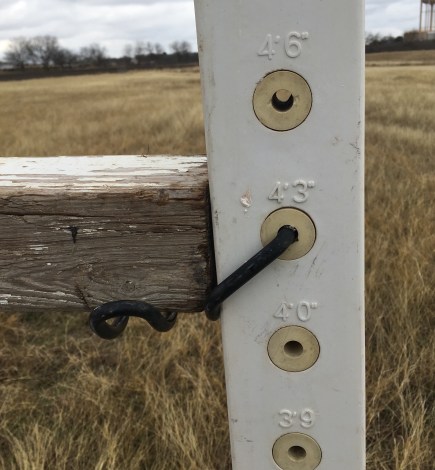
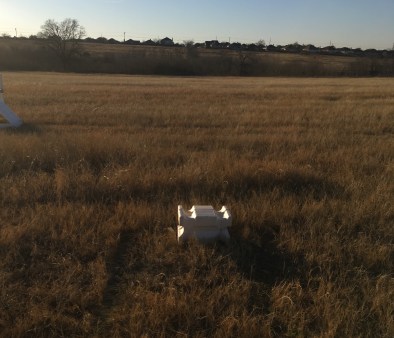
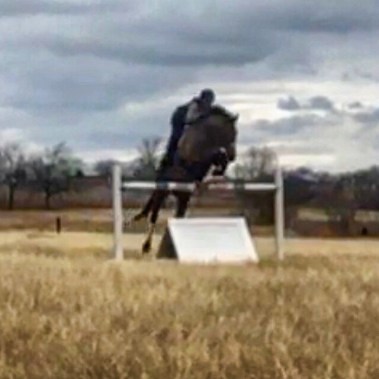
Then I was like well, if we actually make it over that 4’3″ jump without dying, I’m gonna want proof, so I better go prop my phone up on the barrel (the one that acts as a standard for another fence, bc my life is honestly just kind of ghetto) and see if I can get it. Of course that barrel is kinda far away but it was the only propable surface within video distance, since my jumps are in the middle of a giant field.
And well… that isn’t exactly conducive to excellent quality media. You can tell the blur is a horse and you can tell that the blur is jumping over another blur, but that’s about it. Still though, it’s the biggest I’ve jumped this horse and I’m claiming that it totally counts as photographic evidence.
These are the times when I honestly wish I had someone around to video. Or set jumps. Or any of those things that you totally take for granted when you aren’t solitary.
I say that, but I should actually qualify that statement to be more specific, because the SO came out to the barn with me the next day (for the first time in like a year) and the only video he got is a few seconds of some monstrosity that he shot through literally the worst filter ever created by mankind.
That. Is. Terrible.
It is also still blurry.
It is also set to some kind of weird techno beat.
I should probably look more closely at something like a Pixio or a Soloshot (do those even work in big open spaces?), but I think I’m probably way too cheap for that kind of thing. Not sure that I can justify hundreds upon hundreds of dollars, even if it would be a great learning tool, unless someone wants to give me a bag of money.
Until then… just embrace the blur?








 breedrideevent.com