As promised on Monday, I wanted to circle back and discuss “The Tree of Knowledge” that Presto spent many hours tied to last weekend.
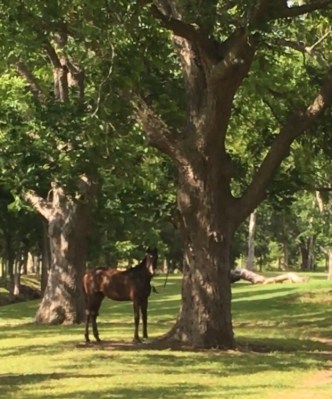
The practice of tying horses out alone is an old one. The cowboy set in particular has been doing this for a long time. Sometimes they use a telephone pole set into the ground, sometimes it’s a special metal pole high tie, sometimes you’ll see someone sling the rope over the rafter of an indoor, and sometimes, if you’ve got a good tree, you can use that too.

The important part is that the horse is tied to a point that is high – above it’s head. This way they can move around however they want and not become entangled, but they also can’t get any leverage to really hurt themselves if they go to pull back. A horse that’s tied at body level can break just about any tie apparatus and do a lot of damage to it’s neck/back, just because the force it can exert at that angle is tremendous. A horse that’s tied to something well above it’s head can’t get much leverage at all.
The point of it is not to torture the horse by leaving it tied for hours, it’s to teach the horse a) to tie reliably, b) patience, c) how to self-soothe.

To me it’s extremely important that any of my horses be able to tie reliably, and be able to be left unattended for at least brief periods of time. This is a skill that, for my lifestyle, is absolutely vital. A horse that can’t do this will eventually get himself or his human into trouble one day, and likely hurt himself in the process. Teaching a horse to tie reliably, from a young age, is doing that horse a real service for the rest of his life, IMO.
It’s also extremely important that a horse learns that once he’s tied, he may as well just stand there and chill. As soon as they’re tied they should put it in park, take a breath, and wait for something else to happen, whenever that may be. Not on their schedule, but on mine. No pawing, no dancing back and forth, no pulling back when they decide they’re done waiting. And more importantly, no worrying about what else might be going on around them. Rudeness and tantrums get you nowhere.
They also learn that no matter what happens or how they act, no one is going to come get them. They might be stressed out about it at first, but over time they figure out that their shenanigans don’t work, so they may as well just relax. That’s self-soothing. They’re not getting their relief from another horse, or from a human… they’re using their own brains to realize that they’re okay by themselves. That’s a skill that goes a long way in getting a horse to be more confident in all aspects of it’s life.
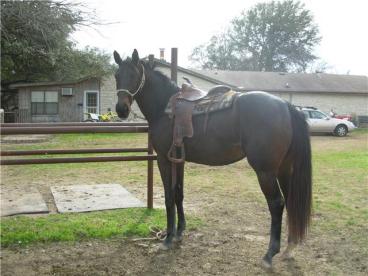
I was first introduced to this concept when Sadie went off to the cowboy for breaking. She was NOT reliable about standing tied, and had learned that she could sit back and break just about anything. It really stemmed from the fact that she was just unsure of herself in general and lacked confidence, especially when she was alone. When she got to the breaker she spent many hours tied to his patience tree, especially those first couple weeks. She pawed, she paced, she had temper tantrums, she attacked the tree, she tried to pull back, she tried to lay down, and made a general menace of herself. And you know what happened?
Nothing.
No matter what she did, she was still standing there at that tree by herself. It didn’t take long before he could take her out to the tree and she would just stand there quietly in the shade until he came back, content to take a nap. She didn’t just learn how to tie or how to be patient, she learned how to simply exist within herself, not relying on outside comfort. The lessons went a lot deeper than tying. I made a mistake by not teaching her those things earlier in her life, and I’m not going to repeat it with her son.
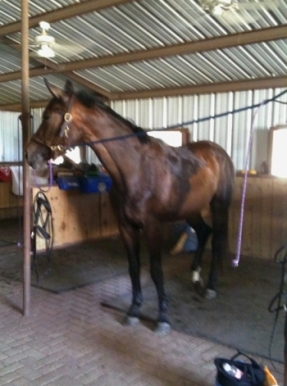
I am a big fan of the concept of patience trees, or as I like to call it, “The Tree of Knowledge”. Because it’s not really just about patience at all.
I still come across people that think leaving a horse standing tied for hours is inhumane. If the horse is standing with it’s head tied high (ie no slack in the rope, forcing the horse to hold it’s head higher than it normally would), or if the horse is left all day with no water, or if it’s unbearably hot and there’s no shade – then I would agree. But if the horse has no real reason to be physically uncomfortable, then he has no reason to be upset about being tied. He’s more comfortable standing there than he would be standing for hours in a trailer, yet we don’t think trailering is inhumane (ok, I’m sure someone out there does…).
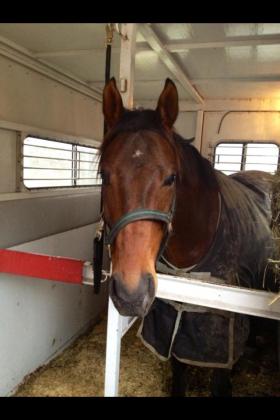
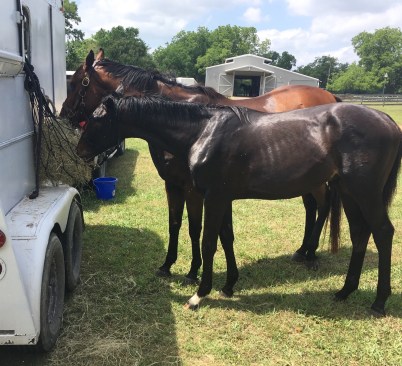
Presto spent about 3 hours each day tied to the tree. At first he was quite mad. He’s pretty solid about being tied so I never saw him try to sit back, but he has not yet learned that the world doesn’t revolve around him and boy did he pace and paw. Eventually the behaviors started to lessen, and he began to accept his fate. He didn’t perfect his patience skills just in those two days, but I think he definitely learned a little bit about how things don’t always operate on his terms. The barn owner built me a high tie in the indoor at home that he will soon become well acquainted with, but I wanted him to log his first few hours on the tree – my favorite place to tie.
I also would not have put him out there if he hadn’t learned some basic ground rules beforehand. First and foremost, he had to know how to give to pressure. I don’t think you should ever tie a horse (anywhere, under any circumstances) that doesn’t understand the very basics of yielding to pressure. He’s also been required to stand tied for decent periods of time with me in attendance, so standing still isn’t a foreign concept either. We built up to it in a way that I felt was fair to him. The only thing different was that this time he had to do it alone.

Some people don’t agree with this approach, and that’s ok. Different strokes for different folks. But for me it’s been a really valuable method that has made a big difference in my horses, and that’s why I do it. At the end of the day, it’s my responsibility to make the horse into a solid citizen, and that’s a responsibility that I don’t take lightly at all, especially considering I’m the entire reason this horse is even on this planet in the first place. I’ll do the best I can with the lessons I’ve learned from past mistakes, and hope that he learns what he needs in order to have the best possible life, no matter what.









 breedrideevent.com