Unless you live under a social media rock, you’ve probably heard something in the last few weeks about the new MIPS technology Trauma Void™ EQ3™ helmets that Back on Track® has started distributing. It should be of no surprise to anyone who reads this blog that I was all over this thing like white on rice. Safety technology as it relates to horse sports? Right up my nerd alley. MIPS technology isn’t totally new to me, being a cyclist as well, but I wasn’t as familiar with all of the specifics as I wanted to be, as a consumer. So first I had to learn more about what exactly MIPS technology IS, and what it isn’t. This video is relating to cycling helmets, but I think it does an excellent job at explaining what MIPS is and how it works:
First thing to note: MIPS has nothing to do with standard impact protection – ie what all that padding in the helmet does. Your regular impact protection comes from that good ol’ EPS (Expanded Polystyrene) foam layer that is in all helmets. The EQ3 helmet still has that, just like any other helmet. What the EQ3 helmet also has, that no other equestrian helmets currently available in the US have, is a MIPS layer, which is designed to reduce the rotational forces caused by angled impacts. Traditional helmet testing mainly uses straight-force impacts, but as anyone who has fallen off enough times knows, the majority of our actual blows to the head come from angled impacts.
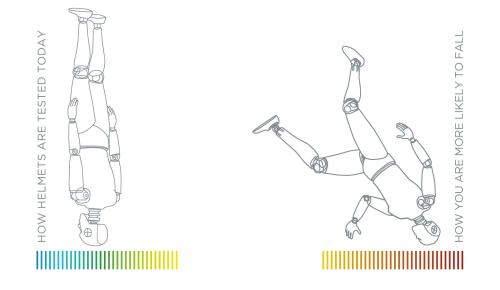
Okay, so what’s the difference in these impacts as far as how they relate to head injuries? Mainly something that MIPS calls “brain strain” (this is where it’s important to note that MIPS technology was developed by scientists – including a brain surgeon and a dude with a PhD on head and neck injury biomechanics). In their words:
From an engineering perspective, rotational motion is a combination of rotational energy (angular velocity) and rotational forces (angular acceleration) that both affect the brain and increase the risk for minor and severe brain injuries. The reason that the brain is more sensitive to rotational motion is that the brain is very much like water or a gel when it comes to its shear properties. The brain, like water, is also incompressible. Therefore, a linear motion will not affect the brain as much as a rotational motion.
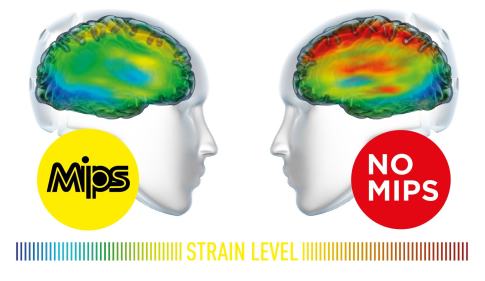
Common injuries that are proven to be linked to the rotational forces caused by angled impacts? Things that probably sound familiar to equestrians, such as subdural hematoma and concussion. The MIPS layer has been designed to reduce these rotational forces, thus, hopefully, reducing the subsequent injuries.
MIPS is basically just a thin layer that is between the EPS and the helmet liner itself that allows the helmet to rotate a few millimeters in any direction around the head in the case of an angled impact. This decreases the rotational forces on the brain itself.
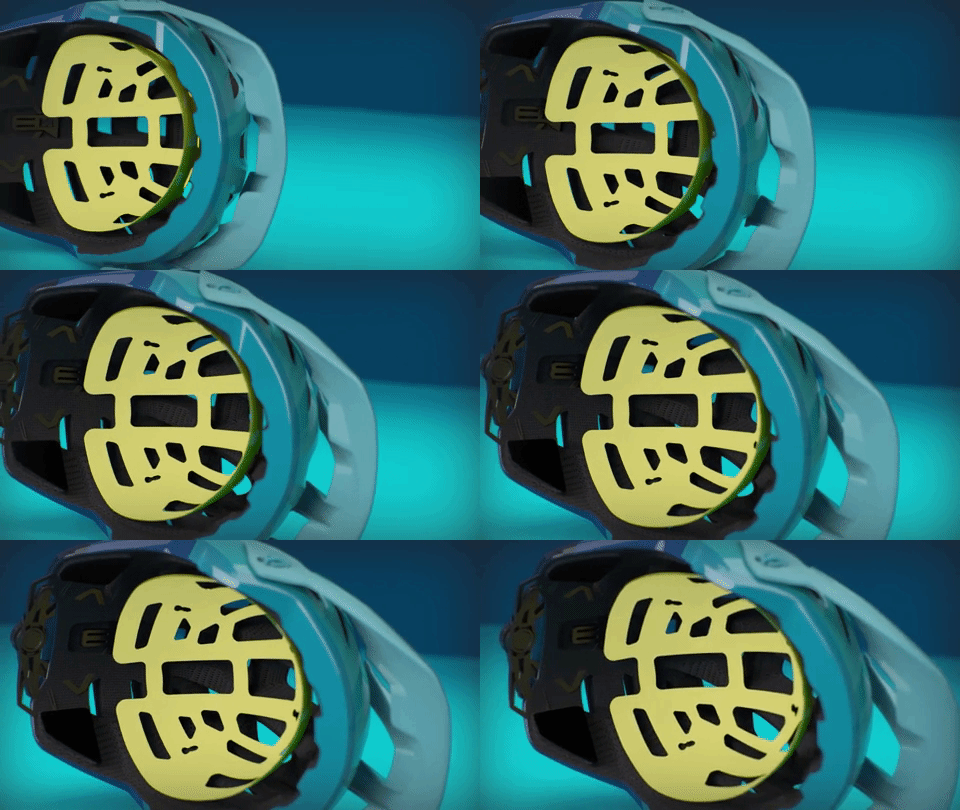
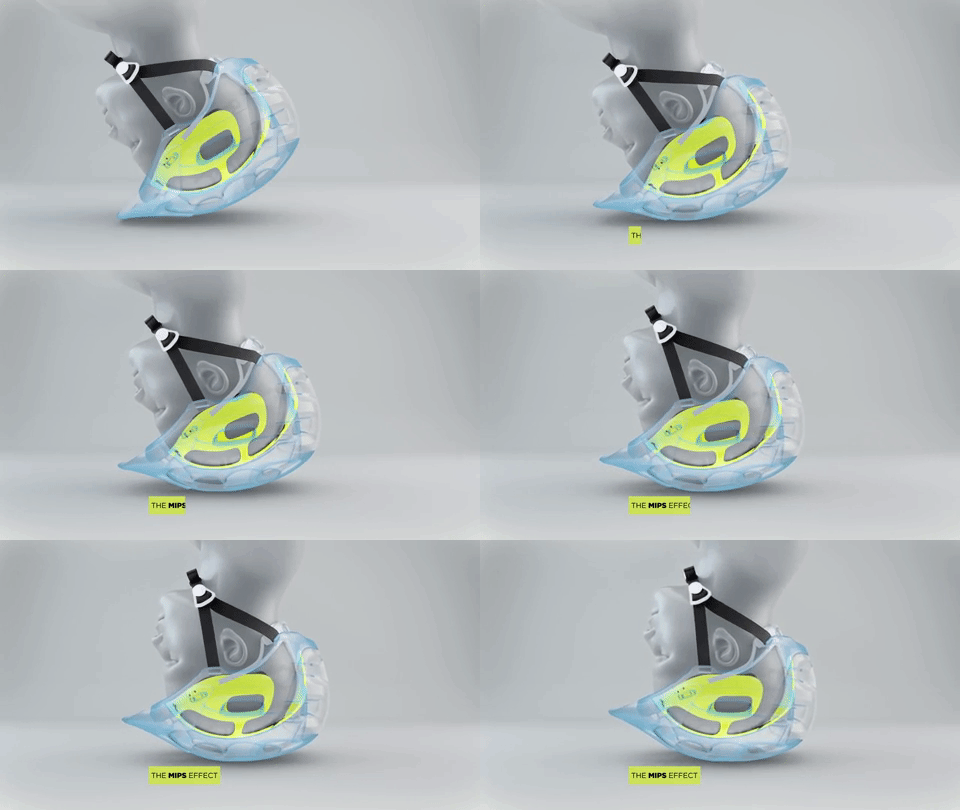
MIPS technology has also been used in cycling helmets, motorcycle helmets, and snow helmets. Originally it was introduced into equestrian helmets in Sweden, via the EQ line, where they have been in use for the past few years. This is the first time that this helmet technology has been available in equestrian helmets here in the US.
By this point you’re probably either buying into the technology or you’re not. If you want to read more about it, there’s plenty of info here. Or just… Google in general. It’s all over the internet. The studies conducted by MIPS have shown that it does actually help decrease these rotational forces. On that same point, you also have to understand that our current testing standards for equestrian helmets (for SEI/ASTM, for example) do not test for things like this. I’ve talked about it here before, but there is a ton of room for improvement in our helmet and safety vest testing methods. For real, look into it, you might be shocked. Alas… that’s a different topic entirely.
I personally am extremely interested in the MIPS technology, and really eyeballing these helmets hard. My “schooling” GPA is nearing the end of it’s lifespan, which means I will soon need to be looking for a replacement. Of course, even scouring everything that I could find about the helmets online left me with a lot of questions. I sent an email to Back on Track, who referred me to the design company, Trauma Void. I was able to get a phone call scheduled with Maria, who was infinitely helpful (and patient) as I spent half an hour asking her questions. So, here are some of the things I learned.

One of the first things I wondered, when I understood how MIPS technology worked, was whether or not the helmet would “jiggle” during regular riding. Maria said that she had wondered the same thing as well, but that she and the rest of their staff have been wearing the helmets and no one has noticed any movement, nor have they had any customers comment on it.
What about weight? Does that MIPS layer make the helmet weigh more than most helmets? The MIPS website says that the layer is very thin and weighs between 25-45 grams (so 0.0551156 to 0.099208 pounds). Not significant. Maria went a step farther and weighed an EQ3 helmet in each size for me so I could compare it to something more “known” to us on the market. The EQ3 helmet weighed in at 1.25-1.5lbs, from smallest size to largest size. I weighed all the helmets I could get my hands on (for science!), all in sizes 7 1/8 to 7 1/4, and they came in like this: GPA Speed Air weighs 1lb, Charles Owen JR8 weighs 1.2, Samshield ShadowMatte weighs 1.2, and Charles Owen 4 Star weighs 1.4. So based on that, there is little to no difference between a “regular” helmet and the EQ3. It may even weigh a bit less than a skull cap.

Because the helmet is being distributed by Back on Track, a lot of people seem to think that some kind of BOT material or product is incorporated here. Don’t worry, head-sweaters, that’s not the case. The liners are made of a Coolmax® material and are machine washable on the delicate cycle. There will also be replacement liners available for sale separately.
Another interesting feature of the EQ3 helmet is a brim that is more flexible than your standard brim, to allow it to bend and flex as needed upon impact, making it less likely that the helmet will shift out of place on your head or cause an irregular impact pattern. On the “smooth” style helmet this brim is covered in a PU (leather like) material, and on the microfiber helmet it is covered in microfiber.

And then of course, the thing we all want to know: how does it fit? Trauma Void says that the helmet tends to fit a bit more on the round side, but they were quick to point out a couple things. First, the helmet comes with two liners, a thicker one and a thinner one. These liners are fairly moldable, and between the two options they have been able to get the helmets to fit properly on most of the people that have tried them. They also offer a 14 day return policy if the helmet does not fit, or if you need to exchange for another size. Currently they are only available up to size 7 1/2, but they might be open to expanding the size range later on if there is enough demand (so those of you who need a larger size and want one of these helmets – EMAIL THEM and let them know!).
The helmets have four vents, two in the front and two in the back. Reports that I’m seeing so far from early users are that the ventilation feels similar to a OneK. Of the two different styles, the smooth comes in navy and black and the microfiber comes in navy, black, and brown. The Microfiber has a slightly glittery piping (black on the black helmet, a slightly lighter shade of blue on the navy helmet, and a golden color on the brown helmet), for those who are looking for something with a little more pizzazz.
At $249 the price seems pretty reasonable to me, all things considered. They also offer reduced pricing on replacement helmets in the event of a fall. You have to register the helmet online within 30 days of purchase, after which point you’re eligible for 50% off a replacement helmet in the first year, or 25% off in the second year.
Whether or not you like the helmet, they are definitely interesting. If nothing else, it’s a fun new technology to geek out over and have discussions about. Within the cycling community I’ve heard a lot of good things about the MIPS technology so far, and I definitely look forward to seeing how it applies to horse sports.
What do you guys think? Anyone bought one yet?
Also Maria gave me carte blanche to email her with any other questions, so if you have any feel free to hammer away and I’ll try to get them answered for you!