I always use Memorial Day sales as a perfect time to stock up for summer on whatever it is I may need. Fly stuff, hoof stuff, coat sunscreen, sunshirts, treats, whatever will give me the will to survive the next 4 months, etc etc. You know. That kind of thing.
Unfortunately I don’t have enough time to sit down and come up with a fully comprehensive list for you this year, but I’m dropping in long enough to point you at one that I always take advantage of every year.
Riding Warehouse is launching their sale today, and it runs through May 27. They’ve got 20% off lots of stuff (tack, horse care items, clothes, etc etc) and an additional 15% off clearance (which is totally worth digging through). When I’m perusing RW I always go to the New Picks page first, to see what’s new obviously, and then to Clearance. That’s my natural trajectory for fun times, 10/10 recommend. There are items in the New section that are on sale too! The Aubrion sun shirts look interesting, has anyone tried them yet?
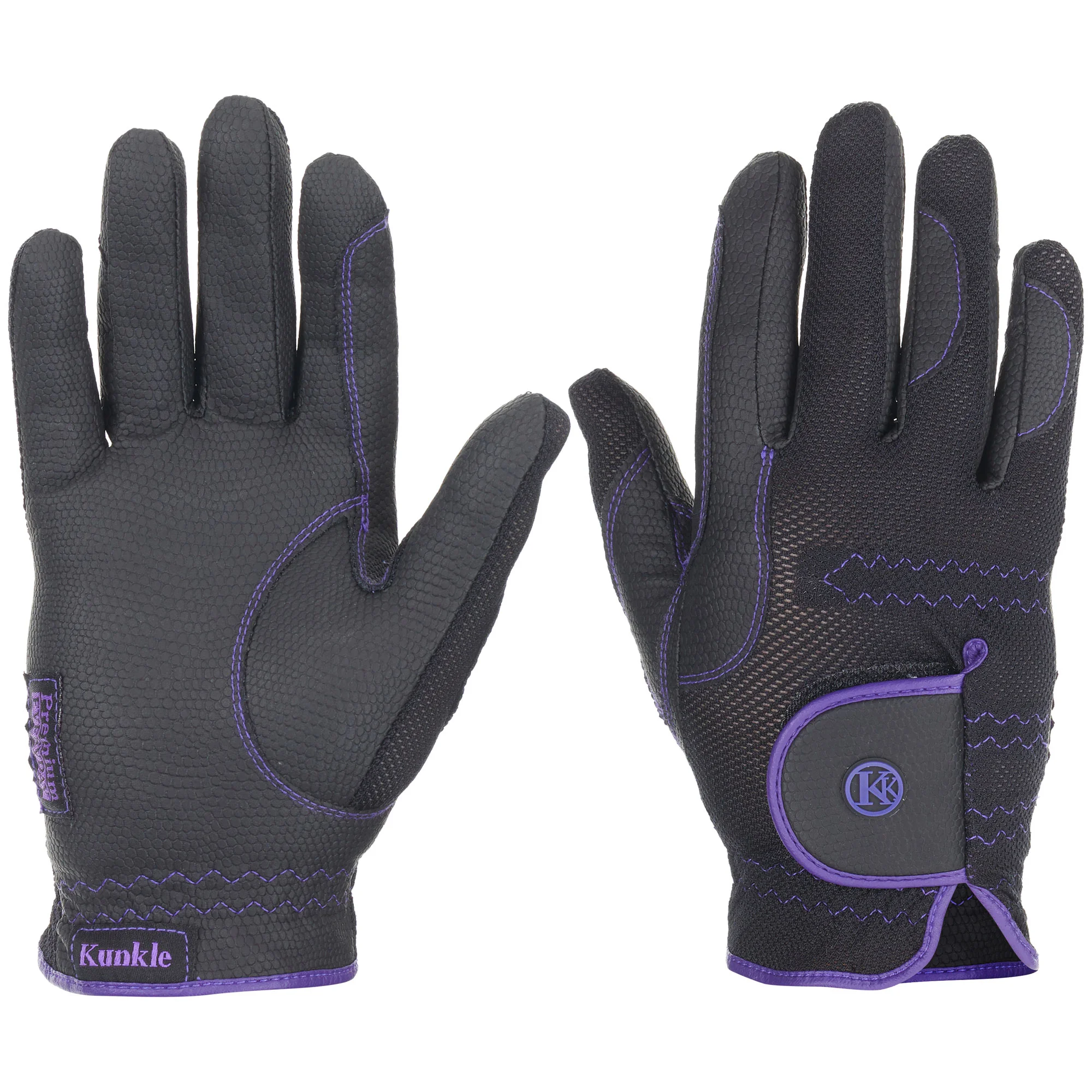
I just got these Kunkle gloves with the purple trim and really like them so far. Review coming as soon as I’ve worn them more. The sale price is really exceptional, though, if you want to snag a pair.
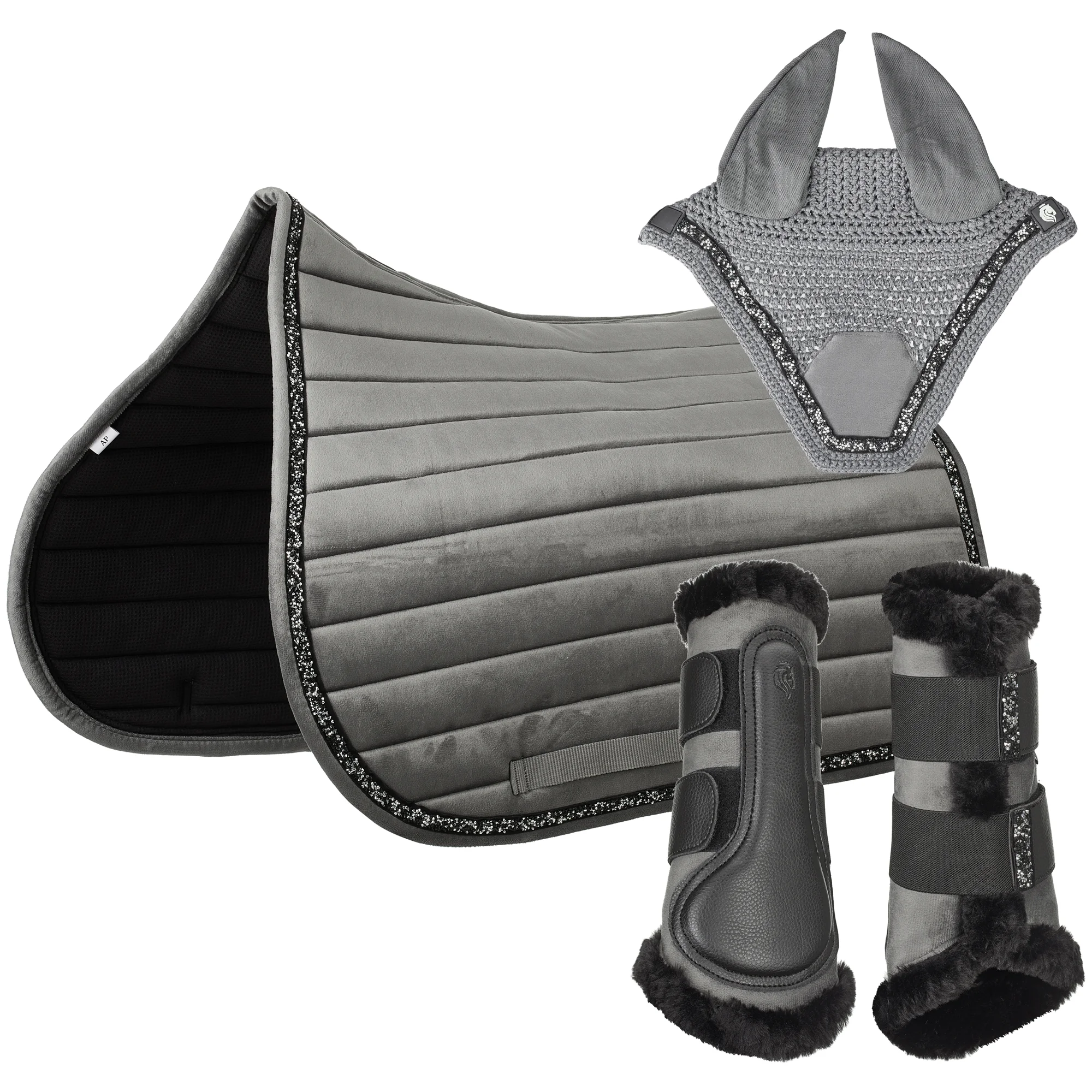
For some reason I can’t explain, because I’m generally not one to fall prey to saddle pads nor am I a lover of mathcy sets, I really think this would look adorable on Lottie. Except for the fact that her head is TINY and the bonnet would therefore probably be too big. Someone else get it and let me stare at pics of it on your horse. Think of it as a public service.
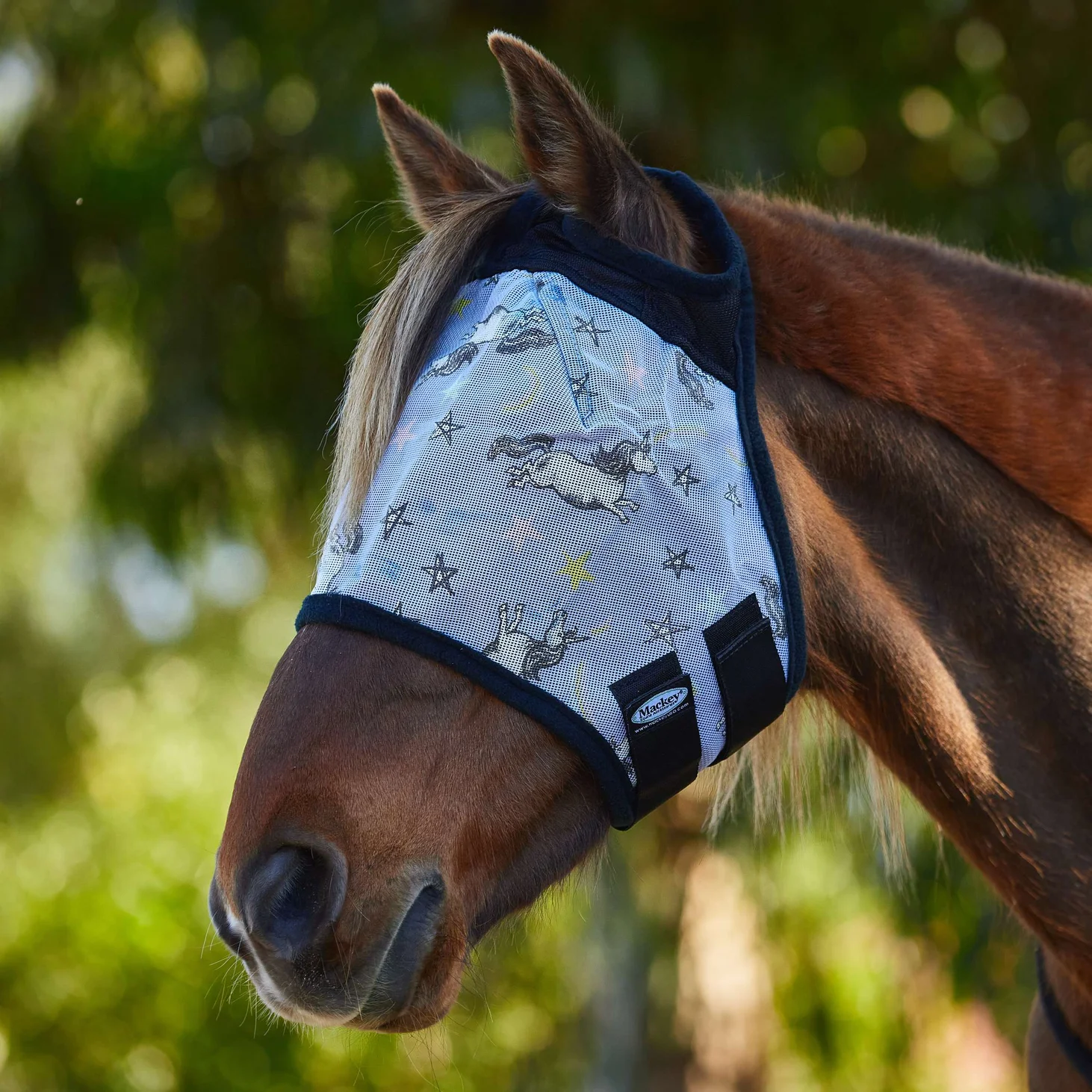
It also comes in black and gold, which if it was black and silver I might just go ham and get it for Presto, but he’s not a gold kind of guy. Alas, I will probably be confined to all the practical things this time around (add to cart fly spray, German Horse Muffins, salt, Back on Track liniment, and some more Quick Knots). The flies are fuckin TERRIBLE this year. Which reminds me, Lottie’s teeny head needs a fly mask that fits. I feel as though she might need the unicorn one.
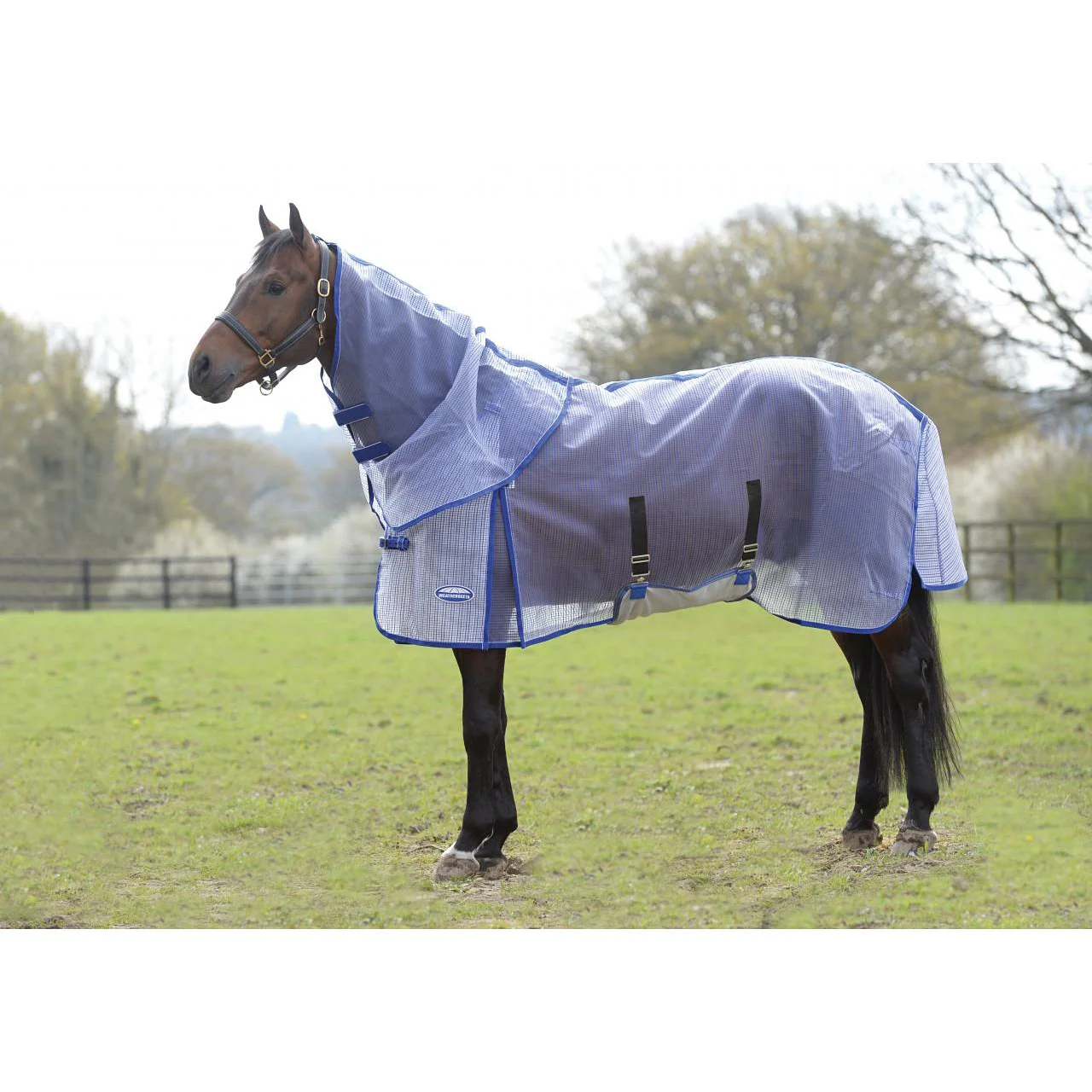
I got Presto this Weaterbeeta fly sheet last year and it’s held up REALLY well to his antics, so I’m debating getting another one in a (much) smaller size for Lottie. It’s a bit hot in Florida during the summer for fly sheets, but I use them a lot in the spring and fall. I need to measure her, she’s a dainty beast.
On the subject – does anyone have a favorite shampoo for greys? I haven’t owned one since back in the day where Quicksilver was literally the only option, and I never loved it. There are so many more choices now, I’m open to suggestions.
I see lots of sunshirts and tights in the clearance section too, if anyone is feeling the need to get themselves prepared for the sweaty depths of summer! Lord help me, who knows what all is gonna actually end up in my cart by the time I finish wading through the sales…
We’re now 3 weeks into my broken ankle debacle, and there are several bits of good news.
Firstly, I’m pretty freakin good at negotiating everyday farm stuff now with my peg leg (aka hands free crutch, if you want to call it by its real name and take away my pirate status). Leading horses is still a bit sketchy because I’m a slow and unbalanced, but I can do it in a pinch. I’m still feeding and cleaning stalls and doing hay and all that stuff, so at least I’m not totally useless. The ankle is feeling a lot better, and while there’s still some green and black bruising, the swelling is almost gone. Yesterday I spent some time in the house in my walking boot, and while I’m not ready to switch over to that full time yet, I think I can start easing my way in that direction. Having two legs back… it feels so close.
a good girl
I’ve also been stable enough to at least spend some time with Lottie. I can’t lead her all the way up to the main barn/crossties yet, but every day I groom her and fly spray her and put stuff on her feet. I’ve convinced her that cookies are good, and while she still takes tiny bites and only eats German Horse Muffins, it’s a solid start.
She loves her groomies and is slowly but surely starting to show a little bit of personality towards me. I think mostly she’s decided that the lady who feeds her and gives her treats and gives her lots of face rubbies can’t be all that bad. Step one of convincing her to love me. I am determined to make it happen.
Pretty sure she thinks I’m a nutter
In other good news, I was able to ride! FINALLY. I strapped my bareback pad to Henry, climbed up onto a truck tailgate, and swung aboard. God it felt good to be back, even if I just trotted and cantered around for 5 minutes. I hate being out of my routine and feeling like (yet again) I’ve lost all my momentum.
a good boy
I’m not deluded enough to try to get on Presto until I can actually walk properly and at least put both feet in the stirrups, but it’s a start. A start I desperately needed because I’m gonna be honest this sucks and I hate everything about it. Progress though. Slowly but surely.
Presto is getting a few rides a week from friends and seems equal parts pleased with his mini-vacation and really really bored from his mini-vacation. The Presto Paradox, born of his own poor life choices. What else is new.
Other than that, I really don’t have a lot to share. We’re still breeding mares and still doing pregnancy checks… I’ll update all that here at the end of the season. We’re getting close to but we’re not done yet.
Guys. I’m super fucking over having a broken ankle. It’s annoying. I’m irritated. I hate everything about it. I want to ride. Hell, I want to be able to lead a horse. And just go about my day to day chores without taking 900 years and/or falling over. Gaaaaah. Last week I got the “foot” of my peg leg stuck in the hay pallets and went boom like a tree felled by a lumberjack.
Anyway. Done complaining for now. Maybe.
Mom and son
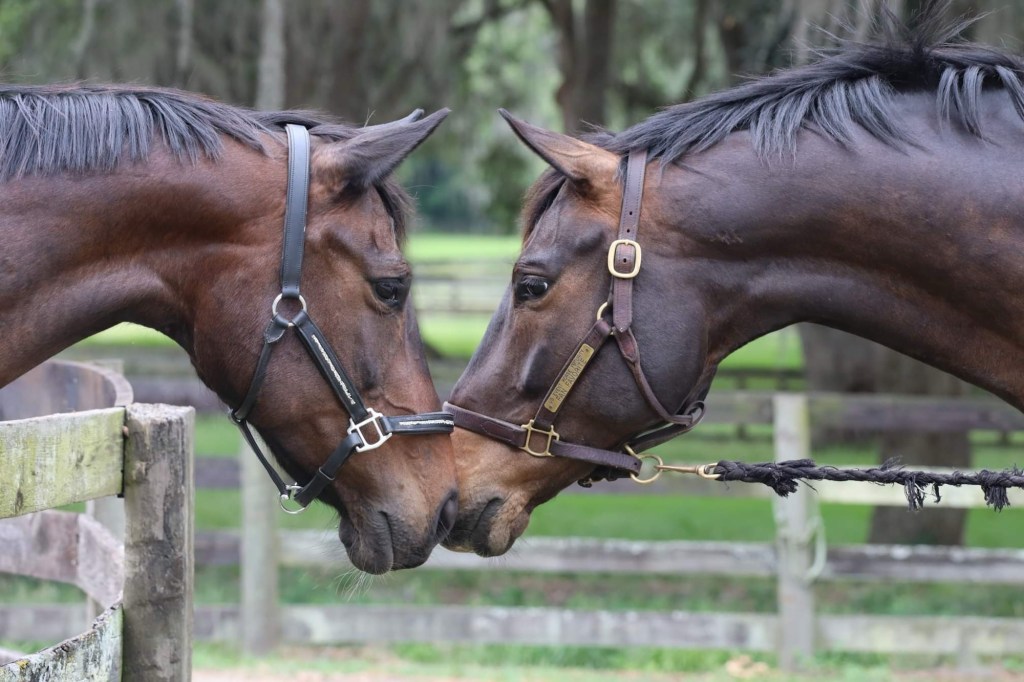
I finally got a pic of Sadie and Presto together, on her 17th birthday, which was also Mother’s Day. It’s really cool to see them next to each other. When I can actually stand on two legs again we’ll have to get some pics of them standing side by side, but for now the head shots are freaking adorable. It’s totally insane to think that was 2005 when I bought the breeding that produced Sadie, 19 years ago. Nineteen. Bonkers.
In related news, Presto has at least been able to stay in some kind of work while I’m on the IR list, thanks to my friends!
Lija dressaging him up
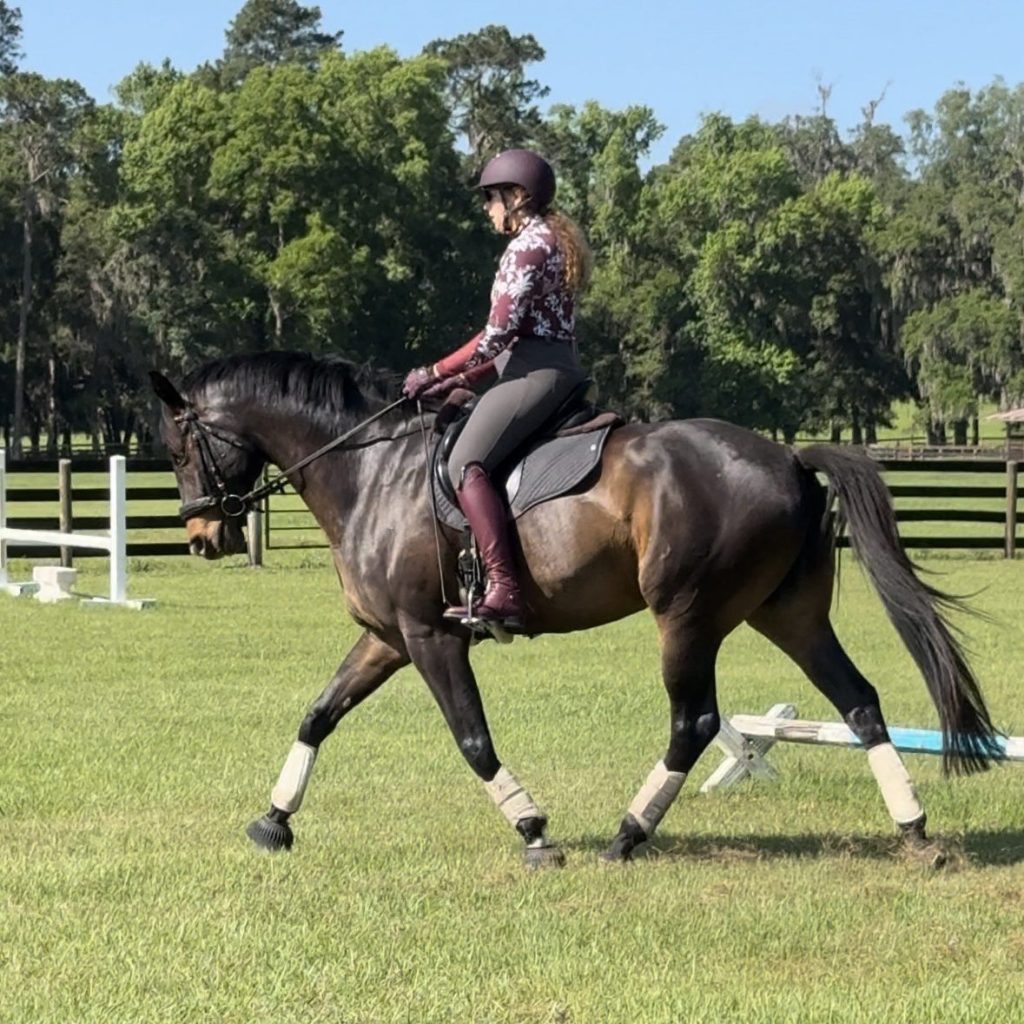
He’s had a few different people riding him, which I’m super grateful for and so is he. Idle Presto is not a happy Presto (as I tell him daily “maybe you should have thought about that before you yeeted me into the ground” and “you fucked around and now you’re finding out” and “it’s called consequences, my dude”).
It’s not as much work as he’s usually in, but it’s absolutely waaaaaaay better than nothing. I’d hate for him to just sit and lose all of his fitness. Plus it’s good for him to be ridden by other people. He does feel as though there has been a severe lack of jompies in his life, tho. Please see above oft-repeated phrases in parentheses.
Lottie Durrr
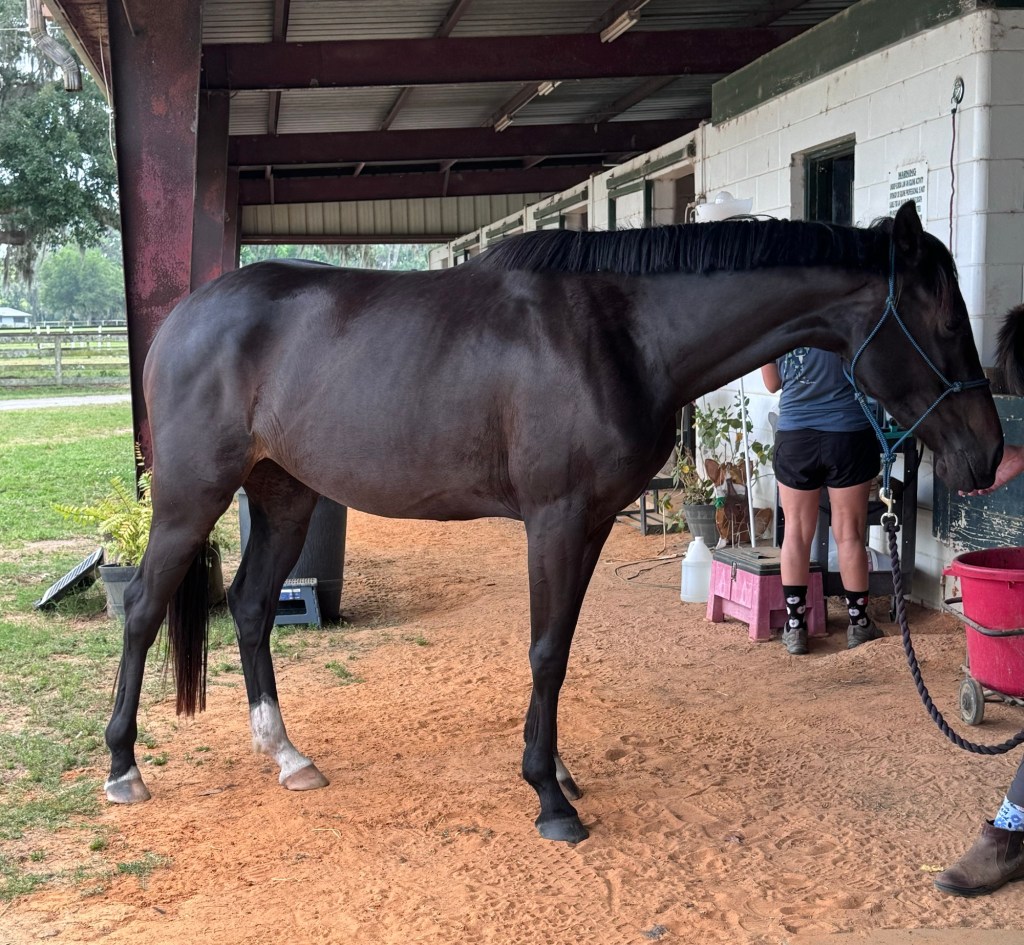
In other news, Lottie has been here for a week now. It annoys the heck out of me that I can’t be doing all the stuff with her that I’d like to be doing. I planned on giving her downtime from riding, but if I was able to actually stand solidly on two legs I’d be bringing her in and brushing her and spending time with her at least. Now our interactions are limited to feeding and a quick groom/fly spray in her stall every night. Sigh.
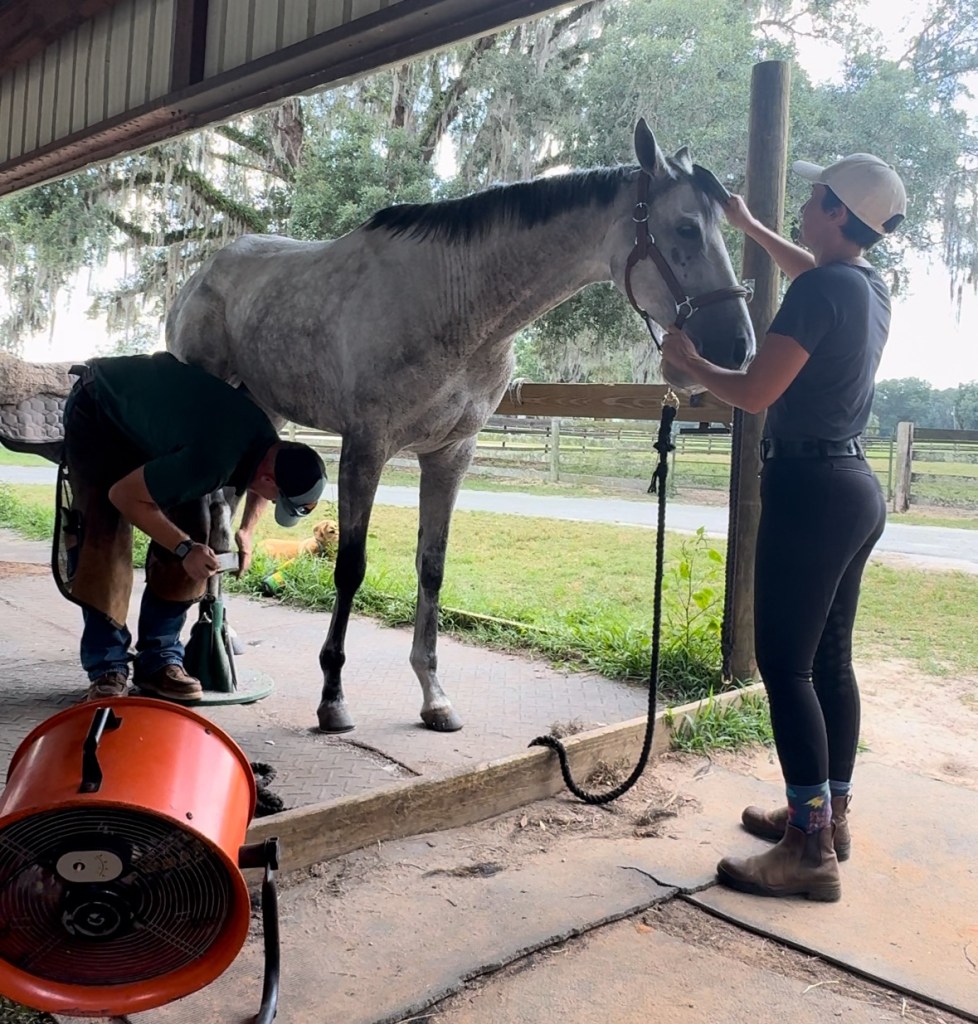
But once again my friends have been helping. She got her feet done last week, the farrier got here literally right as the hauler was pulling in, so we just went ahead and did her feet that day. Her angles are special, so may as well get started on those asap. Hillary held her for the appointment since we didn’t know how she would be, but Lottie was a superstar. Really quiet and sweet and well-behaved, especially considering she just got off a trailer.
Lottie’s first chiro appointment
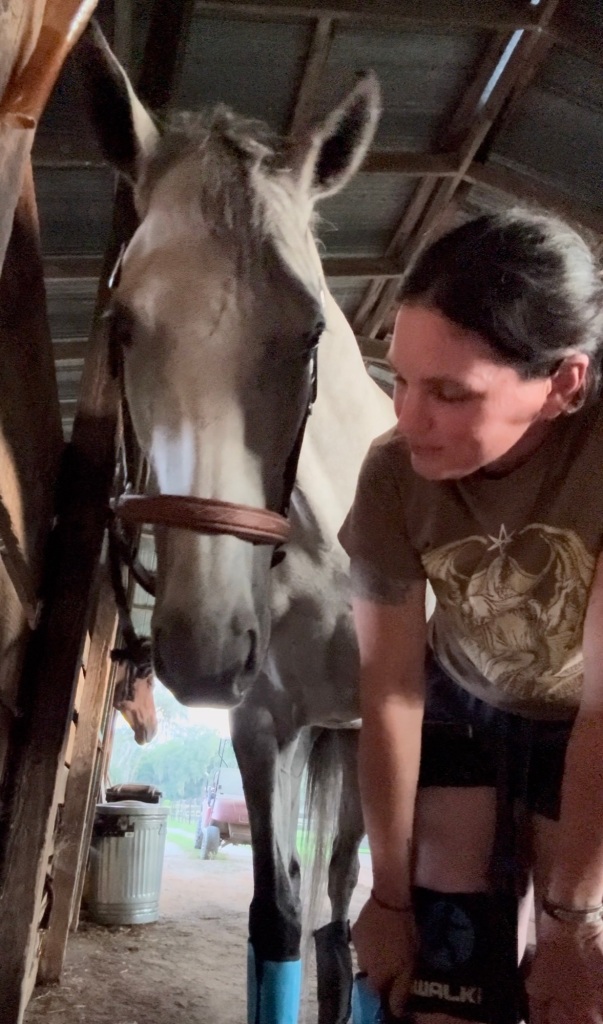
The next day our vet was coming out anyway to chiro another horse, so I went ahead and had her do Lottie also. She’s QUITE sore, which is to be expected from a 7yo racehorse that spent two days hauling across the country.
Once again Lottie was really well-behaved for her appointment (Michelle held her this time), even if she had no idea what the vet lady was doing to her. Lottie thinks we’re all a bit odd here.
So far it’s been hard to get a good read on her personality. She seems really reserved, and like she’s always seen humans as being transactional. Shes a good girl, but a little bit robotic in how she interacts. I’m itching to be able to bond with her a little bit to see how her personality starts to come through.
She can move tho
In other other news, we’ve been scanning and breeding mares like nobody’s business. So far we’ve bred Peyton, Vee, Chanel, Gossip, Sadie, and Fey (all WTW foals except Fey, that one would be mine). And we’ve still got 3 or 4 more to go.
Fey is looking like a real horse
Give us your best “black dot” vibes for all these upcoming pregnancy checks! It would be nice if we had lots of babies on the ground next year, especially since some of the mares are getting older and toward the end of their breeding career.
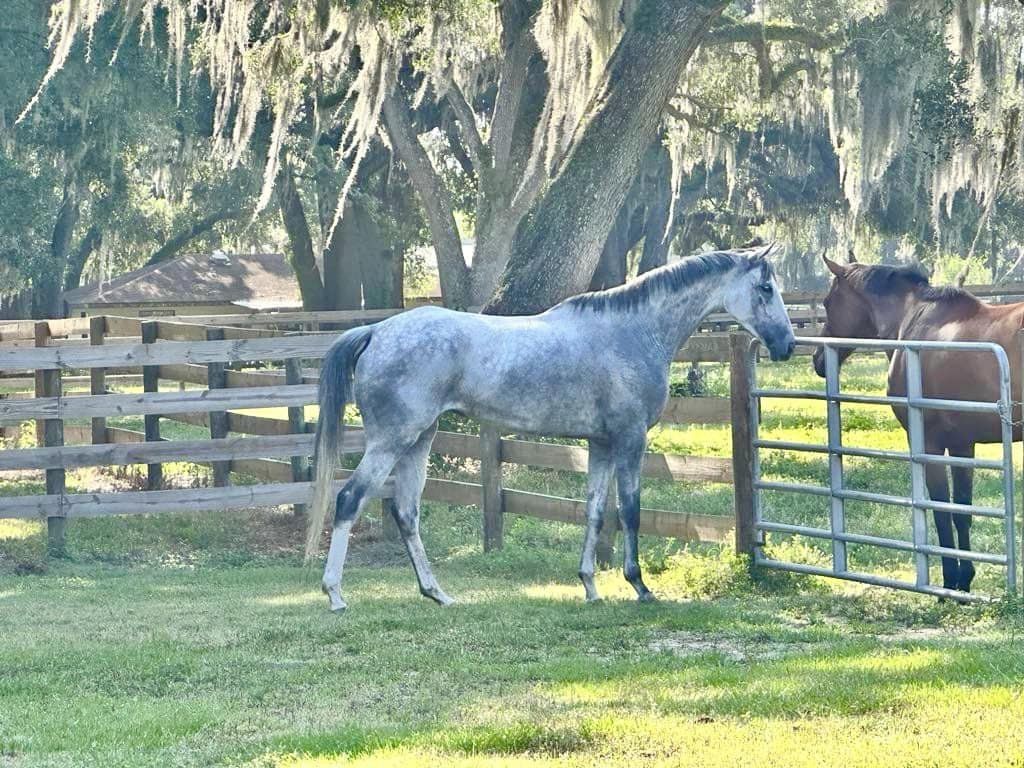
The eagle has landed! And by eagle I mean gray TB mare, Gospel Carlotta. I’m calling her Lottie.
Before we can officially embark on the Lottie adventures, I feel like I must introduce her properly. And because you’re on the blog space of a pedigree nerd, that introduction surely must include a deep dive into her breeding and heritage. Who is she, where did she come from, and why did I like that pedigree so much? Let us begin.
pretty girl
Lottie is 7 years old, raced 29 times, was bred and has been owned her entire life by Oklahoma breeder/trainer/owner Steve Williams. He also trained her throughout her entire career, and that’s who I bought her from. She has always been based out of his farm in Oklahoma, and only raced at Oklahoma racetracks. She won once at Remington Park, twice at Fair Meadows, and once at Will Rogers.
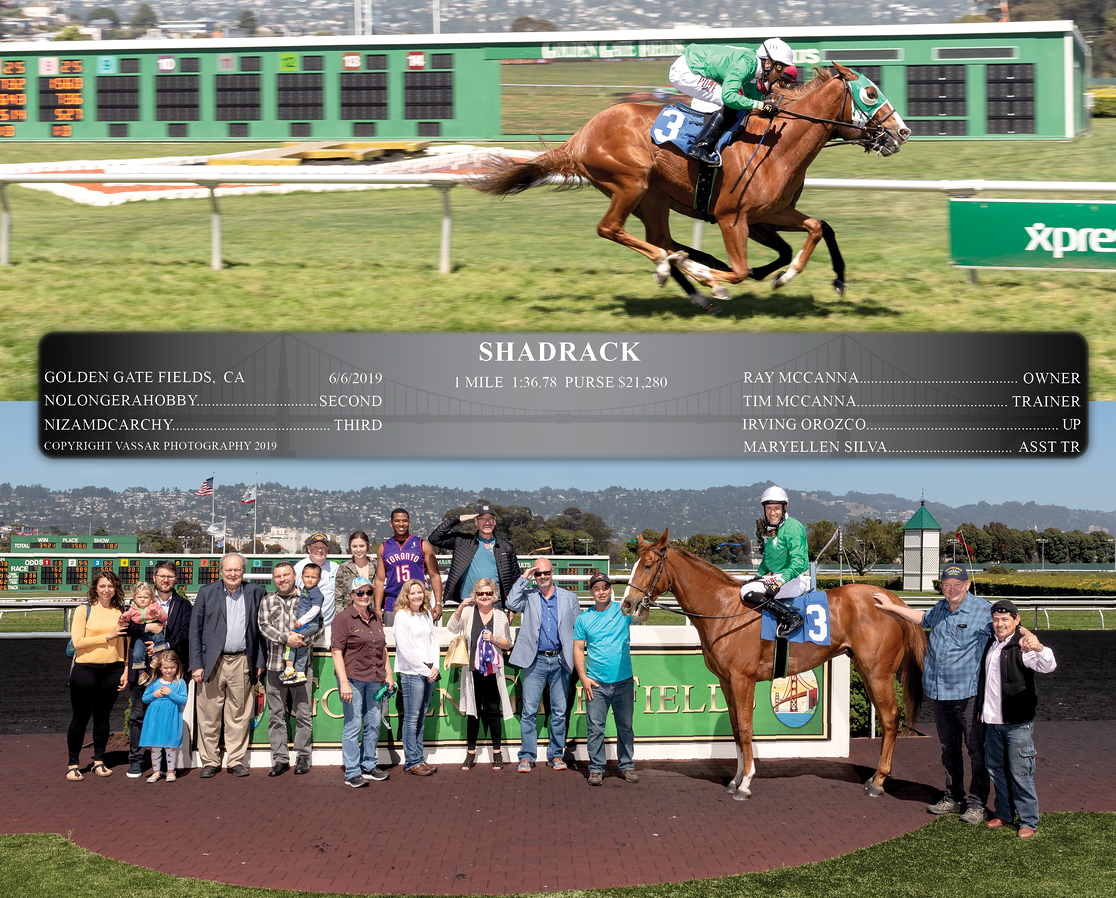
I’ve contacted the track photographers about trying to get win photos but am still waiting to hear back. Her running style was always to come from far back – she was often just a hair slow to break, and would tuck in until the far turn, where she either fired or didn’t, and either was able to pass horses or not. She won a lower end Allowance in 2021 but has mostly been running in cheap claiming races. Her last race was on April 2nd, where she finished last of six.
Her sire, Gospel Tiz Key, never raced and never stood at stud publicly. He was bred in Kentucky by Adena Springs and sold as a 5yo “race or stallion prospect” to Steve Williams. Gospel Tiz Key only had about 30 offspring, all between 2017 and 2021 and all bred by Steve, who uses the Gospel prefix.
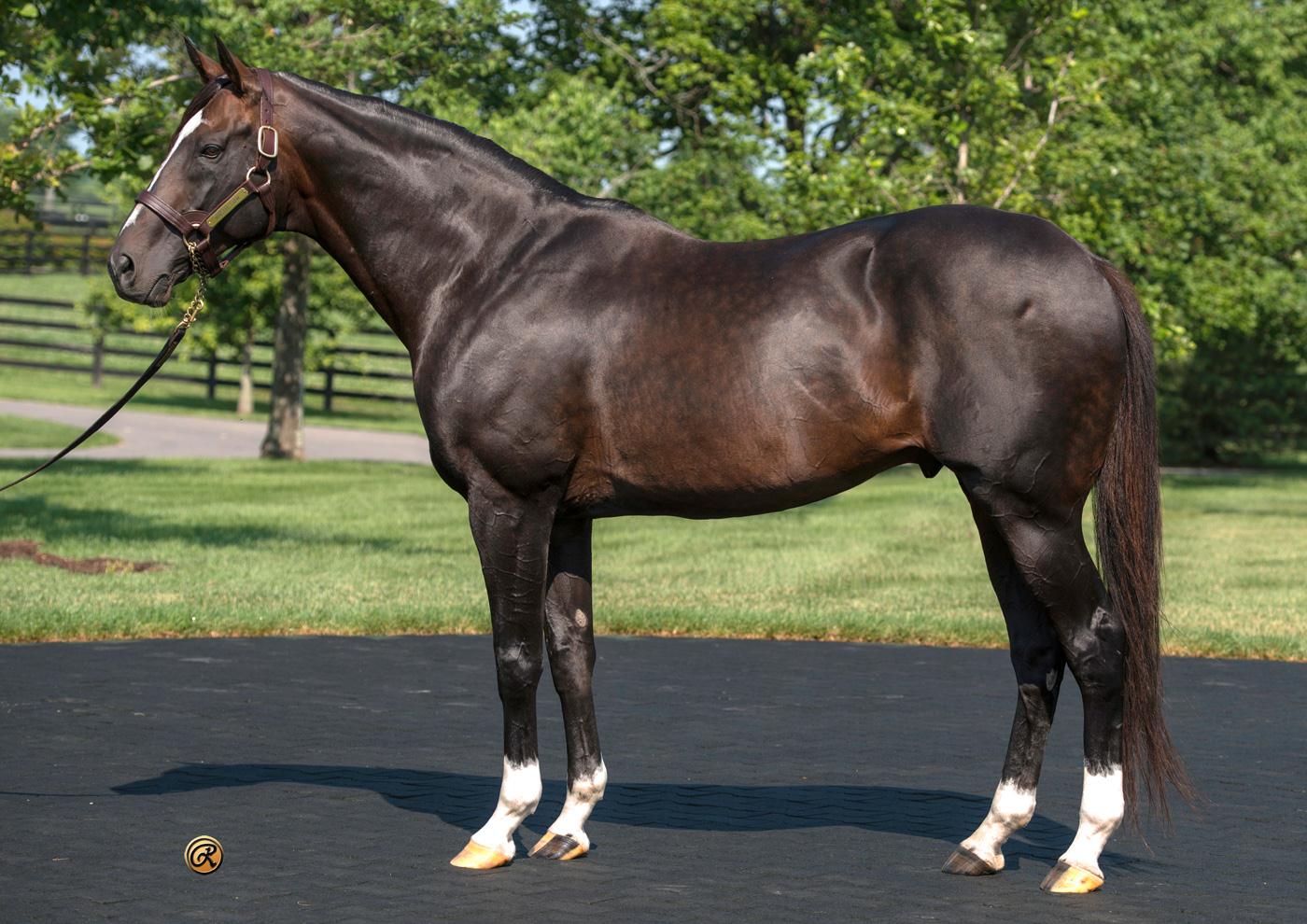
Gospel Tiz Key is by Tiznow, who won the Breeder’s Cup Classic twice and earned 6.4 million dollars in his career. He’s been a really successful sire of racehorses including Midnight Bourbon, Tourist, and Colonel John. He’s also got a few good sporthorses to his credit, being the sire of Mia Farley’s 5* horse Phelps and 3* horse Tiz Ready. His sons have produced a lot of sporthorses too: Outrageous Limit is the sire of 4* horse Outrageous Dance and 3* horse Teki to the Limit, and Colonel John is the sire of 4* horse Lovely Assistant. Those are just the FEI horses… there are tons more at the national levels. Tiznow’s full brother, Tizbud, has also produced a PSG/Int dressage horse, Big Variety.
Tiznow
Gospel Tiz Key’s dam, Honey Ryder, was also an excellent racehorse. She won multiple graded Stakes throughout her career, including a win in a Grade 1 and a 2nd and 3rd place finish in the Breeder’s Cup Filly and Mare Turf, earning over 2.7 million in her career. She was exclusively a turf horse, and Bloodhorse described her as “a true distance specialist, she won as far as 1 1/2 miles, and her average winning distance was about 10 1/2 furlongs.”. In 2008 she sold in foal to Giant’s Causeway for $1.75 million. Unfortunately none of her offspring ever showed anywhere near her level of racing talent despite being sired by some top stallions.
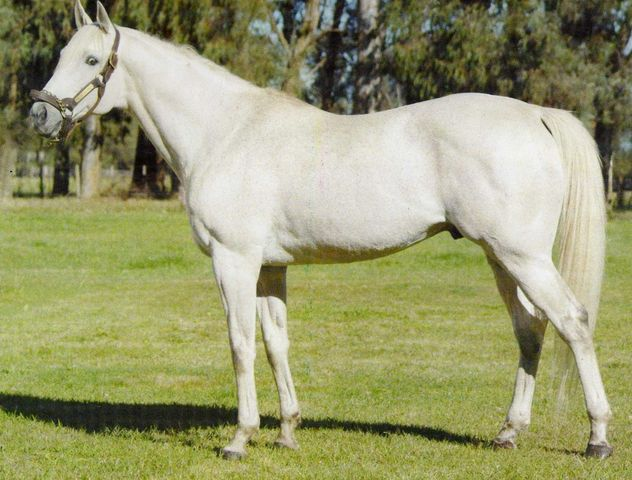
Honey Ryder’s sire, Lasting Approval, was a stakes winner, also finishing second in the Grade 1 Hollywood Derby. He was a reasonably successful sire both in the US and later on in Argentina, and Honey Ryder was his top earner. Lasting Approval was by the stallion With Approval, who produced some 3* and 4* event horses.
Lasting Approval
Lasting Approval’s dam was La Gueriere, the best female offspring of a mare named Lady Winborne, who was part of a very famous line of mares.
Moving to the bottom side of Lottie’s pedigree, her dam Nikimoto was…. not a very good racehorse. She made two starts as a 3yo and never hit the board. They tried to sell her in foal to Showing Up but bidding only got up to $3200 and didn’t meet the reserve. Then they ended up selling her in foal to Einstein for only $1300, to Steve. Overall she had 6 foals, with none being particularly successful racehorses. Lottie is her most successful offspring with $61k in earnings.
Nikimoto’s sire was the well-known Macho Uno, who won the Breeders Cup Juvenile and earned 1.8 million.
Macho Uno
Macho Uno is known for throwing good movers and jumpers (no surprise considering he’s by Holy Bull out of a Blushing Groom mare!) and is the damsire of 3* horse Uno Concerto.
Nikimoto was out of a mare named Sunday Sensation, who sold for $155k as a yearling but only had 2 wins and $86k in earnings. She produced a few foals here in the US before being sold to Korea. Sunday Sensation was by the stallion Royal Academy, who raced in the US, Ireland, and England. He won the Breeder’s Cup Mile and was second in the Irish 2000 Guineas.
Royal Academy
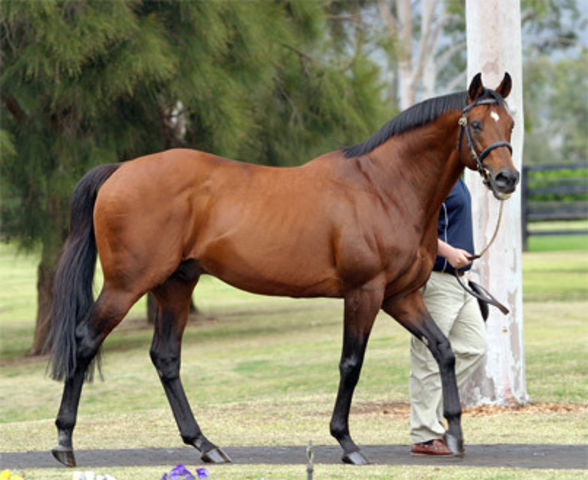
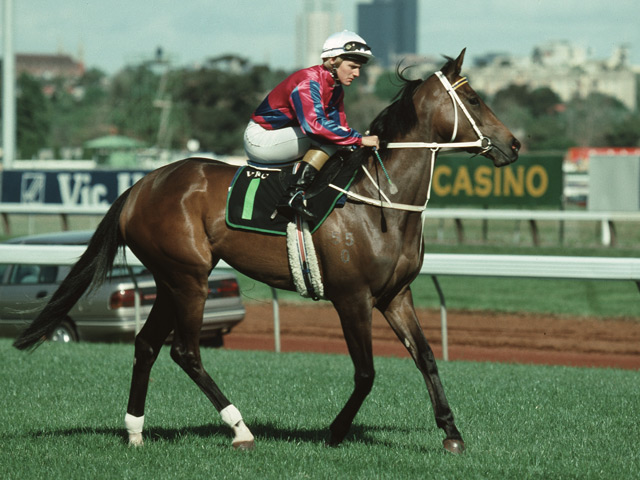
Royal Academy was also shuttled all over the world throughout his breeding career, from Australia to Japan to the US to Brazil to Ireland. He sired more than 160 stakes winners that earned over $120 million, leaving a particularly strong influence in Australia – he’s the grandsire of Australian phenom race mare Black Caviar.
Royal Academy’s dam, Crimson Saint, was a very famous producer – she was the dam of several big name horses including the mare Terlingua, the dam of Storm Cat and Pioneering.
she also was a stakes winner herself
Outside of the racing world, Royal Academy has also left his mark. He’s the second sire of 5* horses Twilightslastgleam and Ferro Point, as well as second damsire of 5* horse SAP Talisman.
Sunday Sensation’s dam was the Australian-bred Arborea, who won multiple stakes races including the VATC One Thousand Guineas. She had 3 foals in Australia before being exported to the US, where she had 7 foals, and then went back to Australia and had 4 more foals. LOTS of foals. Unfortunately none of whom were superstars on the racetrack.
Arborea
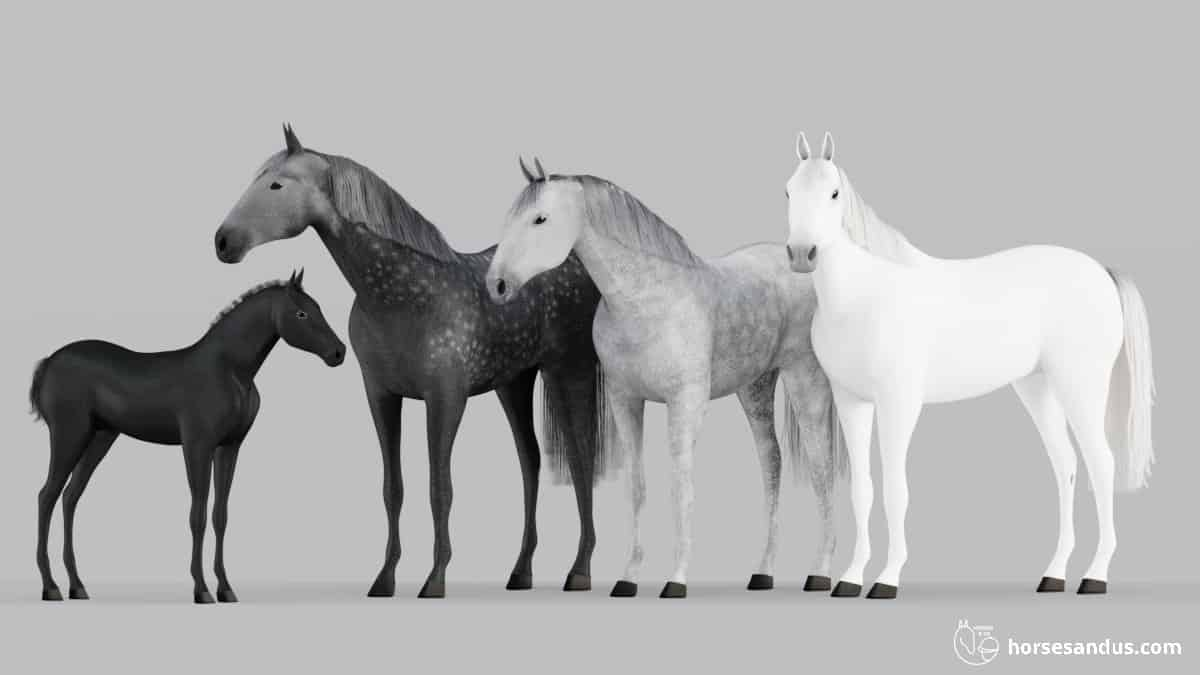
You may have noticed that there are a whole lot of gray horses in Lottie’s pedigree. Indeed, both of her parents are gray. Which means there’s a possibility that she herself is homozygous gray. I’ll definitely be doing some DNA testing on her and I’m curious to see what her color panel is, including her base color. For those who aren’t familiar with how the gray gene works (gray is actually not a coat color, it’s a modifier… horses aren’t born gray) here’s a rundown.
The gene responsible for turning a horse gray is one that acts to slowly de-pigment the horse over time. The gray modifier gene is actually the loss of color. Gray horses are all born another color and progressively lose pigment throughout their lifetimes, while still retaining their dark skin color. A gray horse can be born with any coat color or pattern.
Graying happens due to the presence of a dominant gene (known in equine genetics as “G”) on the twenty-fifth chromosome. Gray is epistatic, which means the gray gene overrides the normal coat color: if a horse has a gray gene, it WILL eventually be gray. A gray horse must have at least one gray parent, as the gene is not recessive and cannot “hide” or skip generations. Lottie had two gray parents, so she could have inherited the gene from one or both of them.
the progression of depigmentation
Horses that possess the gray modifier gene will eventually look almost white all over. As they age and each season’s coat sheds out, they will become lighter and lighter. The speed at which this happens is extremely variable – some horses are light at a very young age, while others may take a decade or more.
Additionally, during the depigmentation process some horses will retain small flecks of pigmented hairs and have a “flea‐bitten” appearance, while others will retain pigmented hairs outlining lighter-colored areas and have a “dappled” appearance. Some horses go through both stages while others go through neither… the greying process varies widely from horse to horse.
If Lottie has one copy of the gray gene, then there’s an automatic 50% chance that any foals she had in the future would be gray (unless I bred her to a stallion that was also gray… that ups the chances). If she has TWO copies of the gray gene, then any foal she has will be gray, 100%.
That’s pretty much all there is to know about Lottie so far, at least on paper. More updates next week as she settles in and I get to know her more!
We have had no shortage of OTTB’s around here lately. We’ve got the long-term ones, like Henry, the broodmares Vee and Peyton, past ones like Gemma, and more recent ones Freya, Argo, Tilly, and Lottie.
Having a few here at the same time that all came off the track within a few months of each other has been an interesting compare and contrast. From the way they act to their aftercare to what they eat to how they’re trained – they’re all very very different, and yet… similar? I think people tend to lump OTTBs in together in one big category, and in my experience with so many of them over the years, I would say that’s both true and false. True because they have similar backgrounds and have had similar jobs and lifestyles, but false because like any other type of horse, they’re all individuals.
And so are the people they end up with. I believe strongly that there is more than one road to Rome, and a lot of different ways that could work to achieve an end goal. If there’s anything we know about horses by now, it’s that there’s no such thing as one right way. If only it was that easy, this horse thing would be a breeze.
There’s kind of a perpetual argument about what is the right or wrong thing to do for a horse coming off the track. Do you put it straight back into work? Do you turn it out for a while? Does it need a slow introduction to restricted solo turnout or can you kick it right out with a herd? Do you need to do lots of groundwork first or can you just swing aboard? How “broke’ are they really?
There are people that will argue to the death about one particular thing being the only right answer, but to me the answer is the always-irritating “it depends”. I think the real skill in being a horseman is assessing the horse and understanding in which scenario you might make which decision. And of course, being open to being wrong and trying something else instead. It’s why I’m always so hesitant to want to give anyone advice. The best I can do is say what’s worked for me and my horses, but that sure doesn’t mean it will work for someone else, their situation, and their own horses.
Henny ❤
But there are a few (very few) things that have been helpful across the board to us with all of our collective OTTBs here, so… let’s talk about those things!
Training
Ah yes, let’s start with the fun part first and work our way backwards. I’m not even going to get into super specifics here except for the fact that if you don’t have a ton of experience transitioning one from track to sport life, be willing to enlist assistance. If you have access to trainers that have a lot of experience, use them. Use them a lot. From the very very beginning. Because while you think that you’re not doing anything exciting in those first several months, just trotting in circles or working on steering, what you’re actually doing is re-installing new basics. Really important ones that the horse’s entire sport career will be built upon.
If you don’t have quick and easy access to good in-person help, there are other tools you can use to get you started. Y’all know I’m a big fan of Ride iQ. While I’ve mostly used and talked about features like the dressage test read-throughs (one of the motivating factors behind me scheduling that lesson with Peter Gray!), the conditioning schedule workshops, and the member video reviews (I’ve done a couple of those now, actually, it’s always fun to get a new perspective) there is actually quite a bit of content that could be helpful to someone with a horse that’s recently come off the track. There’s a whole “first 60 days” guided program geared specifically for OTTB’s, in fact, that I found to be a great addition/guidance.
and they’ve got a ton of OTTB resources and rides that are suitable for early-stage OTTB as well as continuing education up the levels. If you want structure and direction, these are a great way to achieve that. You might not have someone physically on the ground in your arena, but having them in your ear is the next best thing. After the basic first 60 days program, if you’re looking for other ideas, I think the 6 Weeks to Show Ready program is a good building block.
Even if you DO have the benefit of regularly scheduled professional oversight/involvement, there’s (IMO anyway) tremendous value in maintaining guidance in between lessons or training rides, or even maybe just hearing a different perspective or trying a different technique.
Another perk of Ride iQ, aside from the guided audio rides, is that they also have a really deep library of podcasts with a wealth of information on a lot of these same topics. OTTBs are a commonly talked-about discussion, and you can hear a lot of different advice and tips from tons of people that have so much experience with horses like this. The Ask an Expert series is fantastic too, with topics from ulcers to feet to nutrition to maintenance and on and on and on.
That app is truly a wealth of knowledge for any horse owner, but particularly for someone who is tip-toeing into new or unfamiliar territory. I’ve been a member since the day it launched, and truly can’t say enough good things about it. If you want to try it out there’s a free two week trial, and then monthly membership is $29 or the annual works out to like $25/mo. That’s like… 1/3 the cost of a single lesson these days. I’m a big fan of not wasting money, but spending it in ways that are wise, and this is one of those things that’s worth it tenfold, especially if you aren’t in a regimented trainer-led program.
one of Argo’s first post-track rides, doing a Ride iQ lesson!
Another resource I’ve been really enjoying for the OTTB side of things is the OTTB on Tap podcast. They’ve had a few episodes that might be particularly helpful when it comes to care, or things to consider, or even how to go about picking the right horse for you in the first place. Definitely recommend giving that a listen, too!
Feed
Ok moving on to the less fun parts… the topic of feed is one of those things you hate to even talk about because it’s guaranteed to start an argument among the masses, but in general: you have to be prepared to feed them as much as they need of whatever they need. If you’re used to easy keeping quarter horses or warmbloods, it may seem like a TB needs to eat a lot in comparison, especially one fresh off the track. You’ll come across one every once in a while that is a very easy keeper, or one that doesn’t do a bit of a regression in their condition as they transition from a race diet to a sport diet (that can be alarming if you aren’t prepared for it) but those are less common. Especially in that first year or so when they first transition to sporthorse life.
It also depends a great deal on the quality of your pasture and forage. Some horses do better on a higher alfalfa diet, some do better on a grass hay diet, some need a lot more fat than others, etc etc. And you’ll see some people say that they feed all of their horses exactly x, y, z things and it works perfectly for all of them… if that’s true, great. But then one will come along and prove you wrong. We all know it. Horses thrive on proving us wrong.
Right now for instance we’ve got one that really only eats alfalfa and requires a lot of it. Another is grass hay only. The others eat a mix. One puts on weight like crazy as soon as the spring grass comes in. One of them eats 3 times as much grain as another one. A couple get extra fat via flaxseed oil. Some get soaked alfalfa cubes, another won’t eat anything that’s remotely soggy. Horses gonna horse. Don’t be afraid to play around as needed to figure out what works best for your horse, and be open-minded to changing things or feeding more than you normally would. Going from a high starch, high calorie, sugar-infused racehorse diet to something typically high fat/fiber and lower starch is going to be an adjustment for their body… keep that in mind.
Feet
A good farrier that has experience with transitioning OTTBs to sporthorses is going to be an absolute lifesaver. Many (not all, but many) racehorses are shod very very differently and with a different hoof balance than sporthorses are. Having a farrier that 1) understands what changes need to be made 2) knows how to make those changes gradually in a way that helps the horse rather than hinders it, is critical.
If you’ve got one with particularly interesting angles or something suspicious, getting farrier view x-rays right from the beginning is never a bad idea. It will show you what’s really going on inside the foot and help your vet and farrier make the right choices to get those feet trending the right direction. I think a common mistake too is to pull the shoes off the horse right away without really considering how fair that is to the horse based on the foot it currently has, your footing, and what you’re expecting it to do. Give it time and the proper support. No hoof, no horse.
Ulcer care
Listen, none of us want to hear it but the reality is that most horses have ulcers. And the more stressful their life is, and the harder they work, the more likely it is that they’ve got them. I mean really, even pasture puffs can have stomachs that you wouldn’t believe. You should expect to treat any new horse for ulcers, but especially an OTTB. They’re going from a high-stress but familiar life, to a different and thus still stressful one. Help them out and set them up for success.
I also think that scoping before treatment is very very very highly recommended if you can at all manage it. We have scoped all of ours, and all of them have had different types of ulcers and/or presentation that changed the necessary treatment (length, dosage, and medication). It’s all fine and good to throw Ulcergard at one for a few weeks and hope you accomplished something, but the truth of the matter is that you have no actual idea unless you look. Those meds are expensive as hell, spend the $300-400 up front to do the scope and actually SEE what you need. At least then you can be certain about the medications you’re buying.
For instance, we’ve had horses on Ulcergard/Gastrogard, Miso, Sucralfate, and Nexium, or some mix of those, and for various amounts of time. I wouldn’t want to be throwing sucralfate at an ulcergard problem, just like I wouldn’t want to be throwing ulcergard at a miso problem. If at all possible, just scope the horse first.
The age old question: to let down or not to let down?
This is another fun one that people like to be 100% dead set on and argue about. Is it best to get the horse off the track and turn it out for a few months, or to transition it straight to work? IMO it’s another one of those “it depends”. I’ve done both. Some really need time and space to mentally decompress or physically unwind. Others will make seriously bad life choices if you take away their daily structure and work routine.
While it’s true that just chucking a horse out in a pasture can heal a lot of physical and mental ailments, it can also be worse for others. To me it’s one of those things you have to use your critical thinking skills with, and then be willing to change your mind depending on how things go.
Which is… kind of the summary of this entire post, isn’t it?








 breedrideevent.com