There was yet another fatality (horse and human) at an event this past weekend, and I dunno about y’all but I’m growing weary of this same song and dance. Tragedy strikes, everyone gets upset and/or outraged and points fingers at what they think the problem is, but nothing ever actually happens. Eventually people stop talking about it, people forget, nothing changes, and we move on along until it happens again.

At least this time we’ve started to see a little action. The fatality occurred yet again at a table fence, like so many have recently. A few pros stepped up and started a fund to begin outfitting more fences with frangible/collapsible technology, and you can also donate to the USEA foundation (specifying that the money be allocated to the frangible fence fund). This is a great thing, and I’m happy to see the community rallying behind it. If safety technology exists, we have to utilize it, and it’s up to us in the sport to figure out how to help fund it.
The truth is, though, that this will take time. A lot of time. And money. A lot of money. Think of how many venues there are in this country, and how many fences we’re talking about that would have to be rebuilt (if possible) or scrapped and replacements built from scratch. It’s a big, albeit extremely worthy, undertaking, and while it’s part of the solution, it isn’t all of it.
I do think there are other things we could be doing now, or other avenues that should also be pursued in this quest for a safer sport. I see many people blaming one thing or the other, but the truth is that there are a lot of different aspects to this, and it isn’t as simple as fixing one thing.
Course design is a big part of it, and something that is already a work in progress and heavily studied. Understanding how horses read fences, jump shapes, trajectory, lighting and how it changes, terrain, speed, the flow of the course as a whole, etc – it’s complicated, but these things are all factors when it comes to safety. We’ve done a lot to improve this, but there is still more to learn. We’ve seen several fatal falls at tables in recent years – what is it about these fences that we’re getting wrong?
I also think, and this may be an unpopular opinion, that more liberal application of yellow cards and dangerous riding penalties would not be a bad idea. Officials shouldn’t be made to feel hesitant to use these if they think they’re warranted. I bet all of us can easily think of several dangerous situations that absolutely warranted a yellow card or a DR penalty but ended up as just a warning, if that. Hell, maybe we ourselves have deserved that kind of wake-up call at some point. With this particular rider there is at least one prior incident seen on video that was clearly a DR/yellow card offense, but none was given. Would it have ultimately made a difference many months later? Who knows. I know it’s a tricky situation, emotions flare, but we have to trust our officials to do their jobs, and we have to allow them to help keep us safe. Of course, officials also don’t have the ability to be everywhere at the same time either, and it’s just not possible for them to police everything, which brings us to…
Rider responsibility. You have to be realistic about yourself and your horse, where you’re at, and what you’re capable of. If you can’t quickly and easily adjust your horse’s gallop, if you can’t keep them straight to the jumps, if you’re getting dragged around XC… you’re not safe. Many horses are just not capable of moving beyond a certain level. Surround yourself with people that will be honest with you, not with people who just tell you what you want to hear. Err on the side of caution. Know when to call it a day. Stop getting so caught up in ticking boxes and moving up that you are willing to overlook red flags. Your life may depend on it. I was absolutely appalled to read a comment on social media yesterday from someone saying that they had a rotational fall in warmup but got back on and ran cross country. This is ghastly. Do not do this. Do not let your friends do this. Do not let your student do this. I can’t believe anyone would even want to, or think that’s a good idea. We have to be smarter than that.
Which also segues to the whole “if you don’t have anything nice to say, don’t say anything at all” thing that so often gets thrown around. In this situation, it’s crap. I’m sorry, but it is. Everyone makes mistakes, even Michael Jung, and mistakes are one thing, but we all know an accident waiting to happen when we see it. I’ll go ahead and put this out there for myself – if you see a consistently dangerous situation, if you think that either I or my horse is not prepared for what I’m attempting – call me out. I mean, have empathy, do it kindly from a place of caring, not a place of judgment or meanness. Take me aside, don’t be rude about it, but please, say something. I would hope that all of us feel the same way. Ego is dangerous, hubris is deadly, and we have to be able to accept constructive criticism and doses of reality. If your friends don’t love you enough to be real with you, get new friends. If you don’t love your friends enough to be real with them, be a better friend. If your trainer isn’t willing to stand flat-footed and say “you aren’t ready for this” or “you need to be better at x thing before you’re safe to move up” – get a new damn trainer. Keep a team around you that knows you well, sees you regularly (at home and at shows) and that you trust. Also, be willing to listen to those people that care about you and are more experienced than you are.
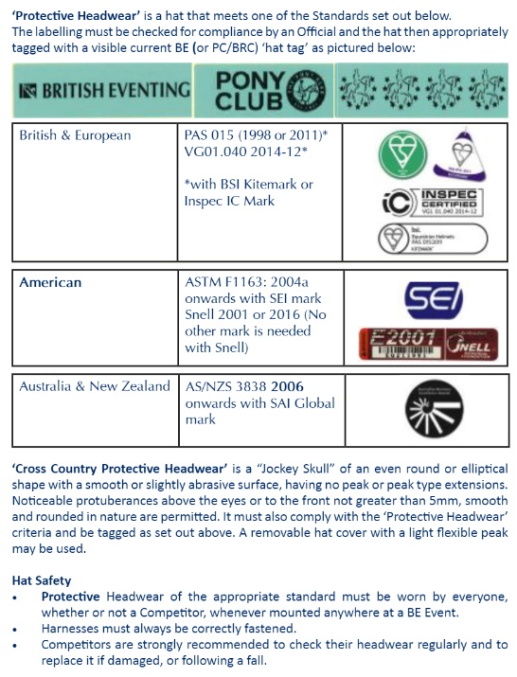
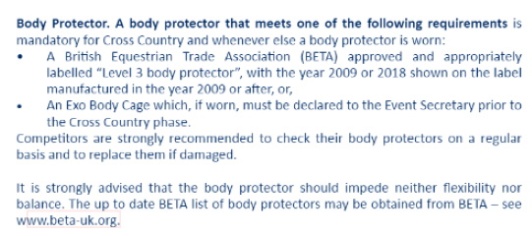
We also need to talk about how behind we are in the US when it comes to rider safety equipment. We can’t even manage to pass a rule making BETA 3 vests mandatory, and I’m sorry but that’s just ridiculous. I think it’s well past time that the US aligns it’s own safety equipment rules to at least match those of British Eventing. We know (because science) that this equipment makes a difference, why can’t we require it? This is very easy, low-hanging fruit. It was mega-frustrating to see the rider involved in the latest fatality wearing a sub-par vest that did not even come close to fitting correctly. Again, would it have made a difference? Who knows. But we can police this, and we should, because it might make a difference for someone else.
Other possible rule related changes – NQR’s and MER’s. Also might be an unpopular opinion, but I don’t think it would be a bad idea to revisit the basic requirements that have to be met before someone is qualified to move up, and to start those requirements at Training level or even Novice. I also don’t have a problem with requiring them to be met by the the horse/rider combination either. This would inconvenience the upper level riders who bring horses up more quickly or obtain already-established upper level horses (maybe there can exemptions to the lower levels for extremely qualified horses and riders, I don’t know), and yeah someday it might even mean that I myself might have to hang out a certain level longer than I might want, but I feel like that’s a much better alternative than letting people leave the box when they really shouldn’t.
I also whole-heartedly agree with the Eventing Nation piece yesterday about accident reports and transparency. Not just the basic fall reports that are required and processed internally, but public ones, with extensive evaluation and detail. It’s frustrating that all we ever know about these accidents is what gets passed around the rumor mill – never any specifics on exactly what happened or how. I realize it’s a very sensitive subject and must be handled with compassion, but we have to do this. To me it’s an even bigger tragedy to not even be able to understand and learn from these types of accidents. How do we fix it if we don’t even know what went wrong? How do we ensure that we personally do all we can to not make the same mistakes? Other sports do this, we can too. We have to.
Everyone has their own idea of what the problem is, and in a way I think everyone is right to some degree. This isn’t a simple thing with a simple solution. There are so many factors that influence safety and accident prevention, and it’s up to us to figure out what all of them are, and pursue them all equally. If doing some of these things means that my entry fees or membership fees go up a little bit, raise them. The things that can be done quickly and easily and immediately – we have to do them. The things that will take longer and require more work – we can’t lose sight of them. The future of our sport, even our lives and those of horses, depend on it.
 breedrideevent.com