With a Side of Science

Back in the old days, foal watch was something that could span the course of weeks. Sleeping in the barn, getting up every couple hours to check on the mare, obsessing over every little change in her demeanor. Then somebody figured out milk testing and everything got a whole lot easier.
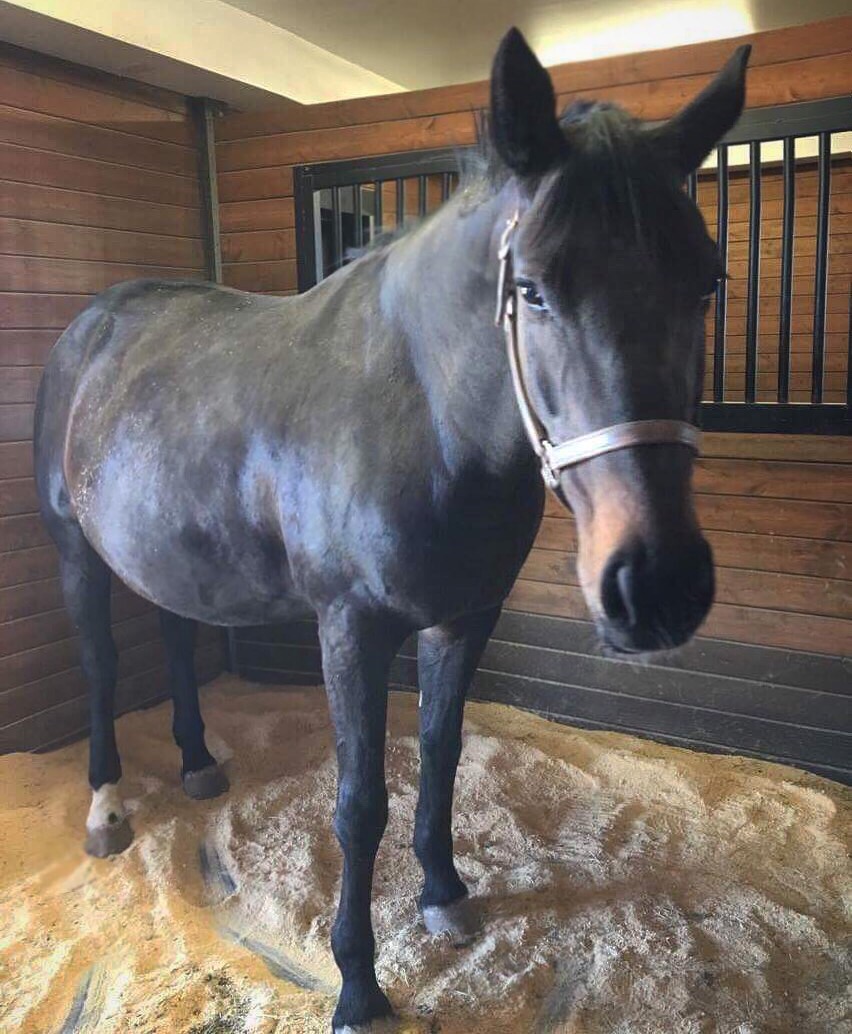

There are “official” milk test kits on the market, like Predict-A-Foal or Chemetrics, but you can accomplish the same general type of testing with plain old pool testing strips – ones that measure pH and calcium. It’s pretty simple really… you collect a little bit of “milk” (which may or may not look like actual milk until foaling. Sadie’s is still more yellow and clear-ish.), dilute it with a specific ratio of distilled water, and then use the strip to test it.

what not-quite-milk-yet milk looks like

Some people rely solely on the color of the milk to tell how imminent foaling is, but some mares don’t really produce much until right at foaling time, and others may not have true white milk until the very last minute either. Testing the calcium content and the pH of the milk are more accurate indicators than just using color alone.
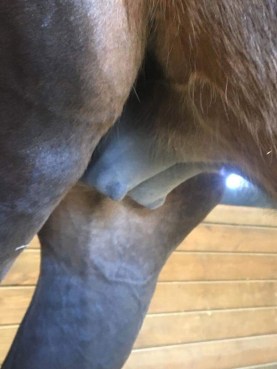
udder is filling out!

Beyond getting the ratio of milk to water correct, it’s actually a super simple method of testing. As the mare gets close to foaling, the pH will drop and the ppm of calcium will increase. Once you hit 200ppm of calcium, you’re probably within 24-48 hours… 400-500 usually means you’re imminent (although some mares can have a big spike in calcium a day or so in advance). Using the calcium in conjunction with pH gives you a little bit of a closer window, since pH drops dramatically just before foaling. Once your calcium is high and your pH is low, baby horses are about to happen.
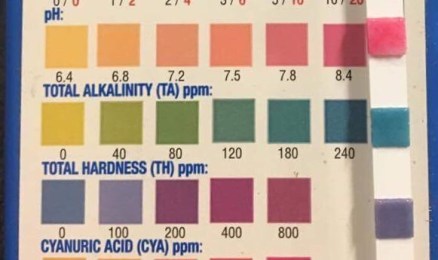
We care about the pH line and the calcium line (total hardness). In this case the pH is still high and the calcium is still low.

Granted, you don’t want to constantly be testing the milk or you run the risk of depleting the colostrum. As the mare’s udder starts to develop, testing every few days is fine until the numbers start to change, and very little milk is required to test. Although this method of testing works well on most mares, you’ll find one sometimes that doesn’t go by the book. Still though, it typically helps reduce the sleepless nights to just one or two instead of MANY.

So, what does all this mumbo jumbo really mean? It means I get to go audit the FEH/YEH clinic in Dallas this weekend, because Sadie’s still testing low on calcium and high on pH!!! We’re not super close.
SD Blog Hop: Feed

Last week Alaine at Spotted Dressage asked one of the most seemingly simple and yet usually complex questions in the equestrian world:

What Do You Feed & Why?

I’m a total nerd about this stuff and find it really interesting, so I couldn’t resist this one. Henry currently gets:

  • 6lbs per day of Triple Crown Senior
  • 4-6 flakes of coastal hay
  • grass or coastal hay in turnout
  • 1 flake of alfalfa per day (1/2 am, 1/2 pm)
  • free access to salt


I pay bit extra on top of board for premium feed and I buy my own alfalfa, but I’m a huge believer in nutrition and think that high quality feed and hay are absolutely vital to the overall health of my horse. I’m really picky about ingredients and what Henry eats, and more than happy to pay extra to get something good. I definitely won’t feed anything that has some kind of grain by-product as a major ingredient.

Henry used to be on TC Complete but made the switch to TC Senior last fall. He’s getting plenty of forage these days, with lots of hay plus his alfalfa and grass, so I opted for lower starch and lower total NSC. The Senior is still 10% fat, over 1500 calories per pound, and made from high quality ingredients, but has about half as much starch as Complete. Henry isn’t a super hard keeper, per se, but he is a thoroughbred event horse that works 5-6 days a week. He still has energy, although I’ve noticed a decrease in nervous energy since the switch. I don’t know if that can be attributed to lower starch or if he’s just growing up a bit, but so far the Senior is working out really well for him. I like that it’s grain free, and I love that it’s not a dusty pellet.

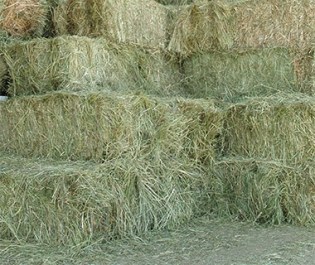
Coastal hay definitely isn’t my favorite, but it’s really difficult to get anything else around here. Luckily the barn’s hay is at least good quality coastal squares (the rounds tend to be yuckier and can definitely give them a potbelly look), so it works.

Aside from the “what”, I also think the “when” is equally important. The less time he spends standing around with no forage, the better. He gets alfalfa and hay with his TC meals, and has access to hay or grass as much as possible. Really the only time he doesn’t have forage is in the middle of the night, which is when he’s finding a nice fresh pee spot to sleep in anyway.

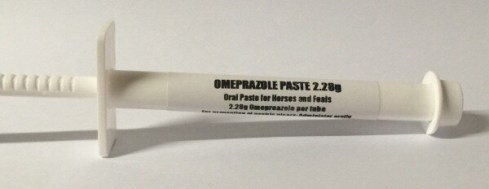
You’ll also notice Henry’s lack of supplements. That’s because I kind of hate most of them and have a lot of opinions about the supplement industry that probably no one will like. I’ll spare all of us and just not even start down that road. I don’t hate them all; Henry has been on a few different oral supplements in the past (one for his lungs, and magnesium) but nothing has really made enough difference to stick. His feed already has probiotics and vitamins in it, so no need to add any of that, and if I’m going to do a joint supplement I’d much rather do it IM than oral. He does get omeprazole when we travel, but that’s in paste form.

stay away, ulcers

What do your horses get? I’m really interested to hear what other people feed their horses – it’s so interesting to me to see what everyone does and the reasoning behind it. Equine diets are fascinating!

Trainers and Consistency

There is no doubt that having a lot of regular lessons (a lot for me anyway) over the past few months has really helped me connect some dots with my riding and especially my confidence. Amazing how consistency and repetition work, eh? At the little jumper show this past weekend there was another person who has made tremendous strides with her own riding in the past 6 months or so. We got to talking about it and our general consensus was “Finding the right trainer and dedicating yourself to regular instruction makes all the difference.”.  I thought she hit the two key things right on the head. Right trainer + consistency = improvement.

aecteammask3
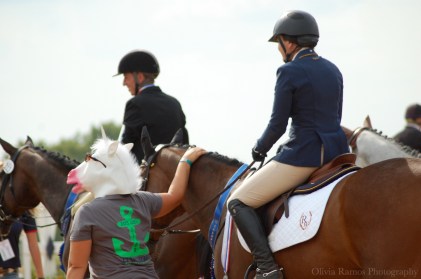
the right trainer is literally a unicorn

Granted, there are a couple other trainers I ride with on occasion (one of which I’ll be riding with again this summer when Trainer is busy having a kid) but over time I’ve gotten incredibly particular about who I’ll ride with. I’d rather have no lessons than ride with someone I don’t trust, or who doesn’t understand my horse or me, or who has no idea what I’m ultimately working toward. To me that seems pointless. I think as an eventer it’s especially important that the person at least have a good understanding of the sport and it’s demands, even if they don’t specialize in it. Let’s be honest, riding with a strictly hunter trainer would ultimately be pretty pointless for me, just as riding with an event trainer would likely be pretty pointless for a hunter rider. They might have a few helpful tips but overall the nuance isn’t there and it just doesn’t mesh.

lesson84

Because I’m really particular, I don’t enter a clinic unless I know a lot about the person and how they teach, and know that their style would be complimentary to my regular instruction. Just because you’re famous or have an impressive resume doesn’t mean you’re the right fit for me and my horse. Not to mention that clinics are really expensive… I could literally have EIGHT lessons with my trainer for the cost of the average clinic. And I still walk away from her lessons having learned something every single time, plus she knows me and my horse and what we need to work on in every phase, and how it all ties together. I trust her to give me honest feedback and I especially trust her to keep me safe. There’s not a lot of appeal for me to spend a lot of money to ride with someone else at this point, although sometimes clinics are fun.

feblesson3

Granted, I also see the appeal of spicing it up every now and then and getting a different set of eyeballs on you. Sometimes that can help lead to big breakthroughs. But again, I’m really picky about which eyeballs. I want everyone I work with to at least be fairly like-minded and have a similar style. Otherwise I’ll end up with so many different opinions that it comes down to a “way too many cooks in the kitchen” situation and I won’t make any progress. Been there. Done that. For me it was worse than no lessons at all.

I know that dedicating myself to one person’s program and showing up as often as possible makes a big difference for me. It’s not always convenient (ok it’s rarely convenient these days, it’s a freaking 4 hour drive round trip) but I kinda feel like either you really want to get better and will put forth the effort to do so, or you don’t and won’t. Hopping constantly back and forth from one trainer to another, or doing what’s most convenient, or just meeting up with someone for coaching at shows doesn’t work for me. It’s important that the person I ride with regularly also sees me at shows, so they know how everything translates for me when I’m in the ring. That’s how I build and improve.

henrytrailer2
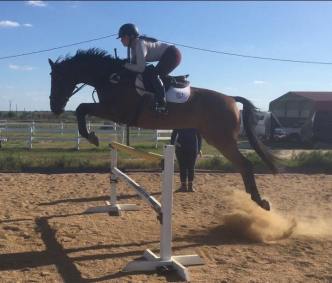
we do a lot of this

I’m curious about what everyone else’s approach is to training, trainers, and lessons. Do you prefer to stick with just one person, or a few people with a similar style? Or would you rather get as many different eyes on you as possible? Is being in a regular lesson program important to you or do you just take them as you can get them? Do you think it’s vital that the person you ride with have experience with your specific discipline? How important is The Right Trainer to you?