DIY: Dyeing a saddle

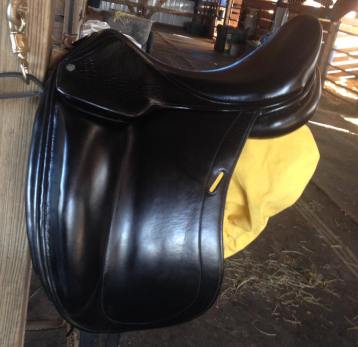
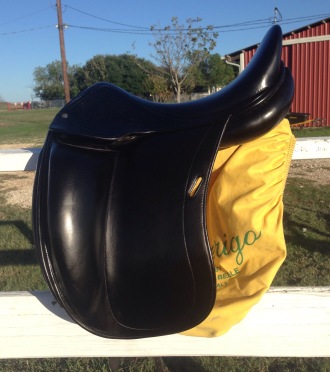
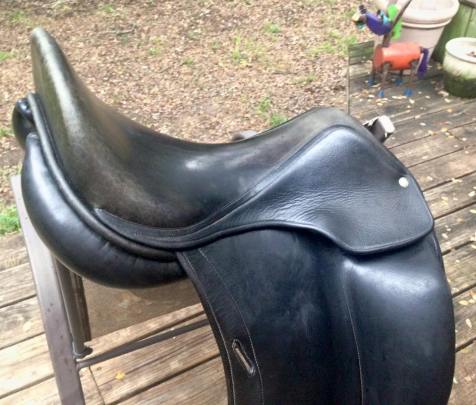
While I love my new-to-me Childeric dressage saddle, I was not thrilled with it’s appearance. The seat had faded to a sickly looking shade of green, with splotches of uneven color complete with old mold spots. The flaps were in better shape but the front of the knee roll area on both sides was starting to look green and scratched as well. A very thorough conditioning helped a lot, but the faded greenish pallor persisted.
childericdeglazerI had read a lot online about dyeing saddles, and since I dyed a pair of tall boots a while back I’m a little less scared of the process in general. So I scoured the internet for tips, ordered my supplies on Amazon, and bolstered my bravery. Oh yeah, and I had a hard cider before I started.  Liquid courage helps. Several of you asked me to share the process and results here, so… here ya go. I’m not saying this is the best or the only way to do it, but this is what I did. I know it looks like a lot of writing, but that’s only because I tried to be as specific as possible. It really isn’t hard at all, don’t be deterred by my rambling.
1FB074CB-F7D8-40FE-A411-A671C32DCA6A
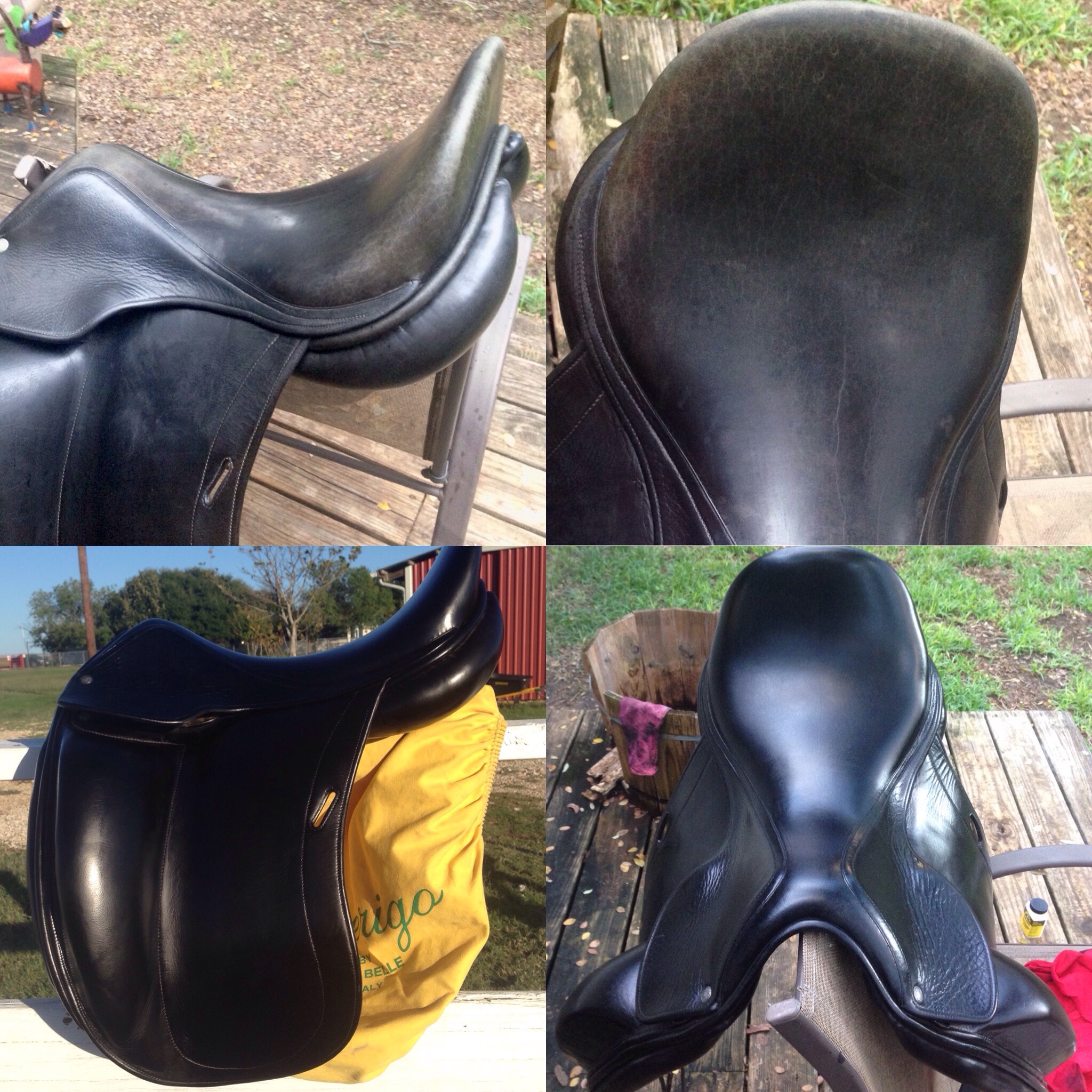
top: before, bottom: after

First up: Supplies. I went with all Fiebing’s products because a) that’s what I used on the tall boots, b) that’s what most of the online folks were recommending.

  • Deglazer (which I think is just acetone but I wasn’t taking any chances with getting the wrong thing)
  • Leather Dye
  • Tan-Kote
  • Resolene
  • Brushes (I used foam, but microfiber or regular paint brush would work too)
  • Rags (tons – the microfiber ones from the dollar store work great)
  • Latex gloves
  • toothbrush
  • your adult beverage of choice

I bought all the Fiebing’s products and foam brushes from Amazon for $35 with free shipping, and the rest I already had lying around. Not a bad investment.

childericdyesupplies
adult beverage missing from photo because it was already consumed

First I cleaned the saddle thoroughly, then went at it with deglazer and a rag. I wet the rag with deglazer and started rubbing in circles. This removes the clear top coat from the leather. Without this step the dye won’t penetrate the leather very well, so while scary to rub what is essentially fingernail polish remover all over your saddle, it’s important. Just take another chug of your adult beverage, you’ll be fine.
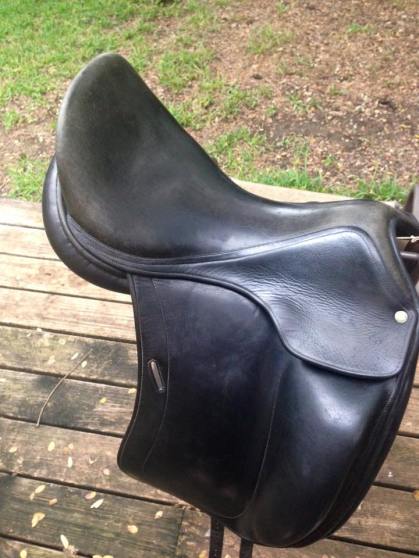
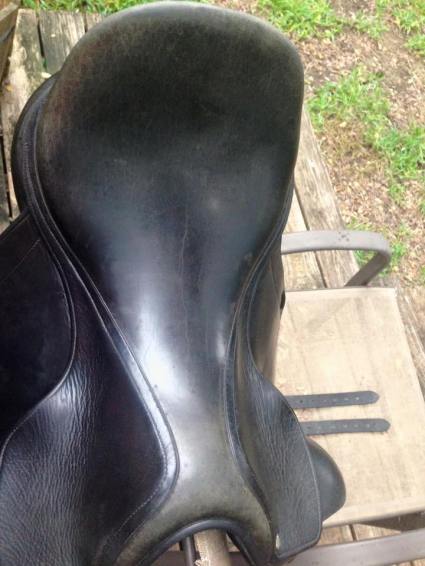
childericbeforefront

Childericbeforeseat
the gross seat

Once you’ve removed the top coat (you should be able to tell once it’s gone, the saddle will look very matte and thirsty all over), let it dry thoroughly. Take a few more chugs of that adult beverage, pull on your gloves, grab your brushes, and start applying the dye. It was a little bit of trial and error for me to figure out which method I liked the most, but by the third and final coat I decided that I preferred to get some dye on the brush (not much, you don’t want it running all over the place), paint it onto the saddle, and then rub it in with a rag. That made the color very even and it absorbed into the leather well. I did one area of the saddle at a time – the seat, then the back and panels, then each skirt, then each flap. To make sure I got into all the little cracks and crevices I used a toothbrush. By applying the dye in sections, it helped keep everything “under control” a bit better. You don’t really need a lot of a dye to get the job done – I used less than half of a 4oz bottle with three light coats.
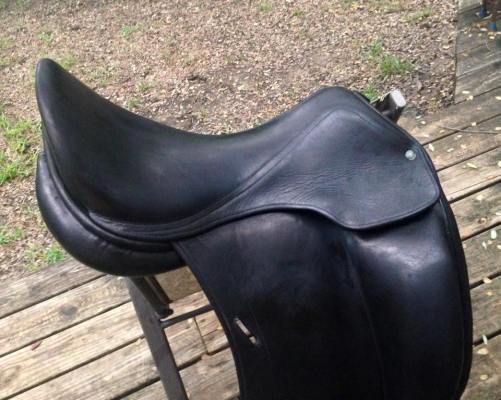
childericfirstdye
first coat of dye

Between each coat I let the saddle dry for about an hour, and after all 3 coats were applied I left it to dry overnight. The next day I took a clean rag and rubbed (in circles, circles are your friend throughout this entire process) all over the saddle to help lift off excess dye.

Then I got out my Tan-Kote, poured some onto a rag, and started putting on a top finish. Some people only use Tan-Kote, some people only use Resolene… the results that I found online that I liked the most used both, so I used both as well (it’s also good to note that Resolene is water resistant and Tan-Kote is not, so Tan-Kote is more of a finish and Resolene is more of a sealant). Tan-Kote is resin based and feels sticky as you’re applying it. Don’t worry, just keep rubbing it on in a thin, even layer. As it dries the stickiness will go away.

childericaftertankote1 Childericaftertankote2

Once the Tan-Kote dried, I again buffed the saddle with a clean rag. At this point very little dye was leeching onto the rag, but there was still a bit of color transfer. Time for the Resolene. I applied this stuff the same way, although it was very runny and watery compared to the Tan-Kote. When you first rub the Resolene onto the leather it leaves a white-ish blue film that is semi alarming, but it quickly turns to clear. For me this was the trickiest step, because if you didn’t get the Resolene fairly even, you could tell as it dried. It wasn’t difficult, you just had to pay attention and not glob it all over the place. For that reason I opted to do three very thin layers, allowing it to dry between each one. I also recommend doing it in an area where you have really good light (direct sunlight is best).

childericresolene
Post-resolene.

Once it was dry I buffed it again, put on a light coat of lederbalsam, and voila -all done!
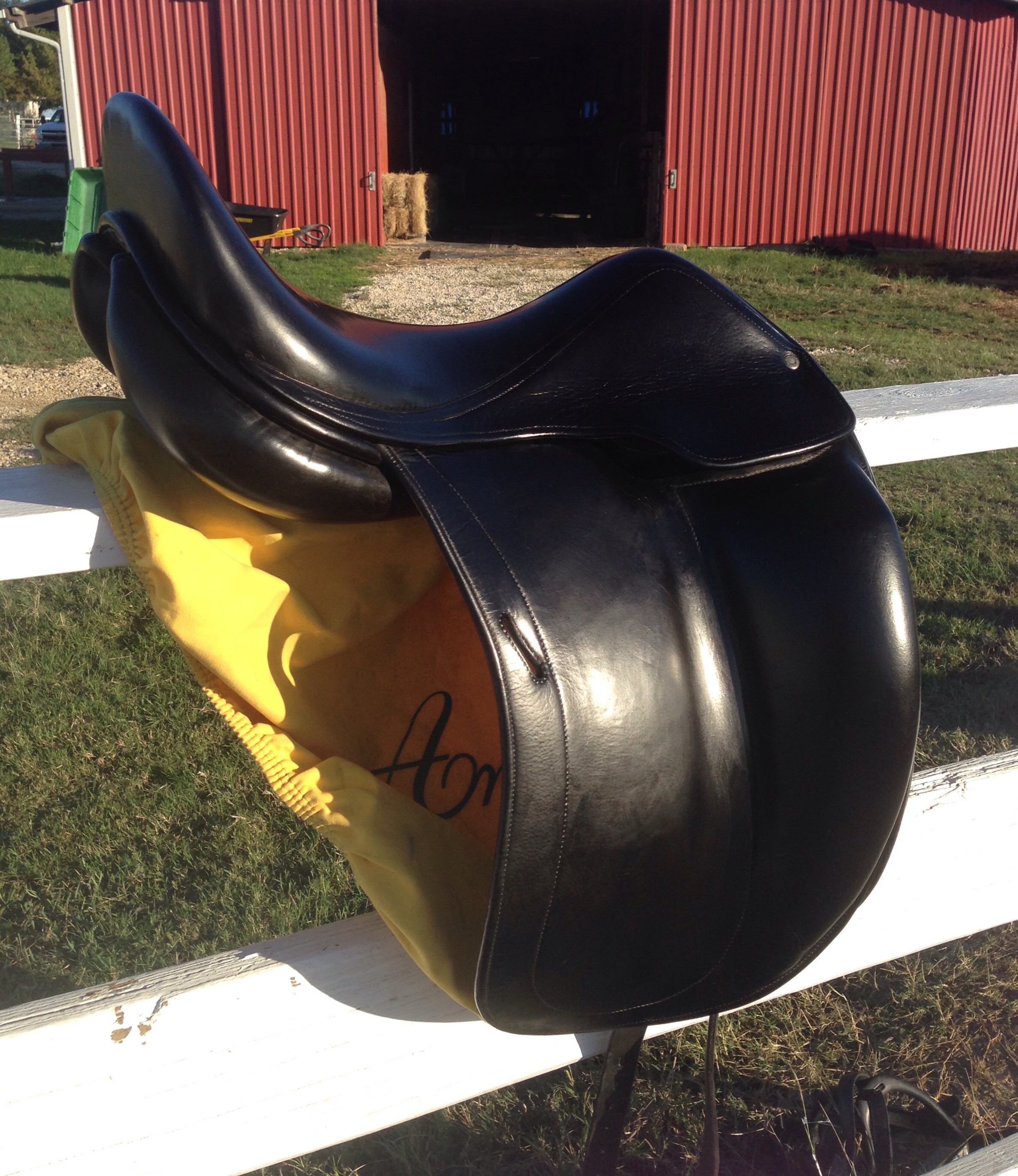
childericafterbarn3

IMG_4527

When I first mentioned this project, lots of you were concerned about the dye leeching out onto your breeches. Here’s a dry paper towel (left) and a wet paper towel (right) that I rubbed on the seat as hard as I could for 20 seconds:

childerictoweltest
no dye

When properly sealed, dye leech shouldn’t be an issue. The Resolene is what provides this barrier. Important to note – once you seal the leather with Resolene, the pores will no longer take oil. If you want to still be able to oil the saddle, stick with the Tan-Kote. That said, without the Resolene you would get some dye leech. Just something to be aware of while weighing the pros and cons of each type of finish – it really comes down to personal preference. Once you’ve sealed it with Resolene, you’re really only going to be able to condition with lederbalsam type products (which is typical of any kind of sealed leather, such as Sedgwick).

Considering that it cost only $35 and a little bit of elbow grease over the course of two days, I would definitely call this one a worthwhile DIY. For value I’d give it 5 out of 5. I think the saddle looks so much better, and with minimal investment. For difficulty I’d say 2 out of 5. Dyeing a saddle is definitely not rocket science, it just requires a little bit of patience and common sense.


Hawley Bennett clinic Day 2 – XC

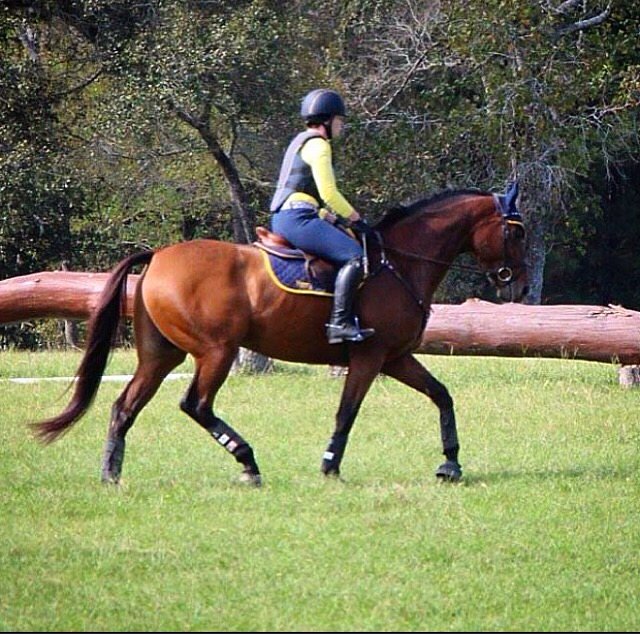
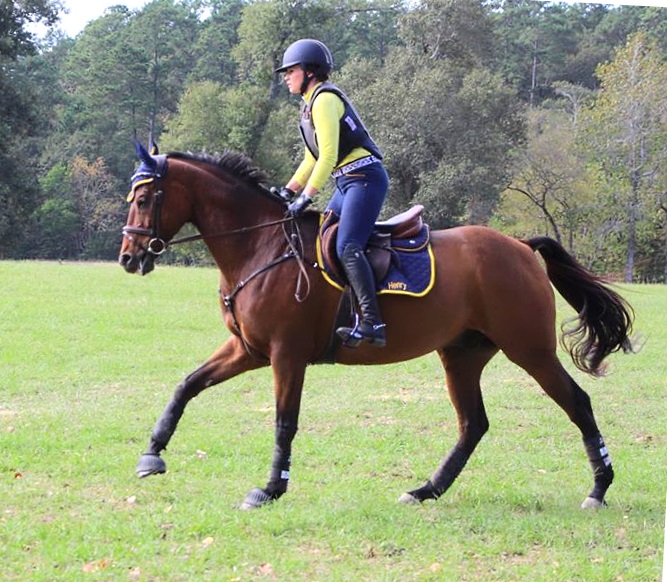
Since my group didn’t go until mid-day on Sunday, I spent all morning watching other groups do cross country. I noticed a theme throughout – tired horses. Considering we’d done over an hour of ring work the day before and jumped a lot of fences, this wasn’t surprising. I got on Henry thinking that he too might feel a little tired and stiff. HA. HAHAHAHAHAHA.

not tired
HBMxc2
still not tired

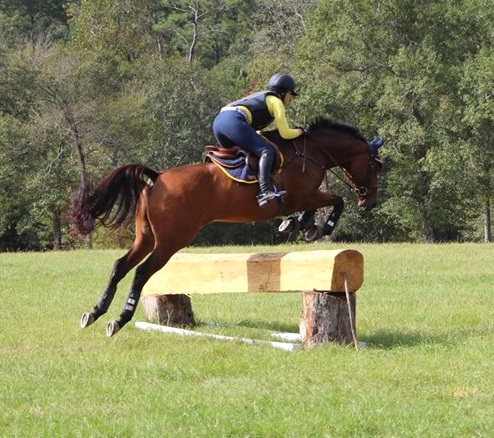
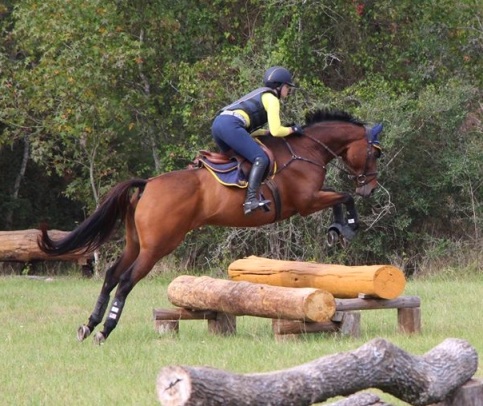
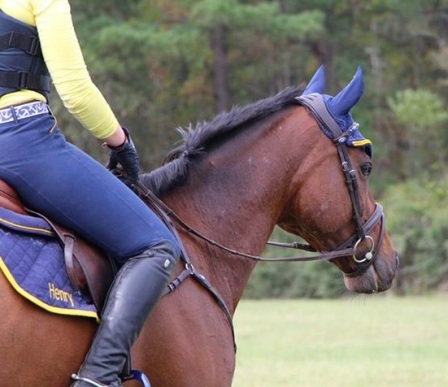
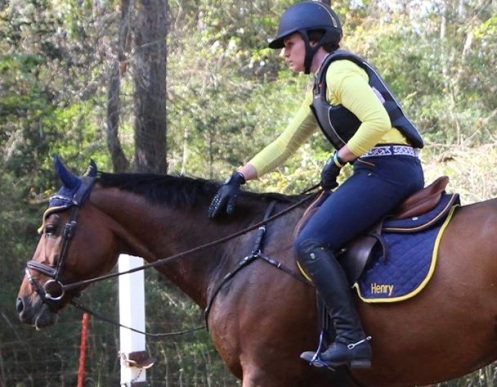
As soon as he realized we were walking out to the XC field he started jigging. I made him walk politely while he pouted, waiting for me to so much as breathe heavily so he could pretend I’d asked him to canter. Note to self – Henry is plenty fit. After a brief warm-up we trotted a teeny log, which he leaped over with such gusto that he popped me out of the tack. Oh boy, here we go. We cantered a few logs, then did a little mini-course. If horses could smile Henry would have been ear to ear galloping around the field. At this point I tossed my whip in the golf cart lest I die or end up getting dragged all the way to Louisiana.

HBMxc3
not lacking enthusiasm for tiny logs
HBMxc5
Henry’s idea of the best day ever
HBMxc9
Definitely still not tired

Once we started going, he settled in and got down to business. We did another small course, working on using the terrain to help with half-halts, and more emphasis on upper body position just like on Day 1. He was definitely dragging me a bit, and when he gets heavy like that he tricks me into dropping my shoulders, then we kind of end up in a heavy little ball together. Hawley said to think of it as keeping my hips forward when he does that, which for some reason really clicked in my brain.

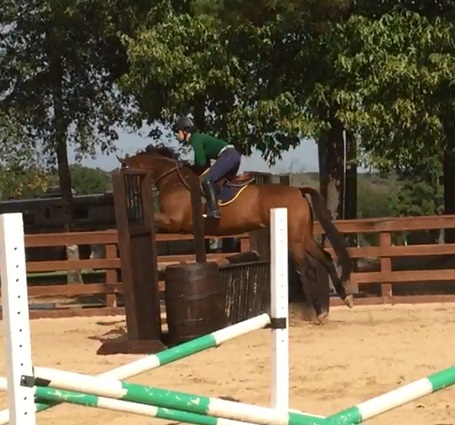
After that we headed over to the banks and water. My ground crew didn’t make it over there so no media from that part, but we popped up and down a bank (Hawley said she prefers to trot down banks, even at Advanced, so the horses really have time to look at where they’re putting their feet and understand the question), through the water and out over a fence, and did some jumps after the bank so we could practice a quick recovery after slipping the reins. Again the focus was on upper body position on the approach (vertical) and the proper canter (forward and uphill).

HBMxc6

HBMxc7
Everyone is impressed with me, right?

Hawley is also not a fan of letting the horse break to trot for the water… the water naturally makes the horse’s stride flat and long, so if we ride into it backwards, we don’t have enough good uphill forward energy to have a good ride out of the water. It’s the rider’s job to keep the canter forward and uphill, keeping the leg on and the energy in the step so that the horse doesn’t get bogged down and flat. Trotting the down banks and keeping a forward canter into the water is exactly what I’ve been doing with Henry, so it was good to hear that Hawley’s approach is the same. She also made a good point here that when you ride an upbank, the horse’s first stride after jumping up is naturally shorter than a typical stride (usually about 9′ as opposed to 12′). Because of that, it’s very important to land with your leg on and keep coming forward, especially if you have another fence right after.

HBMxc10After that we went into the woods to the ditches. Hawley asked how my horse was about ditches and I said that either he doesn’t notice them or he just jumps them greenly, so of course Henry trotted up to it and went WHAT THE HOLY HELL IS THAT and slammed on the brakes. Granted, it was a deep ugly ditch and most horses felt the same way. It took some cajoling but he leaped over, so we just kept trotting the ditch until he settled. I watched a couple of the other groups school the ditches too and Hawley was really great with the green ones here. Their only choice was forward, but she gave them time to understand that it was no big deal, not a monster, and made sure the horses were immediately rewarded when they jumped it. She said that she isn’t a fan of yelling and beating and scaring the horse into jumping – that it makes them just run at things out of fear instead of thinking their way through the question, and makes the rider look uneducated. Just give them time to understand and repeat the exercise until they’re relaxed about it. All the horses got it, and they were all calm by the end.

Once they were all trotting calmly over the ditch she built up a two stride to one stride coffin, then around to a vertical, two strides to an angled wall. We had to keep a good bouncy coffin canter and be very straight for the exercise to work. Henry was great here, and it was his first time jumping through a full coffin exercise. We let the horses be done with that, and Henry strutted the whole way back the barn. Ending an XC school with a confident horse is always a good sign.

HBMxc11

The clinic was great, Hawley has a lot of horse sense, and we learned a lot. Given the horses that Hawley has had success with in the past, I guessed that she had to be a tactful, sensitive, thinking type of rider, and that’s exactly what came across to me throughout the weekend. I’m very careful about who I ride with, since Henry is so, uh… mentally delicate. All it takes is one wrong reaction or one too many buttons pushed to cause a come-apart for him, but we never even got close to that point. He was happy and relaxed and confident the whole time. Hawley’s approach was really in line with what my trainer teaches and what I believe is correct, so it was a great building block to add on top of what we’ve already been doing. She demands a thinking, focused ride but she is still very kind and very fair. I would definitely ride with her again!  On to Buck in 3 weeks…


Hawley Bennett clinic Day 1 – Stadium

Day 1 of the Hawley Bennett clinic was stadium day. Considering the trouble we had at Greenwood in stadium with Henry getting flat, pulling me past all the distances, and being generally careless, I was really looking forward to getting some assistance from Hawley.

HawleyclinicStadium
the best I could do before I ran out of patience

When I got on Henry and headed into the ring, he felt VERY fresh. He’s typically not a horse that gets very fresh, so as he trotted around at Mach 10, pretending to spook at everything outside of the ring, I was groaning a little on the inside. After a brief warmup Hawley called us into the middle and asked us about our horses, problem areas, and what we wanted to work on. Then she sent us out to do a pole exercise. It was just three poles set close together on the curve of a circle, so it looked deceptively easy, but it’s really not. It immediately highlights any kind of straightness issues you have, or rhythm issues, or pace issues, or bend issues, or if you’re weak with your outside aids. I have no video of the canter poles so you’ll just have to trust me on this one – it’s both awful and fantastic. We did the exercise continuously both ways at the trot and canter, until the horses (ahem, riders) did it right, and it helped Henry settle in and focus. Hawley made sure to emphasize that this exercise is hard for the horses, so you should always reward them by quitting or taking a break when they do it correctly.
HBclinicss2

Then we moved on to a grid – a bounce, one stride, bounce, adding some jumps before and after, and going through the canter pole exercise in the corner as we went around. It was awesome to have those canter poles in the middle of the “course” because a) they were a great “rhythm check” – if you lost your canter rhythm, the poles did not work out well, b) the poles really helped put the horses back on their haunches going into the turn. I love/hate those stupid poles.

u89bv

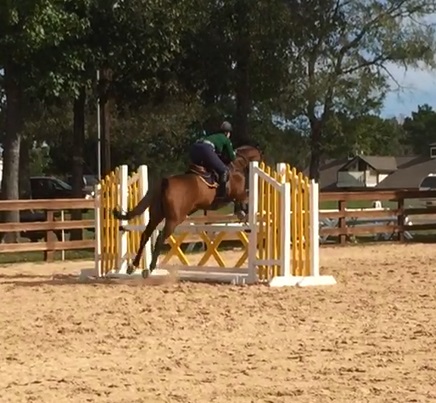
After that we moved on to some course work. The arena was set on a slight slope, so it was good practice to jump things up and down the hill. Henry spent most of the lesson wanting to pull me around, but it was more of a fresh, forward type of pulling than a flat, dragging kind of pulling. If that makes any sense. He was still obedient and listening, just stronger than normal.

I got to watch most of the groups throughout the day, and watching was just as educational as riding. The main points of emphasis were:

  • shorten your reins (pretty much everyone got told this at least twice, myself included. Let’s all just agree that when in doubt we’ll shorten our reins.)
  • shoulders back (constant throughout the day)
  • if it doesn’t work the first time, try something else (ie if it doesn’t ride well off one approach, change your line, don’t keep making the same mistake)
  • keep your rhythm (the whole point of all the work we did was finding and keeping a good consistent rhythm)
  • reward the horse when it does something right (ie if he saves your ass, pat him. If he does the exercise right, stop drilling it.)

Quality of canter was huge, as was correct upper body position and straightness.

HBclinicss1

Hawley demanded a good, thinking ride (if you clucked, broke to trot, or forgot your course you were getting off to do push-ups) but I thought she was overall very positive and kind. She said that one of her biggest pet peeves was people making stupid mistakes like going off course, because there’s really no excuse for that. “Competitions are too expensive to make stupid mistakes” – and she’s right. Focus and self-discipline are always good reminders. She was complimentary of my horse and my riding, but I still walked away with a few good things to work on. Overall a very good first day! And I didn’t have to do any push-ups, so that’s a win…

Horse show hangover

I have serious horse show hangover this morning, and I didn’t even go to a horse show. The Hawley Bennett clinic was this weekend, and Henry and I both had a great time.

HBclinicnom
Henry’s idea of a great time

He had an even better time yesterday when he realized it was XC day and proceeded to show everyone how he thinks he’s destined for greatness. My arms, shoulders, and abs are very sore this morning… kinda feels like I got hit by a truck, but upper body only. I appreciate the boldness Henry, but it’s time to try a Dr Bristol (anybody got one for sale?).

HBclinicxc1

The weather was perfect, the venue was beautiful, lots of friends came, and I was in a group with my trainer on her green horse, so it was all together a pretty perfect setting. We didn’t do anything big, the emphasis was on technical exercises (including a canter pole exercise from hell that will definitely make it into my regular rotation)… exactly what I was hoping for.

HBclinicstadium1
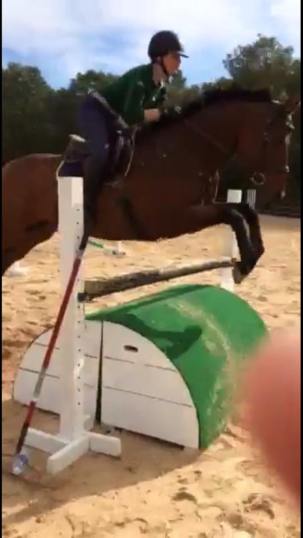
a video still (with a bonus finger)

I’m still working on getting the videos and pictures together to write a proper recap, so you’ll have to wait til tomorrow for that.

As for this week, it’s supposed to rain today and tomorrow so I figure now is the perfect time to start my dressage saddle dyeing project. Hopefully I don’t totally destroy it. Here goes nothing!

Review (with video): Noble Outfitters Ringside backpack

This is everyone’s favorite kind of post – one where I get to admit I was really wrong and have to eat a little crow. Oh, and there’s some Bobby involved… I still don’t get his appeal but you people seem to like him for some reason. I have to assume it’s because you don’t know him or have to spend time with him on a regular basis. Alas, I digress…

I never really understood the ringside backpack craze. If you’re a catchrider or a trainer, I could see how it would be useful. But the rest of us? I just didn’t see it, and I sure didn’t see it enough to pay $100+ for one (or in the case of this particular one, $89 from Riding Warehouse). Then our team won the Noble Outfitters ringside backpack as part of our prizes from the Adult Team Championship, and I was proven wrong.

NObackpackbobby
Bobby is pretty excited about the backpack too, as he demonstrates how well it holds everything in place.

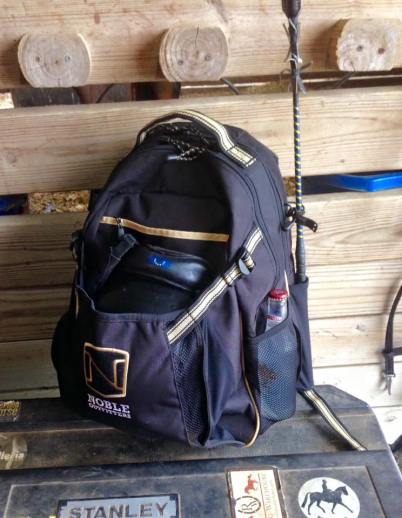
My first impression of the backpack was just how much stuff it could hold. When we got back to our hotel room that first night after winning the ATC and started going through our backpacks, it was like a magic hat. It seemed like the more stuff I pulled out, the more I found hidden within. I didn’t even realize we’d won coolers until I got to the big zippered compartment and went “Oh my god, there’s a cooler in here!”. You know you’ve got serious storage capacity when you can have a giant cooler in your backpack and not even know it.

NObackpack1

There are lots of different compartments in this bag. The first and most obvious one is the front pocket, designed to hold a helmet. I think Noble Outfitters has a superior design to some other companies here because their helmet compartment also has mesh fabric along the sides. If you don’t want to use it as a helmet compartment, it’s still useful for holding other things. Many of the other brands don’t have any fabric on the sides of the helmet compartment, rendering it useless for pretty much anything besides a helmet (or not very secure if you’re like me and keep your hairnets and gloves in your helmet).

On the sides of the outside of the bag there are two mesh pockets on each side – the front ones are a good size for water (or alcohol, for the eventers in the audience) and the smaller ones are perfect for a whip. There’s even a cool little whip holder thingy further up the side of the pack to keep a whip in place so it doesn’t fall out of it’s pocket. Very smart detail.

NObackpack2

Behind the helmet compartment there’s a mid-size zippered pocket. I tend to have a rag and/or extra socks in there (or Pop-Tarts) plus it has a little clip to hold your keys in the pocket.

Then there’s the big zippered compartment. The cooler, folded (or wadded, if you’re me) up inside of it only takes up half of the compartment. I can still fit a change of clothes and shoes in there with the cooler. There are also two smaller zippered mesh pockets inside of that big pocket, a good size for a wallet, phone, checkbook, extra hairnets… things like that.

Behind the big zippered compartment is a thinner padded compartment, perfect for a laptop, e-reader, tablet, or anything that’s a bit more delicate.

NObackpack3

Finally there’s a small, fleece lined compartment at the very top of the back part of the backpack, meant for sunglasses or a phone. My phone won’t fit in there in it’s giant brick-sized Otterbox case, so I usually just have chapstick and/or sunglasses in there.

Even though the backpack holds a lot, I don’t find it to be overly large or heavy. The straps are well padded and wide, so it’s comfortable to carry, and everything stays put very well. The construction is very good, with quality materials and nice tight, even stitching. I’ve been carrying the backpack with me a lot, both at shows and for every day. The fact that I can walk out of my house in the morning with everything I need for the work day and riding after work, all in one bag, is pretty great.

There are only 2 things I’d change about the backpack if I could:

1) The color scheme. I don’t really love the black and tan. Navy would be awesome, or minimizing/replacing the tan. Of course, that’s just me being really really superficial, because it really doesn’t matter what color it is and it makes the most sense for something like this to be neutral colored (but still, my life needs more navy and less tan).

2) I’d like for the outside helmet pocket to have buckles (thinking a basic plastic side release buckle?) as well as the adjustable straps. I love being able to make the pocket looser or tighter depending on what I have in it, but it’d be just a little bit more convenient if there was a buckle on that strap as well so that if I tighten the straps to hold something in, I could very quickly and easily unbuckle the strap to get the item out, without having to loosen the strap. Just a minor detail, if I’m being really picky.

Overall I’d give the Noble Outfitters Ringside Backpack 4.5 out of 5 stars. For an item that I never thought I wanted, I use it all the time and really love it.  I think a lot of riders, not just catchriders or trainers, would get good use out of an item like this.