If it seems too good to be true…

I’m sure I’m not the only one whose eyebrows shot up into their hairline yesterday when they read the post from USEA saying that Point Two was giving away 1,000 free air vests to members. I’m also sure I’m not the only one who immediately went “What’s the catch?”.

pointtwo

And yes, of course there’s a catch. The deal was worded like this in the article:

ProAir Jackets are valued at $675 and Point Two is offering these vests at gratis to the first 1,000 current USEA members that claim them. Members must commit to a 5 year servicing package ($75/year), with annual service including: a cleaning of the outer shell, servicing and replacing piston, springs and lanyards if needed, a brand new air bag, and a lifetime warranty. Members must also purchase one CO2 canister at the time of the annual service.

That got my spidey senses tingling, because I just couldn’t see them handing vests out and hoping people actually sent them back in yearly for servicing (which almost no one does anyway). So naturally, because I’m the nosiest person on the planet, I emailed and asked for more details about the costs involved and the terms, which is when you get the full story:

“The terms of the promotion as follows. $375.00 paid up front for a 5 year service package. Every year when you send your vest in for service you will be required to purchase a canister ($30.00) as well as pay for shipping.( shipping is $17.00 )”

Ah, well, that makes a lot more sense doesn’t it. $375 up front (keep in mind they were selling demos for that much last year, so you know they’re making money at that price) means that they are assuring they see a profit regardless of whether or not you ever send it back for service, plus $47 a year on top of it. Because yeah, their normal annual service rate is $75, but it includes shipping and doesn’t require the purchase of a canister. Those terms make me think the number crunchers at Point Two did a great deal of thinking on this to figure out how to still come out profitable in the end.

I’m not saying this isn’t a good deal. If you really want a vest, were planning on buying this particular brand anyway (at which point I would urge you to compare/contrast), and you would actually be among the 2% of people that sends it in for service every year, you’re gonna come out ahead. But otherwise, make no mistake, this is a payment plan. $375 up front plus $47 a year (plus whatever shipping costs for you to get the vest to Point Two, probably $10ish) for 5 years is a $660ish commitment.  Let’s call a spade a spade – this isn’t a giveaway, it’s a sale in fancy wrapping.

Point Two has done a very smart thing here; they’ve invented a way to “give away” product, still make money at it, and boost their repair/service rate. How’s that for a business rejuvenation plan? Anyone care to guess how many people will ever send those vests back in for service? Enjoy your $375 vests, y’all. 😉 Hey, maybe Point Two will use the profits to fund some research (specifically regarding: if the sudden and violent inflation – particularly the inward direction of the Point Two – exacerbates injuries that have already occurred, the risk of destabilizing neck and spinal injuries as the vest deflates, the failure rate of detachment, the failure rate of inflation, etc). Then again they’ve said in the past that they don’t have any interest in doing research, so I won’t hold my breath.

One really good thing that I do see coming out of this is greater public awareness of the fact that air vests need regular servicing. Point Two’s website recommends annually, after six deployments, or after a hard fall. While it’s true that the mechanisms inside are designed to last longer than a year, dirt and/or water in particular can cause them to massively fail, particularly at/near the canister and lanyard. Of the people I know that own air vests, almost NONE of them get the vest serviced regularly. If you’re going to attach yourself to your horse, at least make sure that your chances of coming properly UN-attached are as great as possible!

Plastic tack – the verdict

If any of you remember my confessional post all the way back in June about my tack snobbery, you might also remember that I went way off the rails and bought a beta halter and beta reins. I still don’t even know what beta really is… plastic? Rubber? Unicorn tears mixed with the rendered body of Gumby? Who the hell knows. But now that I’ve had the halter and reins for a few months I thought it was time to weigh in with an update.

The short version? I love both items. Like, a lot. Like way more than my super snobby tack ho heart ever imagined. I still have a really hard time admitting it because this makes me question everything I’ve ever known about life in general. Let’s back up and talk about what I bought and from where and how they’re performing.


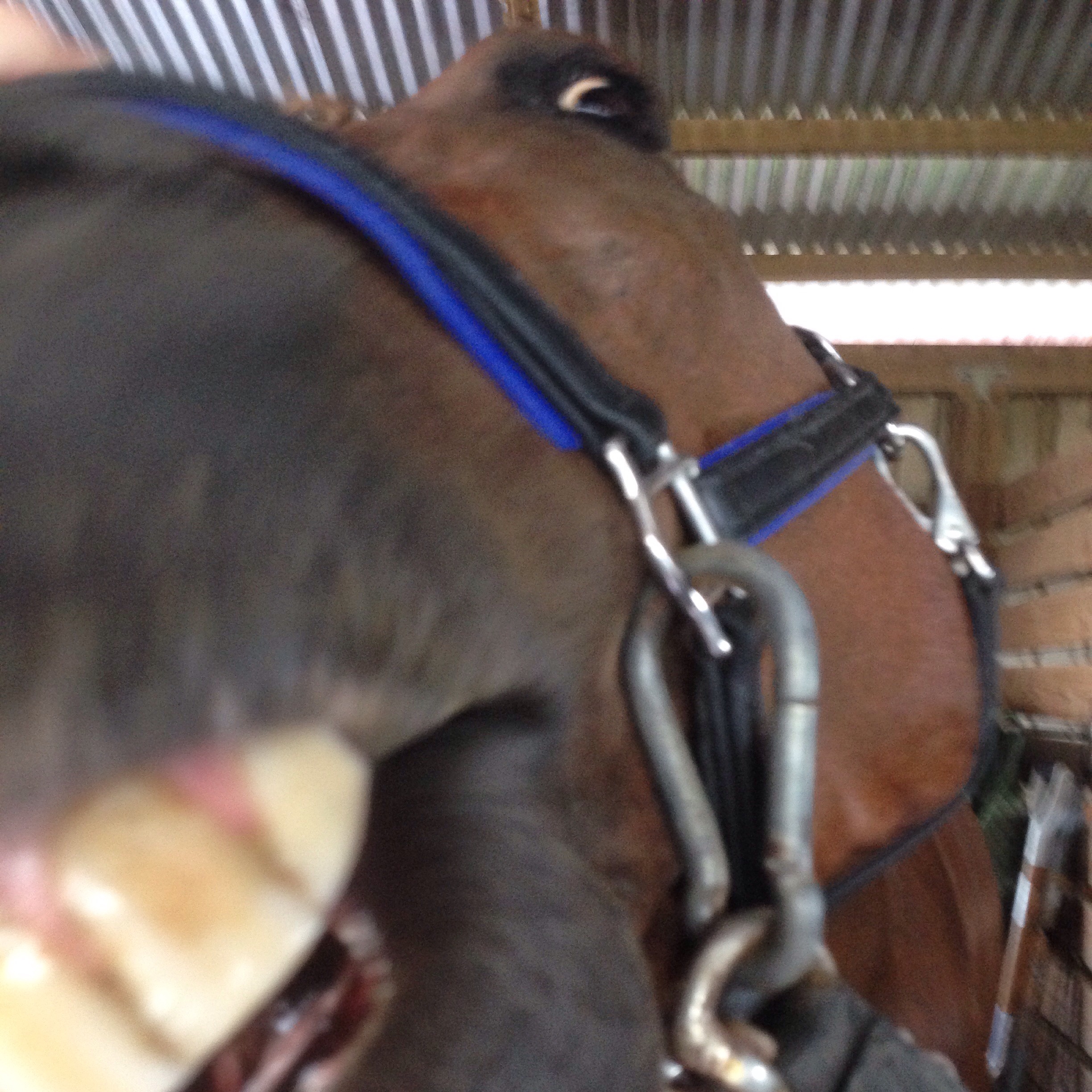
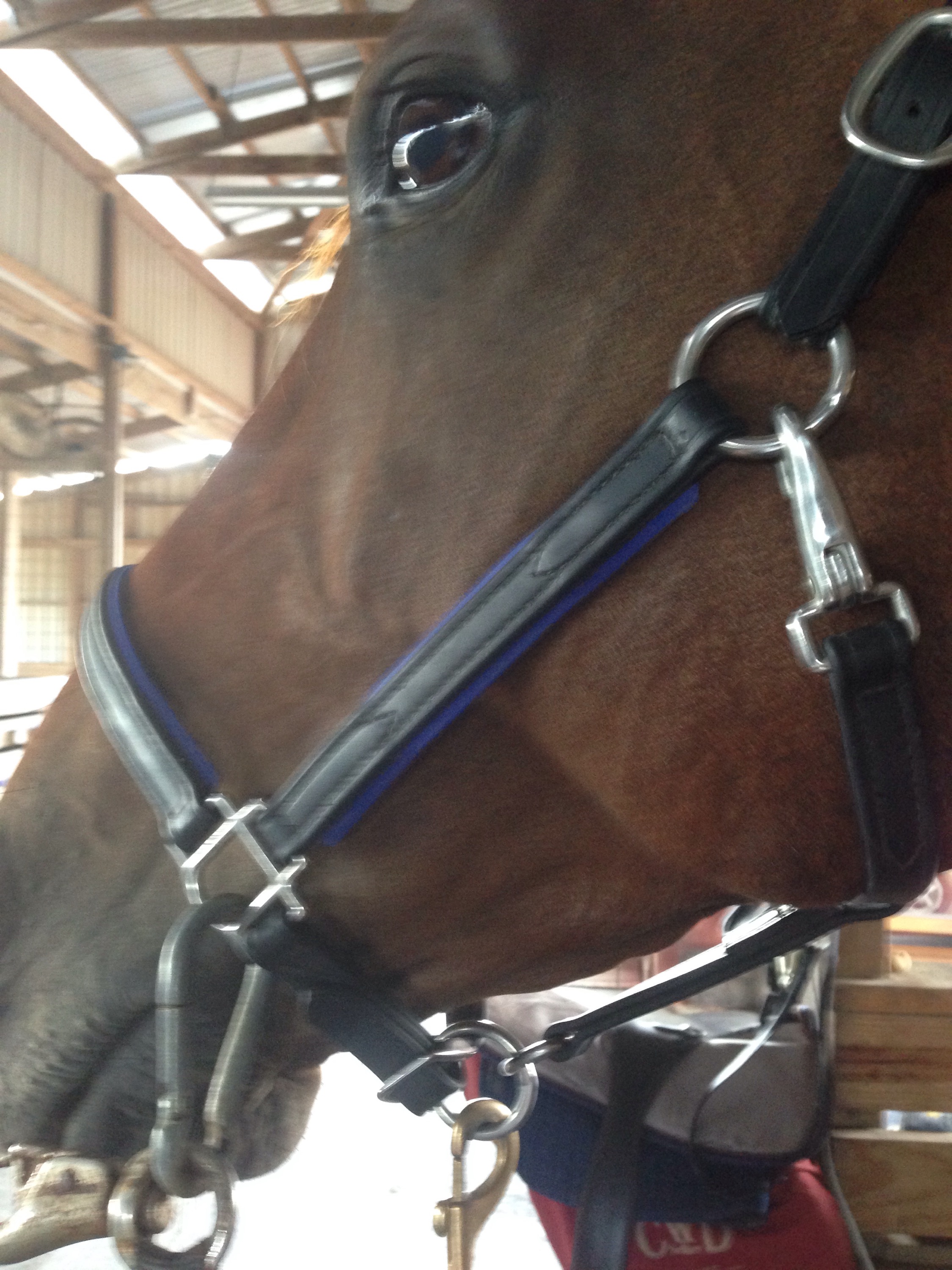
I ordered a black and blue beta halter and brown and blue beta reins from Corner Stable Tack. There are lots of color options for the halters but navy isn’t one of them so royal was the next closest thing. It comes standard with an adjustable nose and throatlatch snap, but I paid $5 extra to upgrade the hardware from plated to stainless, bringing it to $45. You can also add a breakaway tab for $5. The reins have the exact same thin rubber grip as the Nunn Finer Soft Grip reins, which is why I bought them. With a colored grip they were $55 for horse size and come with buckle ends. The blue is pretty damn bright – again I wish they had navy, but since these reins are for my hacking/conditioning bridle, I don’t really care. And honestly… the bright-ass blue has kinda grown on me a bit…

IMG_3585
Henry still seems mortified

The halter is really nicely made and I think the colors look nice. Bobby got a black and red one that also looks super sharp on Halo. I have no complaints about the halter and in fact, Henry’s super stubborn behind-the-ear fungus that I’ve been battling off and on for the better part of year has completely gone away since I switched to the beta halter. Magic (obviously that’s where the unicorn tears come in). It’s nice to not have to worry about conditioning and cleaning a leather halter, especially in the summer when you’re hosing the horses off every day.


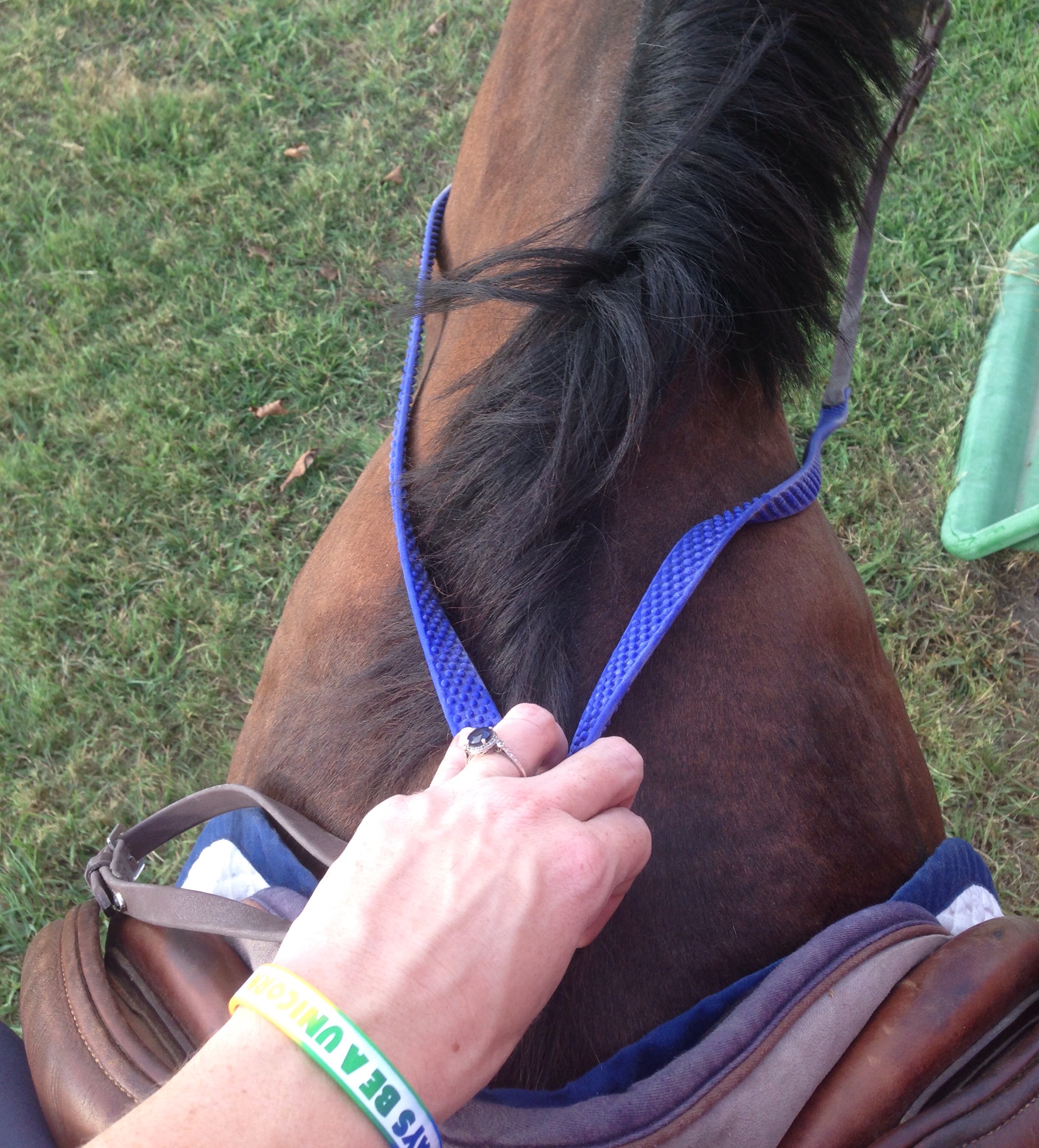
I don’t use the reins as much, maybe once every week or two, since they’re on my hackamore bridle. When my next pair of reins die I think I’ll replace them with the regular black or brown beta, because I really love the grips on these. No one in the world is going to know they aren’t leather unless they come up and examine them, which would be creepy and weird.

Love the thin, flexible grips

So what’s the benefit of beta? So far I’d say the price and the ease of care. A leather version of my halter is more like $90-100, and the leather Nunn Finer version of the reins are about $90. The beta stuff basically runs about half price, plus has more color options and since it’s made to order they’re customizable by request. As far as cleaning goes, I’ve cleaned both things a grand total of once so far and literally just threw them in the wash. It was an oddly liberating feeling to throw tack in the wash.

Bobby’s fancy red and black halter with matching lead rope

Would I replace my whole fleet with Beta? No. I really love my nice leather bridles and breastplates and saddles. But I do see the benefits of replacing certain items with something cheaper and easier to care for. I’ve been pleased with both of my purchases, even if I still won’t say the word “beta” at anything more than a whisper.

It’s in the Blood

I am probably one of the few bloggers nerdy enough to follow the young horse competitions in Europe, but this year I’m kinda glad I did. The Bundeschampionate (basically a big fancy word for the German Federal Championships for Young Horses and Ponies) is held in September every year features the best young sporthorses and sportponies in Europe. If you’re into breeding it’s a pretty cool thing to keep up with because you can compare and contrast a lot of different bloodlines at once.

The Bundes is no joke. Both sections of the eventing championship – the 5yo and the 6yo – have some pretty serious courses to conquer. The format isn’t exactly the same as a regular event – the courses are shortened, the gallop is assessed, they are scored numerically, etc. Basically they are evaluating the horse’s potential to go on and be successful at the upper levels of the sport. More like the Young Horse competitions here in the US, but on steriods. This is last year’s winner of the 5yo section.

I haven’t paid much attention to the dressage or jumping sections lately, but this year I did keep an eye on the eventing sections. Two horses in particular jumped out at me in the 5yo Finals. The first was a familiar name – QC Diamantair. We saw that horse when we were in Belgium at the awesome castle-like barn of Lara de Leidekerke’s.

QC Diamantaire at BuCha
diamantair
QC Diamantair when we saw him in Belgium

The second that caught my eye was the eventual winner of the 5yo final, Michel 233. He’s by Mighty Magic out of a Hanoverian mare. Some of you may remember that I’m planning on breeding Sadie to Mighty Magic next year. Some of you might also remember that Sadie is Hanoverian/TB. So naturally when I saw Michel I perked right up and dug a little deeper into the pedigrees. Turns out that Michel’s dam has 4 relatives in common with the Hanoverian side of Sadie’s pedigree – Gotthard, Wendekreis, Abglanz, and Der Lowe. Granted, nothing super close up in the pedigree but definite similarities nonetheless. Very interesting, and pretty encouraging, that the 5yo Bundeschampionate winner is bred kind of similarly to what will hopefully be my next eventer.

I’ll take one of these, please

Does anyone else pay attention to – or care – about young horse competitions, either here or abroad? I will be keeping a close eye on our Young Event Horse series as the time comes…


Eventing By Number

It turns out that me tossing in that little stadium statistic in my Corona recap a couple weeks ago (only 15% clear rounds in our division) was just the beginning of something bigger. My barnmates and I got to talking over the weekend about which venues seem to produce more rails in stadium, which ones tend to have “easier” XC, etc etc. Then I starting thinking – surely I can come up with some numbers to substantiate our hypotheses. Lord help us all when I start trying to math.

It took me a really really ridiculously long time but come to find out I CAN actually count, and luckily the internet has a percentage calculator so I didn’t really have to do much of anything except plug numbers in. Praise Google.

So here’s what I did: first I had to figure out what numbers we actually wanted. I decided to only do venues in Area 5, and only calculate statistics for Novice and Training level – the ones I care about. I decided to look at the percentage of clear rounds (jump penalties only – I threw out time penalties for this) for both stadium and XC at N and T at every venue in Area 5. For XC, jump penalites consisted of refusals, retirement, or elimination. I threw out every TE because those are more rider error and therefore not really valid for what I was after, and also threw out W’s because there’s just no telling why people withdrew. For stadium if there was one or more rails, it wasn’t a clear, obviously, but I didn’t factor in time faults for that either.

Then I started adding them up and calculating percentages for each show at each venue over the past two years. I could have kept going back a couple more years for more data, but a) my eyes were already starting to cross with just two years worth of data b) I noticed that the numbers at each particular venue tended to be about the same at every event c) since each venue has at least 2 shows a year I already had a minimum of 4 data sets per venue. Of course, that data can have a lot of factors behind it. Bad weather could lead to a high percentage of problems, or something else weird going on could skew things. For the most part though the numbers were consistent across the board. When I had a percentage for every show at every venue I then went venue by venue and averaged out the percentages to come to one final number. Here’s what they look like

Novice:

NoviceStatiumStats

There was nothing too surprising to me here. I figured Corona and Greenwood would have the toughest stadium and they did. Good to know Holly Hill is right in there too. Does Feather Creek super glue their rails to the cups?

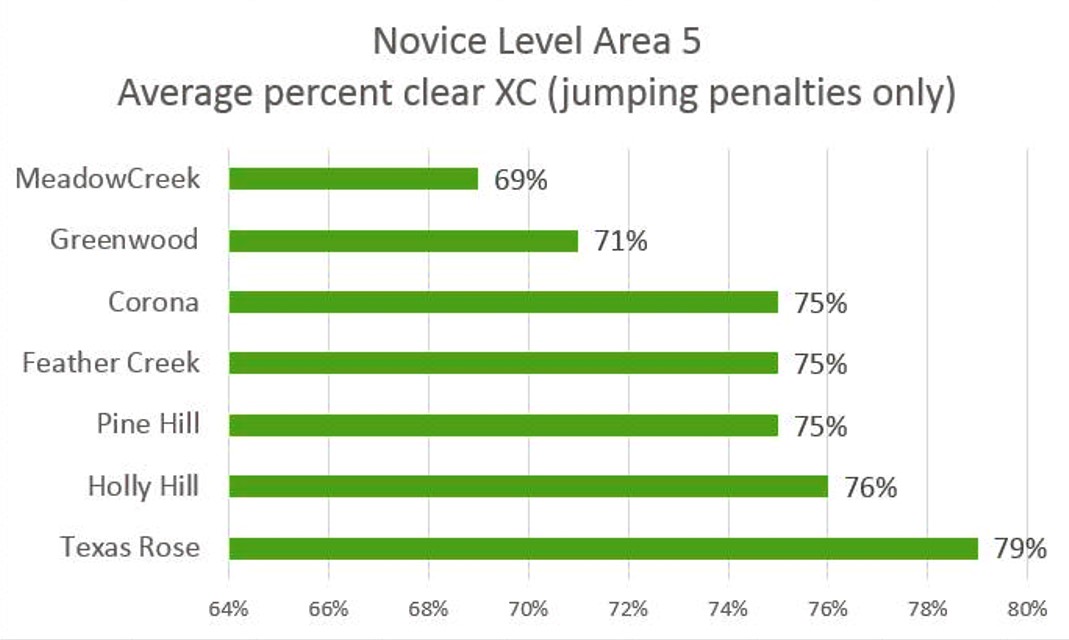
NoviceXCstats

On the XC side of things nothing was particularly surprising either except that Texas Rose had a much higher “Clear Rate” than I expected. But having ridden around it, I can understand why. It’s not small and has some technical questions, but it’s pretty open and gallopy and inviting. It’s also worth noting that there’s only a 10% spread between the highest and lowest percentage of clears – not a very big margin.

Training:

Trainingstadiumstats

Training was interesting to see too, just because I’ve never really paid much attention to the Training level courses at most of these venues and obviously I haven’t ridden any of them (except MeadowCreek a million years ago). If you throw out the top and bottom numbers in stadium they’re all pretty darn close. Also no surprise that the general Clear Rates for Training stadium are less than Novice. TrainingXCstats

The XC I thought was interesting. Holly Hill was far and away the “winner” there, I’m guessing because it’s another open, gallopy course similar to Texas Rose’s Novice. Mental note to also walk the Training course when we’re at Holly Hill for Novice Championships next month… I want to see for myself!

In general these numbers really aren’t that scientific and probably don’t mean a whole lot in the grand scheme of things. But it was interesting to put together, if nothing else, and will certainly make me pay a little bit more attention going forward.

And with that, I have far exceeded my quota of math for the year.

Weekend Recap – XC schooling and hamster brain

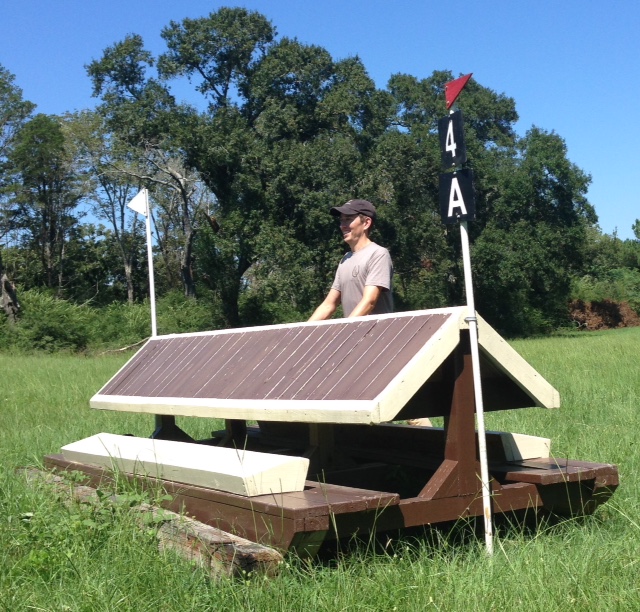
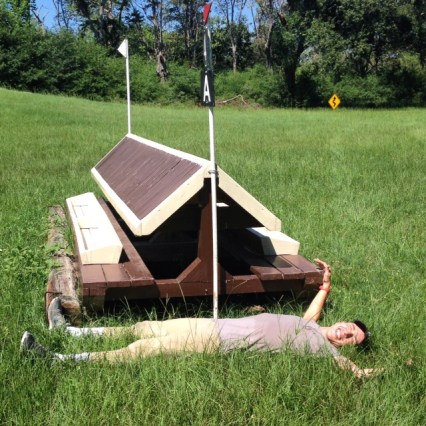
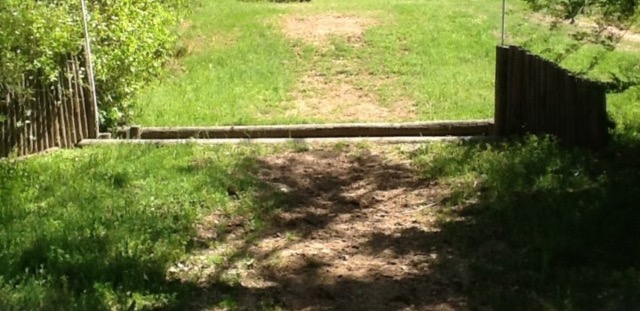
I hope points are awarded for effort, because I TRIED to get helmet cam footage of our XC schooling this weekend but failed. Again. My camera was actually on the entire time, just not recording. Technology, it has defeated me once more. BUT, I did get pictures of Bobby posing with the Training fence we jumped, and stole general internet pictures of the Prelim half coffin we jumped too, so that’s something…

FullSizeRender (8)

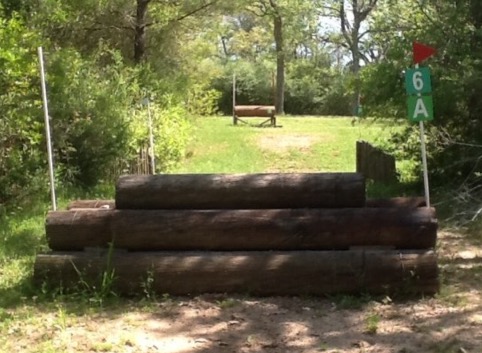
Cantering up to the T fence, it didn’t look that big. Then we took off and I was like “Oh, that’s wide AF!” but by then we were already over it. Yay for not looking at fences before you jump them! Then you don’t know how big they really are.

IMG_3522
As wide as Bobby is tall. This is what we do in our free time.
no for real, from every angle

In general the schooling was a really good day. Henry started out a little bit spooky (I have no idea why he’s spooky at this venue, he’s normal everywhere else) and I was trying to showjump canter everything, but once I let him go forward it was amazing how things actually worked out. Duh. The word of the day was “allow”. Half halt with the body but allow the horse to keep coming forward to the fence. We need to school XC more so I get better about remembering this.

We strung together a few BN and N fences to start, then went to the water and jumped the BN, N, and T routes through there. No problem with that stuff. Then up to the big mound taking the N route and circling around to the big Training hay feeder thingy. He peeked at that off the ground a little and I gave him a tap on the shoulder, then galloped around and he jumped it well the second time. In retrospect, that’s the biggest XC fence he’s jumped to date and it’s kinda spooky, so I can see why he gave it a little peek the first time!

Then we went over to an open ditch that was probably the deepest Henry has ever seen, AND it had water in it from recent rains. He’s jumped a few open ditches and several Trakehners but nothing quite this deep and dark. All the horses were a little spooky at it but with some encouragement and repetition it smoothed out. Henry was definitely looking down into it but he went. Once Trainer said “just ride it like a canter stride” something clicked in my brain and ta-da: it rode perfectly. Just like a canter stride. It’s amazing how sometimes all it takes is the right words… that’s how she fixed my down bank issue too. I think she’s a wizard or a voodoo queen or a unicorn priestess or something.

FullSizeRender (9)

After the ditch itself was smoothed out, we jumped the ditch with two strides to the prelim log stack. It wasn’t very big, probably only 3′, but it’s the first ditch combination Henry has ever done. The whole thing took a few more shoulder taps but once he figured it out he was super game, locked on, and went right through.

FullSizeRender (10)
we were jumping it the other way, ditch to log pile

All the shoulder taps he’d received up to this point (oh, what… 4 or 5? Henry says it was a million) had gotten him a little upset so we took a minute and relaxed and I made a big fuss over how good he was while he velcroed his brain back in place. Poor boy, those hamsters in his brain were working on overdrive the whole day. We ended the schooling with a trip up and down the banks, both of which he did perfectly on the first attempt so we let him be done with that. Mentally he was at full capacity for learnin’.

On the way back up the the barn Trainer and I discussed my plans for the future. I had intended on cornering her after AEC and giving her my 2 year plan (nope I’m not That Weirdo at all, I dunno what you’re talking about) but she beat me to the punch. I was happy to hear that her timeline for a move-up was actually even a bit ahead of my own plan, and that she approved 100% of the Novice 3 Day at Coconino. Will we run a Training before then? She thinks it’s possible. We’ll see how things work out. A lot will probably depend on how wet and miserable this winter is… if we can’t ride, ain’t nothin’ gettin’ done. Until then, I’m super pleased with the progress we’ve already made in Henry’s first year as an event horse. On to the fall season… starting with AEC NEXT WEEK.

Whoa wild eventer. Whoa.