Having had nothing but green horse after green horse after green horse for, basically, ever, I am really enjoying this phase that Henry’s in. He’s 11 now, which sounds so mature, and he’s now entering his 4th year of eventing. He’s starting to actually feel like a horse that knows how all this stuff works. It’s a bit foreign to me to have a horse like this, but it’s also quite nice.
Very mature. Much smart. I won’t tell everyone how long it took him to figure out his slow feed hay net and how many tantrums were involved.
We went to Texas Rose this past weekend to school XC one more time before season starts. I arrived on Friday night, got Henry settled into his stall, set up my tent, and we both went to bed. Northeast Texas had record amounts of rain up there (I say “up there” because it’s literally 4 hours north of me) in February, but somehow the footing was pretty fantastic. The weather was perfect on Saturday too: sunny and highs in the 60’s. Couldn’t ask for much more than that.
Our group headed out around 8:45 and Henry immediately knew what was up. He’s been to Texas Rose 3 times before, so I think he’s figured out where everything is at the facility. As soon as we turned toward the road to the XC course, his walk doubled in speed and pep and soon we left the rest of the group behind. He was LIT, and super excited to be out.
Despite showing at TR a few times (once at BN, once at N, once at T) we’ve never actually schooled there before. The course has such a wide variety of fences though – two waters, several ditch questions, good use of terrain, etc. It’s a nice mix, so it’s great for schooling. We started warming up, which was mostly me convincing Henry that yes, we did indeed have to TROT before he could canter. If you’re into trantering, we’re pro-level. He wasn’t spooky or stupid, just really really really pumped to be there. It was a good feeling. Like a horse who knew what was coming and couldn’t wait to get down to business.
We hopped over some warmup fences to start and he just felt fantastic pretty much right from the beginning. He was focused, he was forward, he was balanced, and everything came up easily. Then we headed over to one of the waters, jumping some Training and Prelim fences. Again he was super on the first trip through, so we opted to save his legs and let everyone else school it more. That first water was definitely deeper than normal because of all the rain… we got soaked.
Then we strung together a few little fences (N and T) out in the open to make sure we still had a good functioning half-halt. I think he was slightly offended to be jumping those, but he obliged. After that it was over to the trakehners, where I tried to kill us both at the Prelim one by running him at nothing, and he proved his ability (yet again) to epically save my ass. We jumped the T one a few times to re-establish the fact that sometimes I can manage to NOT ride like an idiot. Good pony.
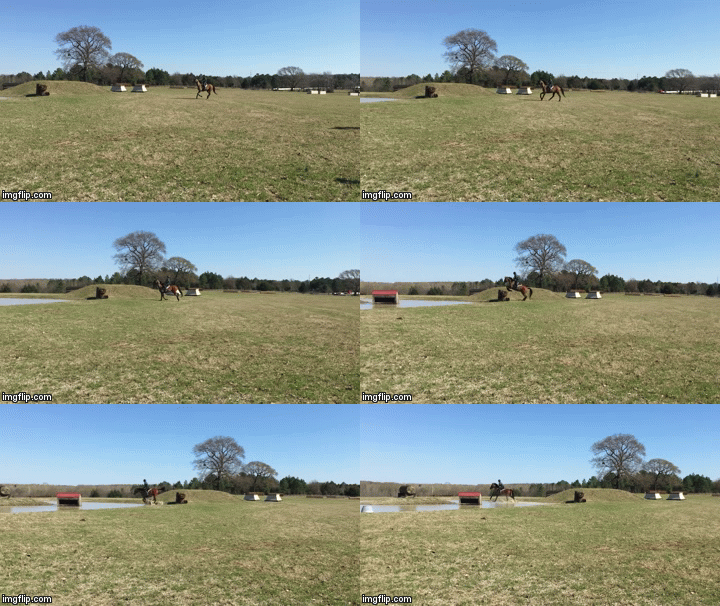
Then it was over to the other water, where we jumped the T hanging log in, looped around to the P log in, and then looped around again to the skinny in the water (which didn’t get captured on video, sadly, but you can see the jump – the little red house looking thing). It was Henry’s first time ever jumping a fence in the water, much less having said fence be an decently-sized unflagged skinny, so I think he was a little surprised by it, but he locked on anyway and jumped it no problem. Always game.
Then we played at the Weldon’s walls (they built new ones with much smaller ditches in front but a steeply sloped downhill landing, so it’s fun to ride) which were no problem, then went over and did a line of fences that included a steep downhill gallop then steep uphill to a skinny. That also rode really well. I really like how the new course designer has used the terrain.
I wanted to make sure Henry still remembered how to drop down into water, so we capped off the schooling by going back over to the first water and hopping down the bank. Again, no problem. Really the only bad jump we had all day was the time I rode like a moron to the Prelim trakehner – totally my fault, not his at all. Henry didn’t put a foot wrong all day. He felt fantastic. He felt super confident. He felt… educated. Things are clicking, and it’s fun to feel his progression these days.
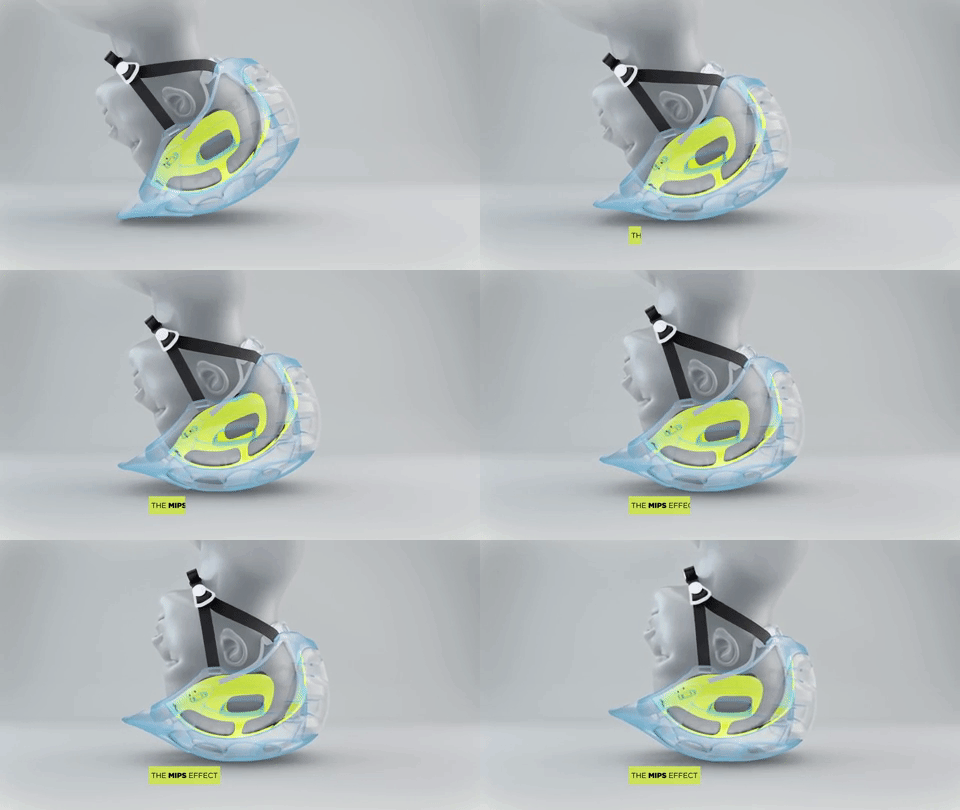
Unless you live under a social media rock, you’ve probably heard something in the last few weeks about the new MIPS technology Trauma Void™ EQ3™ helmets that Back on Track® has started distributing. It should be of no surprise to anyone who reads this blog that I was all over this thing like white on rice. Safety technology as it relates to horse sports? Right up my nerd alley. MIPS technology isn’t totally new to me, being a cyclist as well, but I wasn’t as familiar with all of the specifics as I wanted to be, as a consumer. So first I had to learn more about what exactly MIPS technology IS, and what it isn’t. This video is relating to cycling helmets, but I think it does an excellent job at explaining what MIPS is and how it works:
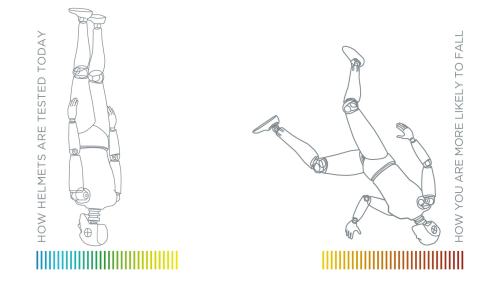
First thing to note: MIPS has nothing to do with standard impact protection – ie what all that padding in the helmet does. Your regular impact protection comes from that good ol’ EPS (Expanded Polystyrene) foam layer that is in all helmets. The EQ3 helmet still has that, just like any other helmet. What the EQ3 helmet also has, that no other equestrian helmets currently available in the US have, is a MIPS layer, which is designed to reduce the rotational forces caused by angled impacts. Traditional helmet testing mainly uses straight-force impacts, but as anyone who has fallen off enough times knows, the majority of our actual blows to the head come from angled impacts.
dunno about y’all but I’ve never fallen off like the dummy on the left
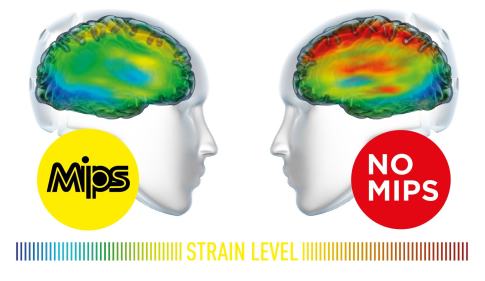
Okay, so what’s the difference in these impacts as far as how they relate to head injuries? Mainly something that MIPS calls “brain strain” (this is where it’s important to note that MIPS technology was developed by scientists – including a brain surgeon and a dude with a PhD on head and neck injury biomechanics). In their words:
From an engineering perspective, rotational motion is a combination of rotational energy (angular velocity) and rotational forces (angular acceleration) that both affect the brain and increase the risk for minor and severe brain injuries. The reason that the brain is more sensitive to rotational motion is that the brain is very much like water or a gel when it comes to its shear properties. The brain, like water, is also incompressible. Therefore, a linear motion will not affect the brain as much as a rotational motion.
Common injuries that are proven to be linked to the rotational forces caused by angled impacts? Things that probably sound familiar to equestrians, such as subdural hematoma and concussion. The MIPS layer has been designed to reduce these rotational forces, thus, hopefully, reducing the subsequent injuries.
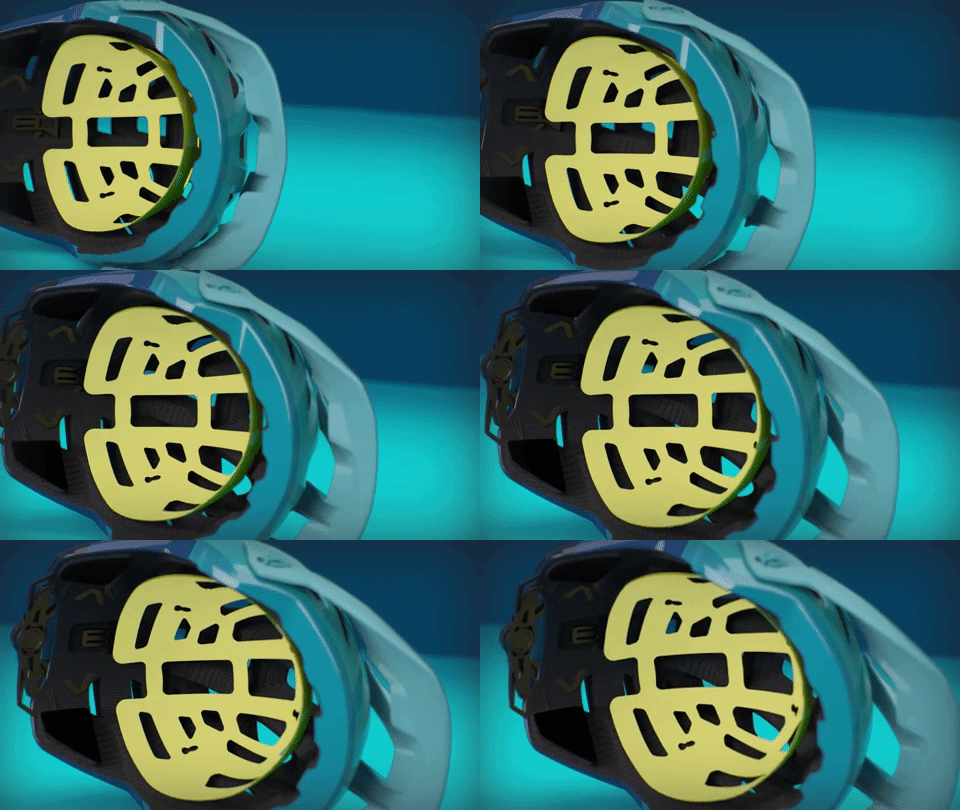
MIPS is basically just a thin layer that is between the EPS and the helmet liner itself that allows the helmet to rotate a few millimeters in any direction around the head in the case of an angled impact. This decreases the rotational forces on the brain itself.
side impactangled front impact
MIPS technology has also been used in cycling helmets, motorcycle helmets, and snow helmets. Originally it was introduced into equestrian helmets in Sweden, via the EQ line, where they have been in use for the past few years. This is the first time that this helmet technology has been available in equestrian helmets here in the US.
By this point you’re probably either buying into the technology or you’re not. If you want to read more about it, there’s plenty of info here. Or just… Google in general. It’s all over the internet. The studies conducted by MIPS have shown that it does actually help decrease these rotational forces. On that same point, you also have to understand that our current testing standards for equestrian helmets (for SEI/ASTM, for example) do not test for things like this. I’ve talked about it here before, but there is a ton of room for improvement in our helmet and safety vest testing methods. For real, look into it, you might be shocked. Alas… that’s a different topic entirely.
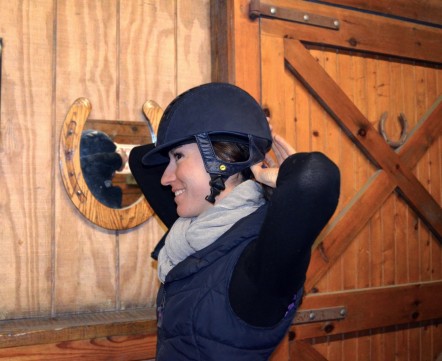
I personally am extremely interested in the MIPS technology, and really eyeballing these helmets hard. My “schooling” GPA is nearing the end of it’s lifespan, which means I will soon need to be looking for a replacement. Of course, even scouring everything that I could find about the helmets online left me with a lot of questions. I sent an email to Back on Track, who referred me to the design company, Trauma Void. I was able to get a phone call scheduled with Maria, who was infinitely helpful (and patient) as I spent half an hour asking her questions. So, here are some of the things I learned.
photo used with permission from Trauma Void
One of the first things I wondered, when I understood how MIPS technology worked, was whether or not the helmet would “jiggle” during regular riding. Maria said that she had wondered the same thing as well, but that she and the rest of their staff have been wearing the helmets and no one has noticed any movement, nor have they had any customers comment on it.
What about weight? Does that MIPS layer make the helmet weigh more than most helmets? The MIPS website says that the layer is very thin and weighs between 25-45 grams (so 0.0551156 to 0.099208 pounds). Not significant. Maria went a step farther and weighed an EQ3 helmet in each size for me so I could compare it to something more “known” to us on the market. The EQ3 helmet weighed in at 1.25-1.5lbs, from smallest size to largest size. I weighed all the helmets I could get my hands on (for science!), all in sizes 7 1/8 to 7 1/4, and they came in like this: GPA Speed Air weighs 1lb, Charles Owen JR8 weighs 1.2, Samshield ShadowMatte weighs 1.2, and Charles Owen 4 Star weighs 1.4. So based on that, there is little to no difference between a “regular” helmet and the EQ3. It may even weigh a bit less than a skull cap.
a view of the MIPS layer, which is under the padded inner liner
Because the helmet is being distributed by Back on Track, a lot of people seem to think that some kind of BOT material or product is incorporated here. Don’t worry, head-sweaters, that’s not the case. The liners are made of a Coolmax® material and are machine washable on the delicate cycle. There will also be replacement liners available for sale separately.
Another interesting feature of the EQ3 helmet is a brim that is more flexible than your standard brim, to allow it to bend and flex as needed upon impact, making it less likely that the helmet will shift out of place on your head or cause an irregular impact pattern. On the “smooth” style helmet this brim is covered in a PU (leather like) material, and on the microfiber helmet it is covered in microfiber.
And then of course, the thing we all want to know: how does it fit? Trauma Void says that the helmet tends to fit a bit more on the round side, but they were quick to point out a couple things. First, the helmet comes with two liners, a thicker one and a thinner one. These liners are fairly moldable, and between the two options they have been able to get the helmets to fit properly on most of the people that have tried them. They also offer a 14 day return policy if the helmet does not fit, or if you need to exchange for another size. Currently they are only available up to size 7 1/2, but they might be open to expanding the size range later on if there is enough demand (so those of you who need a larger size and want one of these helmets – EMAIL THEM and let them know!).
The helmets have four vents, two in the front and two in the back. Reports that I’m seeing so far from early users are that the ventilation feels similar to a OneK. Of the two different styles, the smooth comes in navy and black and the microfiber comes in navy, black, and brown. The Microfiber has a slightly glittery piping (black on the black helmet, a slightly lighter shade of blue on the navy helmet, and a golden color on the brown helmet), for those who are looking for something with a little more pizzazz.
photo used with permission from Trauma Void
At $249 the price seems pretty reasonable to me, all things considered. They also offer reduced pricing on replacement helmets in the event of a fall. You have to register the helmet online within 30 days of purchase, after which point you’re eligible for 50% off a replacement helmet in the first year, or 25% off in the second year.
Whether or not you like the helmet, they are definitely interesting. If nothing else, it’s a fun new technology to geek out over and have discussions about. Within the cycling community I’ve heard a lot of good things about the MIPS technology so far, and I definitely look forward to seeing how it applies to horse sports.
What do you guys think? Anyone bought one yet?
Also Maria gave me carte blanche to email her with any other questions, so if you have any feel free to hammer away and I’ll try to get them answered for you!
I don’t post a whole lot about dressage on here. Sometimes I’ll write a little bit about our lessons, and I do quick-and-dirty recaps of our dressage rides at shows, but there isn’t usually much media. Partly because don’t get a lot of dressage media, especially at lessons. Partly because when I DO get media, all I see is what’s wrong.
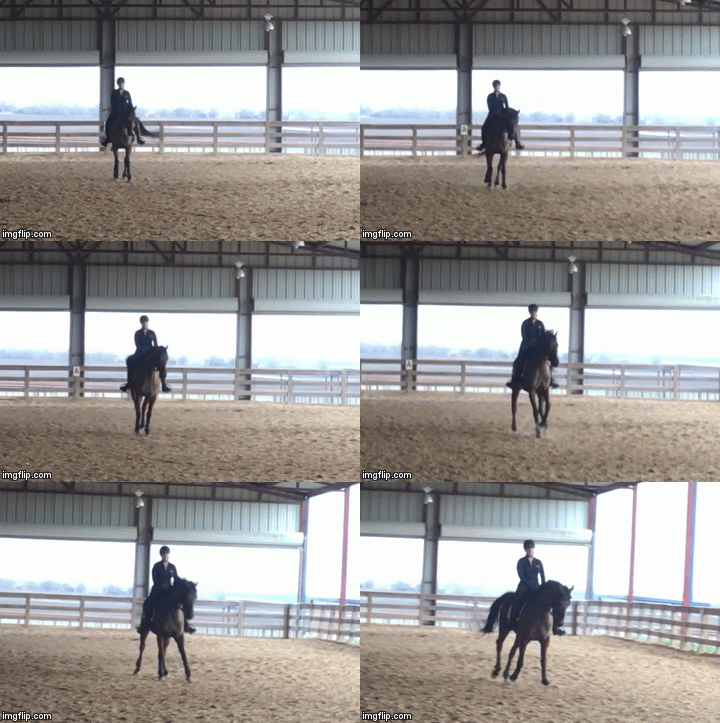
When you forget your polos at home and your horse has to wear his jump boots to your dressage lesson
The dressage on Henry has always been a struggle. It took us almost a year to where I could put my leg on him without him exploding, about 2 years before he really even accepted any contact, and almost 3 before he’d quit curling up behind the bit and chomping like crazy as his default. Cantering used to get him so worked up that the rest of our ride was spent on getting him to relax again. He’s a downhill horse who’s default is tense and tight and anticipatory, and it probably always will be. That’s just his nature.
Even though I know how far we’ve actually come, I can’t help but to always see how much farther there is to go. That’s just MY nature. I’m like that about everything when it comes to my riding. So when I look at pictures or video from dressage and my hands have gone rogue, or I’m sitting to the outside, or I’m hunched forward, or I’m not sitting correctly… I just don’t even want to watch it. Will I EVER get my damn hands up and sit properly? Who knows. I’m not very confident in our abilities when it comes to the dressage.
But I think I’m probably doing us both a disservice with that. Newsflash: dressage is hard. It’s especially hard for someone from a h/j background riding a horse that is not naturally well-suited to the sport. This year I have tried to be better about looking for the good just as much as I look for the bad. That’s hard for me, I’m naturally super self-critical, but I think I’ve gotten a little better at seeing the positive.
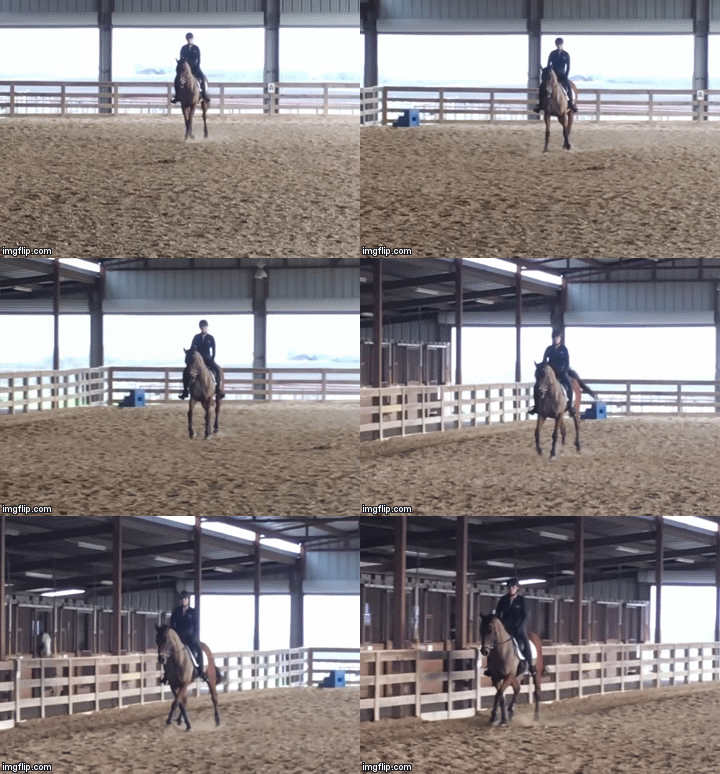
I finally got some dressage media last night (thanks Diane!) and while I’m not like… overjoyed at what I’m seeing, I don’t totally hate it. Do we need more “jump” in the canter half pass? Yes, always. Do the haunches lead sometimes? Yeah, I’m really good at over-riding the hind. Is the bend always correct? No, sometimes I do too much and sometimes I do too little. Will we ever have a lengthening where the tempo doesn’t get fast? I mean, who knows. Will I ever SIT UP AND PICK UP MY HANDS? Depends on how much duct tape you’ve got.
I could go on. There is a lot of room for improvement.
Henry is light years more rideable though, and I think I’m doing better at at least feeling and trying to correct my mistakes. He’s getting a bit stronger and I’m getting a bit more educated. Of course, every once in a while we’re both still total shit sandwiches, so there’s that.
He cute though. He real cute.
I think it’s time to rip off the bandaid with the dressage media though. Just because I see a lot that needs to be fixed doesn’t mean that I should hate looking at it. This is a journey, after all, and it will never be perfect. I’ve got to focus on the progress we’ve made, not the endless pursuit of perfection. My critical eye needs to legit chill.
So for those who really want to bore themselves to tears, I stuck the clips together into one video. This is mostly for me, though. This is going here and it’s going to live here, and maybe someday I’ll be able to come back to it and feel like we’ve come so far past this point. But for now, I’m going to focus on the fact that THIS is a hell of a lot of progress from where we started, and there are actually some good things happening.
If you haven’t gotten in on the blogger Yard Sale blog hop yet, go check out the master list here!
I, as usual, have a bunch of unused stuff laying around, so this seemed like a good opportunity to try to clean out a bit.
Paypal only, please. Shipping not included but I can get an estimate if you give me your zip code. All items ship via UPS ground. Spend over $150 and I’ll ship for free! Prices are not negotiable, I already put them at what I would be willing to take to save everyone some hassle. Whoever pays first is who gets it, sorry but I can’t hold things (mostly because I do not have the brainpower to keep track). You can either contact me here via the comments or message me through my blog’s facebook page.
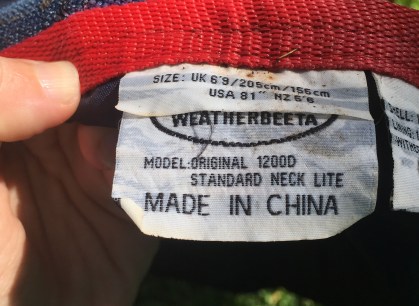
Weatherbeeta 1200D turnout sheet size 81. Used twice. His Majesty Henry requires HUG blankets so naturally he can’t wear this one. SOLD
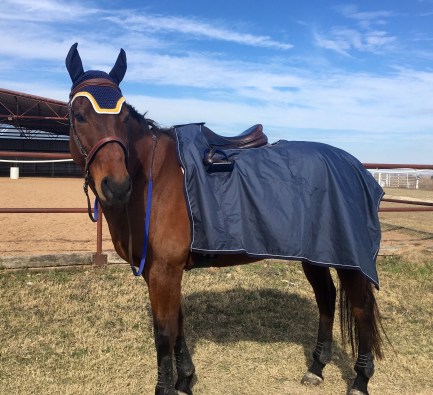
Clearly this is a stock photo. I can get more actual photos tonight if you require, but it looks just like this.
Quarter sheet, navy with reflective gray/white piping. SOLD
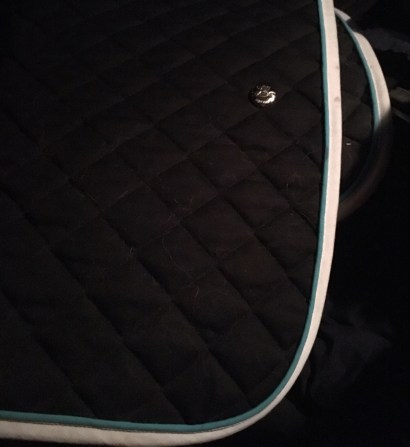
Ogilvy dressage baby pad, regular size. Black with white trim and turquoise binding. SOLD
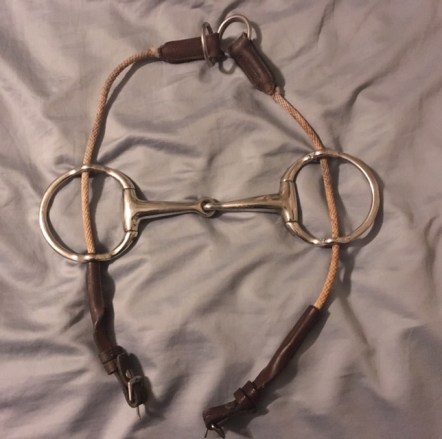
Eggbutt gag with rope cheeks – $30
Total Saddle Fit black calfskin dressage leathers. Only used for about a month. I punched one half hole, otherwise like new. – $40
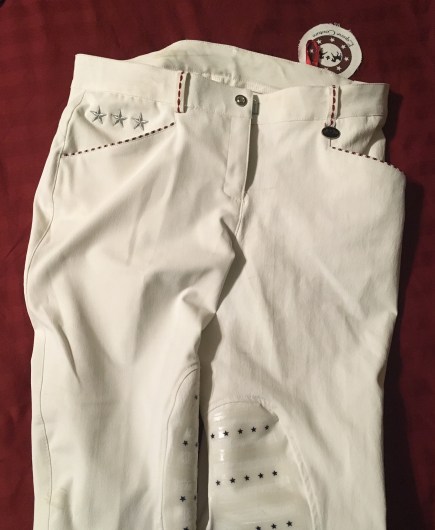
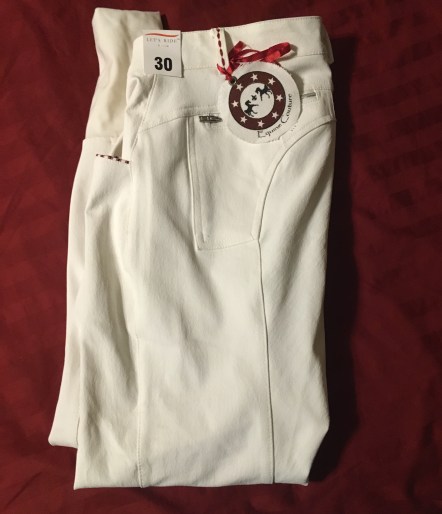
White Equine Couture breeches, size 30. New with tags. $40
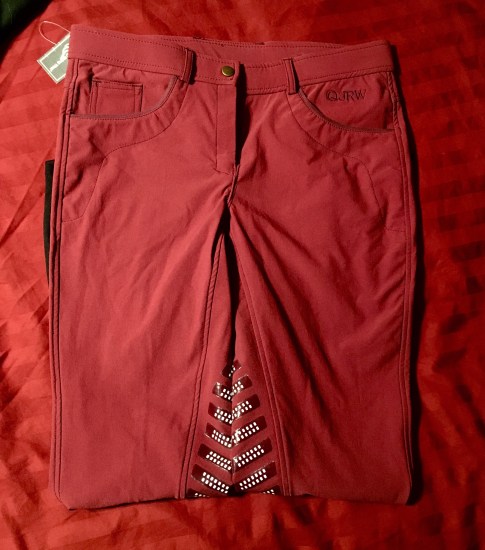
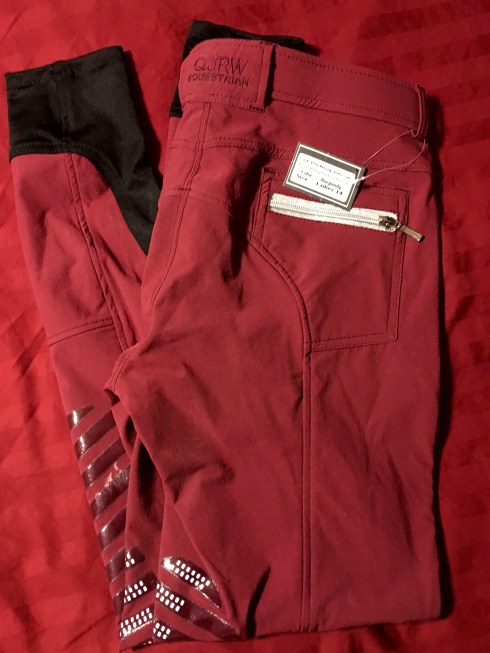
Burgundy QJ Riding Wear breeches, an Australian brand. SOLD
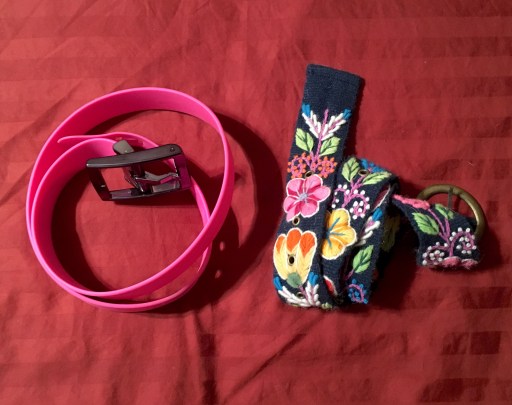
Belts:
hot pink C4 with black chrome buckle. Was cut to fit size 30, could be cut shorter but obviously can’t fit bigger. $15
Peruvian-made embroidered belt, fits size 30 on the middle hole so could go a little bit each way size-wise. SOLD
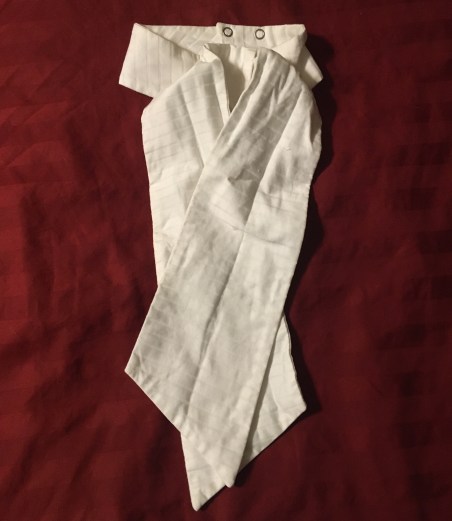
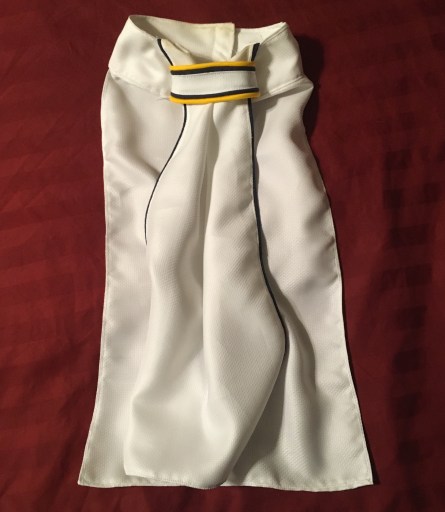
Stock Ties:
Style Stock tone-on-tone white stripe. SOLD
Custom made Burberry Horse white pique with navy and golden yellow piping. $20
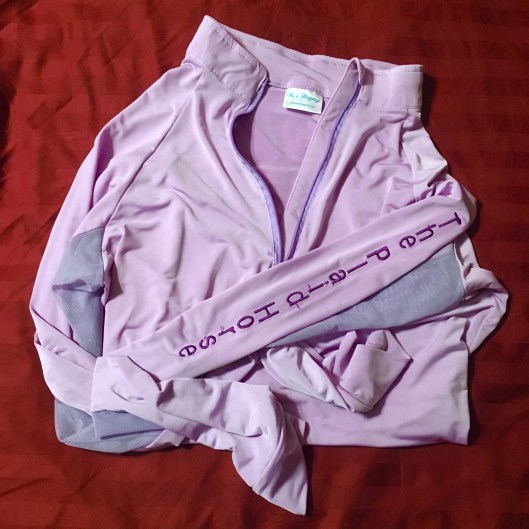
It’s a Haggerty’s lavender sunshirt with The Plaid Horse embroidery down the arm. – SOLD
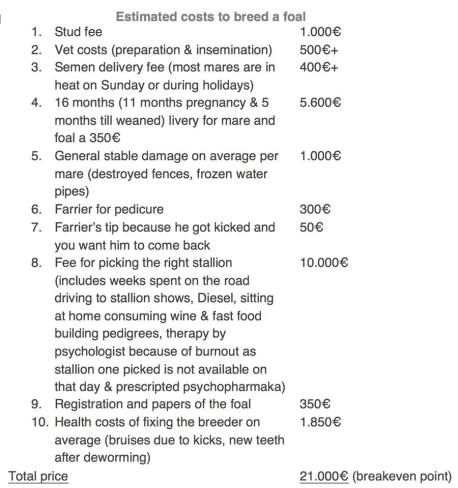
There’s been a little “meme” type thing going around all the breeder’s groups and pages on facebook for the past few weeks…
Sure, it’s funny. But also it’s… alarmingly accurate. And it doesn’t even include the upfront cost of buying a nice broodmare, which, newsflash, are definitely NOT free. Or the lab equipment, if you choose to ultrasound your mares at home to save trips to the clinic. Or the breeders courses that taught you how to use said equipment. Or the vet bills if the mare or foal encounter any complications. This could go on for a while, really.
I think a lot of times breeders get the short end of the stick. ALL THE TIME I see people complaining about how it’s ridiculous for a foal to cost 12k, 15k, 20k, or whatever. Sure, if you’re buying a backyard foal out of a random mare by a random stallion that will grow up with the potential for… who knows… then that’s too much. But if you’re buying from a breeder who purchased excellent mares, spent years honing their eye and their skill to make the best match possible, and devoted endless amounts of time and money into care to a produce a top-class sporthorse prospect, you’re getting a pretty great deal. Most likely the breeder isn’t actually making much off of that sale, if anything.
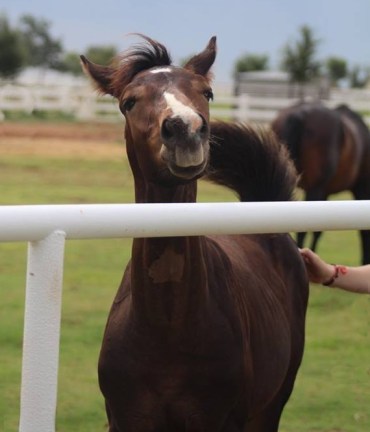
exhibit A: this particular giant money pit that we all know and love
For every foal they successfully get on the ground and sell, there’s another mare back in the barn who cost thousands of dollars to fix a uterine infection, or another who did not ever get pregnant despite many expensive attempts, or another who aborted her foal mid-pregnancy. They will sit for the year, still receiving the best of care, and the breeder will try again next year.
I’m in the unique position where I am the average rider/owner, but I also have worked for breeders and have a lot of breeder friends. I can see both sides of this. Sure, everyone wants a super fancy foal for 5k, who doesn’t love a bargain, but at those prices someone is losing money. That someone is probably the breeder. And if they lose money on every single foal, they’re going to stop breeding. At least the ones that do it RIGHT will, because they can’t afford those kinds of losses. The ones that really do invest a lot of money in the best mares, and really DO spend a hell of a lot of time learning the ins and outs of bloodlines, conformation, nicks, etc. It certainly isn’t as simple as crossing a nice mare to a nice stallion. Being a good breeder takes knowledge. A lot of it. That’s a learned skill, and skill takes time and money to accrue.
So many hours sitting in planes and on bleachers. So many.
So by saying that their foals and young horses are overpriced or too expensive, we’re effectively cutting the best breeders off at the knees. If we want to have good horses, these are the people we should be supporting, or at least understanding. They’re just like anyone else in any other job… trying to get by. Their expertise, and their investment, is certainly worth something.
Buying nice young horses isn’t for everyone. For many people it’s not practical, or they can’t afford it, or they don’t want a baby. All totally legitimate and fair reasons. But even if you’re not part of that buyer’s market, next time you see the price tag on a really nice foal, instead of raising your eyebrows or muttering something negative, take a minute to think about what it really took for someone to produce that horse. The blood, the sweat, the tears, the hours… all of it. Breeders really are, at least in my opinion, the unsung heroes of the sporthorse world. If we want to keep them, we at least have to appreciate and understand their endeavor.












 breedrideevent.com