Cool like Brother

Throughout the course of my life I’ve been lucky enough to spend time with a variety of different horses. They have represented a wide range of ages, backgrounds, disciplines, and general temperaments. My time working at a breeding farm, and raising my own foal, showed me just how important it can be to get the manners installed early. All the OTTB’s I’ve owned have demonstrated how useful a lot of exposure and handling can be later on down the line. Others have shown me just how much the horse’s natural temperament can come into play, and how much it can be improved upon with proper guidance.
cloconfo
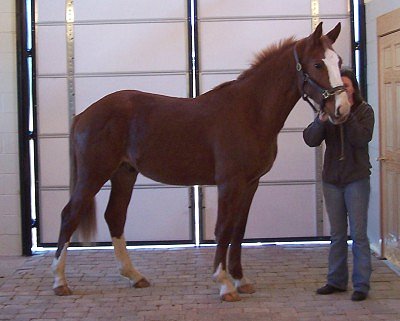
well handled baby stallions grow up into well behaved adult stallions (Cielo B as a yearling)

Henry, while no doubt one of the weirdest and cheekiest horses I have ever met in my entire life, is pretty excellent on the ground. He’s reliable, and he’s smart, and for the most part he can be trusted not to be a moron in a bad situation – if he does anything “naughty” it’s usually completely deliberate on his part (see earlier remark about cheeky). He’s good for the vet, he’s good for the farrier, he comes up to you in the field, he ties like a champ, and he self-loads. He’s an easy horse to own, and I want all of my future horses to be like him.

Most of the horses I’ve had that have been on the track or in race training for any decent amount of time have been similar to Henry. Some more nervous than him just in general, or some with particular issues (generally caused by a person’s stupidity or temper), but overall they’ve been exposed to a lot and been handled extensively.
cruzhead
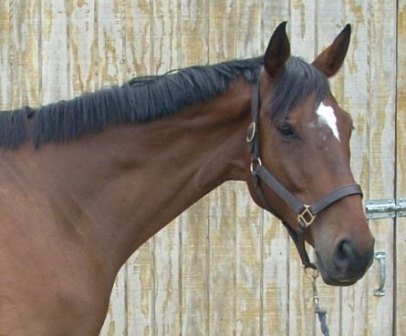
This one was a TB but never made it to the track… he was not as easy.

Presto’s dam Sadie was the first foal I raised on my own, from birth all the way up. Working at a breeding farm meant that I was familiar with handling foals, but most of them ended up sold before they were actual adult horses, being ridden and shown. I had never been there every step of the way before. Because of that, a lot of Sadie’s life was a little bit of trial and error on my part. There are the people who say to leave the young horses in a field with other horses and leave them alone until they’re 3 or 4. There are the people who extensively handle and show their horses, going somewhere every weekend and racking up points and miles. I kind of took the in between approach, leaning more toward the “leave her alone” side of things. She wore tack a few times, she knew the basic idea of how to lunge, and she mostly tied, and she kind of loaded (ish). I did something with her somewhere between every 2-4 weeks, although usually it was just grooming. I didn’t take her places or tie her much, or make an effort to expose her to a lot of things. I figured we could do all that stuff later.

What I didn’t take into account with Sadie was her general temperament. She was a busy-minded horse, smart almost to a fault, and with her, inactivity led to bad things. She got herself into trouble a lot, and had the staples, stitches, and scars to prove it. She also didn’t know how to properly respond to pressure, and had a tendency to panic when she felt stuck.
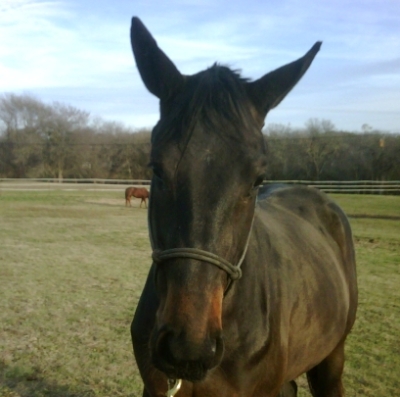
sadie12-9ears
In case you were wondering, donkey ears ARE genetic

I came to realize that I had done her a disservice by not taking her temperament into account. I absolutely should have done more with her, kept her brain engaged, and done a better job of teaching her how to respond in situations where she was unsure or felt trapped. Some baby horses do just fine with the “less is more” approach. She was not one of them. She wasn’t difficult, she just needed more guidance from me than what I gave her.

It’s not a mistake that I’m going to repeat with Presto. Some people think that I do too much with him, mess with him too much, and should leave him alone to just be a horse. I would argue that he has 24 hours a day to be a horse, so spending 30 minutes a few times a week learning to be a good citizen is not exactly infringing on his social development.
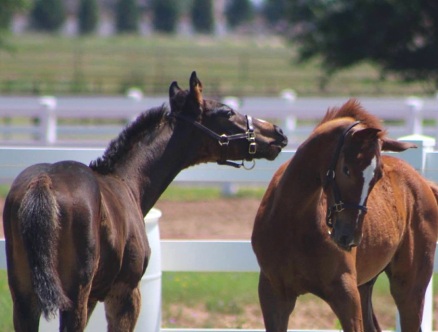
3months6
don’t worry, he’s still very good at biting his friends

I’m lucky that Presto’s natural temperament is much like his mother in that he’s naturally pretty easy, he’s smart, and his lessons stick. Since the day he got here I’ve been teaching him how to properly handle pressure and how to think instead of react. It is 100% a quality that you can teach, and I try to always be aware of what he’s thinking and doing so that I’m molding his brain properly. As a result, he’s a much more confident horse at this age than his mother was.

I go out of my way to put him in situations where I think he might be concerned or confused…. not unsafe, but mentally challenging. Each new experience builds his confidence, every time he doesn’t get his way builds his character, and every time he looks to me with a question mark in his mind and I provide him with an answer, it solidifies our relationship more. This doesn’t mean I baby him, because I definitely don’t. His lines for acceptable behavior are very black and white. But training horses is a constant series of praise and corrections, and in order to make said corrections, I have to put him in situations where he doesn’t know the answer. It starts here on the ground, but the same type of thing will continue once he’s under saddle.
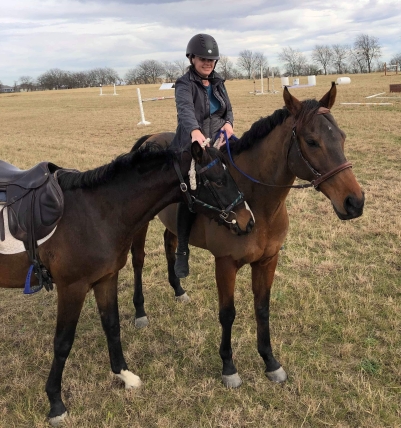
img_2089

Henry is a pretty easy horse because he’s confident in himself and he trusts people 100%… I want Presto to be the same. I want him to feel comfortable in his surroundings, no matter what’s happening, I want him to trust that I’m “safe harbor”, and I want him to look to me for guidance if he’s unsure. He only learns those things through experience. Whether it’s something big like standing tied by himself while I ride Henry in the next pasture, or something small like learning how to pick up his feet all from one side, I think that all of these things put together help make him into the horse I want him to be.

Having a big brother like Henry means that Presto has some pretty big shoes to fill. But having both horses together, and being able to directly compare the things Henry does to the things Presto does… it’s a big advantage for me, I think, if I use the opportunity to it’s fullest. Also having made the mistakes I did with Sadie definitely showed me that there is no such thing as one right way – just that I need to do what’s best for me, and take the horse’s temperament into consideration. They’re the ones that should guide my decisions, not anyone else.

Raising Presto in such a public way does leave me open to a lot of opinions, but if anything it’s really just shown me how important it is to go with my gut. He’s my horse, and I know him best, and I also know what’s best for me in my own situation. That’s a big part of blogging and having horses in general, really… considering the opinions and ultimately doing what you feel is best.

Time will tell how all of this works out. Presto already comes up to me in the field, he ties pretty well, he stands for the farrier, he self loads, and he uses his brain pretty admirably for an idiot baby colt. I’m happy with what I have, mostly because I see a horse that is happy in his education and knows what is expected of him. Will he be as good as Henry? Who knows.
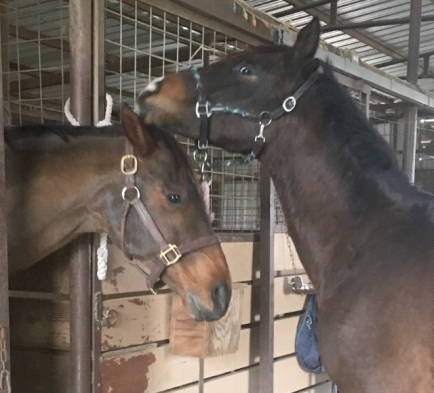
img_1795-1

He’ll definitely be as cheeky as Henry is, at least. That’s one quality I seem to be very good at cultivating.
Phillip Dutton Clinic

One of my big goals this year is to seek out as many educational opportunities as possible, in whatever form they may be. Mounted, unmounted, formal, informal, riding-related, breeding-related, horsemanship-related… whatever. I just want to focus on learning. Riding in clinics isn’t really my favorite, mostly because I don’t feel like they have the most return on investment given the limited amount of dollars in my budget, but I do really like auditing. So when I heard about a Phillip Dutton clinic happening up in Dallas, and that auditing was free, I was 100% all in. It didn’t take much convincing (read: none) to convince Hillary to come too.

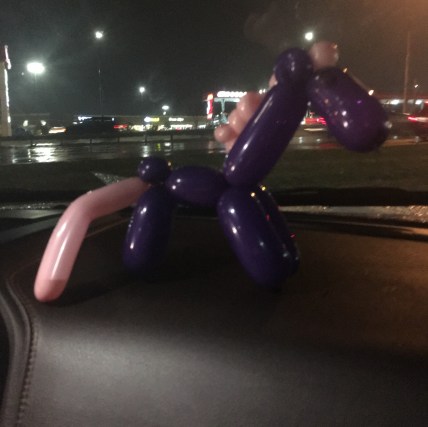
When we stopped for dinner on the way up, there was a girl in the restaurant making balloon animals. This is Mr. Squeakers, the official trip mascot. Later I had to bolt across a La Quinta parking lot to save him when a gust of wind blew him out of the truck.

The weekend was cold as hell, but I did the best I could to take video and notes with my very frozen fingers. Phillip had some really cool exercises, a few that I definitely want to set up at home, but I was glad that I was auditing instead of spending a lot of money riding. I am one of those people that likes things explained to me in detail – I really want to know the WHY behind everything – and Phillip was not particularly verbose. Mostly it seemed like he let the exercises do the talking, which they definitely did. I still got some useful notes though – a few direct quotes and a lot of just general observations.


Some of the exercises set up on showjumping day. The Christmas tree didn’t survive the wind

Saturday was showjumping day. He started off by warming everyone up together in a small space, about the size of a dressage court, and really focused on getting the horse accepting the leg. The did a lot of lateral work at all 3 gaits, and then focusing on getting the horse sharp off the aids by doing a lot of collecting and then lengthening in all 3 gaits. He said several times “prepare for every turn” – which ended up being a common theme for him throughout the weekend. He challenged the riders to see how short they could get the trot, and then how much they could lengthen, and then back again. Eventually he added in small circles in the corners, to increase the balance and get the horses thinking. He wanted them accepting of the aids, in front of the leg, and adjustable.

img_2828

For the jumping, a lot of the exercises involved offset and/or angled fences. There was an offset two stride line of oxers, a skinny with one stride to angled oxer (or the other way, angled oxer to skinny), a corner that got added into the mix, a single oxer on the short side, and a two stride line. They started off cantering single oxers in the middle just one at a time, going straight. Phillip asked them to vary their approach and their distance – first asking them to jump out of an open stride and slightly longer distance, and then asking them to shorten the stride up and jump from a deep distance. He emphasized that it was important to practice different distances and different paces in your training, so that you can produce whichever you want, whenever you want, and the horse knows how to jump out of any of them. He told the riders that if they weren’t sure of the distance, to just sit and squeeze and wait.

When they first added in the skinny, one of the riders tried to walk over to it to let her green horse get a look at it first, and Phillip admonished her for that. He said that our horses have to learn to trust you and that their job is to jump anything we point them at, no questions asked. He said that if we think a horse may be unsure about a question, start small and break down the individual parts of the exercise, then put it together in a way that will educate the horse. But they don’t just get to walk up and get a look at “scary” fences before we ask them to jump. (This is something that I’m a firm believer in, so it was cool to see Phillip saying it too)

img_2855
Trainer continues to get Flat nice and trained up and ready for me to steal

Cross country day started off with more, different, exercises in the arena, before venturing out to a little bit of XC. Again he spent some time on the flatwork, especially making sure that the horses were thinking forward and moving sharply off the leg. They practiced lengthening for 6 strides, shortening for 6 strides, turning small circles, lengthening quickly again, shortening quickly, etc. If some of the horses were a bit slow in their responses, Phillip encouraged the riders to put the pressure on their horses now, on the flat, so that it didn’t come back to bite them once they got to the jumping. Quick and clear corrections = good training.

In the arena he had set up an exercise that I’ve seen him use a lot in clinics now, a line of jumps that looks like this:

pdexercise

To start, they rode the first jump and 3rd jump as a 3 stride line, then they rode the first and second jump as an offset line, then he had them come back through and jump all 3. He didn’t explain this exercise beforehand, or offer any kind of guidance on how to ride it. He just kinda… threw everyone in and let them figure it out. The people who went later in the group had the benefit of learning a little bit from the mistakes of the people before them, but still, this exercise was a challenge to every group in the beginning. Eventually everyone figured out that what he was going for here was a) getting the horses sharp and paying attention and looking for whats next, b) getting the riders thinking FORWARD and using an opening guiding rein to move the horse, rather than pulling back on the rein or riding tentatively. Zig-zagging through jumps like this naturally makes you want to slow down and pick your way through, but it NEVER worked out if it was ridden that way. You had to keep the forward, and you had to look for the next jump with your eye, and open your hand in the air to guide the horse’s focus to the next one.

Once everyone got that exercise, he had them really gallop boldly at a triple bar on the other side of the arena, then come through the triple again. On both days he was VERY adamant about making good turns, both before and after the jump. If you landed from a jump and let your horse drift in, or just rode like a sack of potatoes to the corner, you would get a lecture about bad horsemanship. The turns are crucial to the balance, and he did not like even a single bad turn. He was also adamant that if a horse ran out, you must immediately correct them by turning the opposite direction. If your horse ran out to the left and then you immediately turned him back around left, you could go ahead and brace yourself for a megaphone “bad horsemanship” zinger.

After the warmup in the arena, they went out to the small XC field. Again he had exercises involving a lot of narrows or offset jumps. There were a lot of struggles here throughout the different group levels, and some of the greener horses were maybe a little bit “mind-blown” by some of the exercises at first. Phillip’s big thing was that the riders should always be looking to the NEXT jump, planning ahead and getting the pace they needed. His narrow/offset exercises really forced the horses to pay attention, and they forced the riders to make faster and better reactions. He stressed several times that good XC riding isn’t about being right all the time, it’s about having the ability to quickly react. Several of his exercises demanded a conservative ride in, but then a very positive and forward ride out, otherwise it just wouldn’t work. The use of the opening/guiding rein carried over here, too.

He also spent most of the day telling people to lengthen their reins and get their bodies back. He said “When in doubt, stay back and let the horse have his head and neck to balance. You hardly ever see anyone fall off backwards.”. He still wanted the riders to take care not to hang on the horses mouths though, or catch them in the air/on landing. He encouraged grabbing mane or neck strap if necessary.

The biggest takeaways for me were that he made the riders a bit bolder, thinking more forward. He was forgiving of mistakes as long as you dug in, made an effort, and reacted intelligently. Pretty much everyone finished the clinic riding more forward and more determined than they had, and the horses were generally more rideable. For me a lot of what he said was directly applicable to where I’m at right now, so it was a weekend well-spent just to get these reminders and get a few ideas for new exercises that I can set up at home.

Back to the Solid Jumps

Yesterday afternoon we loaded the kids up for a quick little jaunt down to Pine Hill to cross country school. After what has shaped up to be one of my busiest and most stressful weeks at work ever, I really needed a little reprieve. It’s also supposed to start raining again today so we figured this might be our last chance at a decent school for a while.

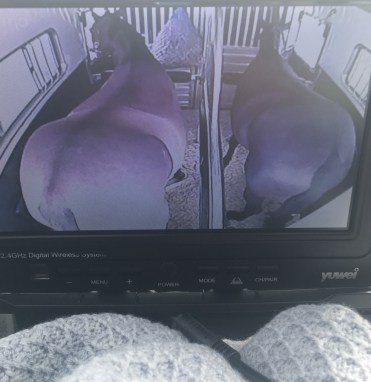
Two butts.

We haven’t jumped any XC fences since the last show here at the beginning of December. And we’ve jumped at all a grand total of twice. So… figured it was probably a good idea to get out and gallop a few things before the next show coming up on the 20th. We weren’t planning on doing much, just getting the ride dialed back in. I tend to always take the first few fences to slip back into the bolder XC ride, and the longer I go in between, the longer it generally takes me to remember. This seems especially true as we’ve gone up the levels. Bigger fences and more speed are harder to just snap right back into, when you aren’t practicing those things on a regular basis.

Mum, the XC is that way

I also wanted to take the opportunity to try out a couple of new acquisitions to my equipment line up – a Champion skull cap and a Dainese XC vest. I need to do actual reviews of these soon but preliminarily I’m happy with both things. The helmet is AWESOME, like it’s definitely up there with being one of the nicest helmets I own, if not the nicest. Which is saying a lot, because… um… I own a lot of helmets. The vest is just downright fascinating. I like it, but it’s definitely different from anything I’ve had before. I have many thoughts about it. We’ll save them for another day.

new vest new helmet who dis

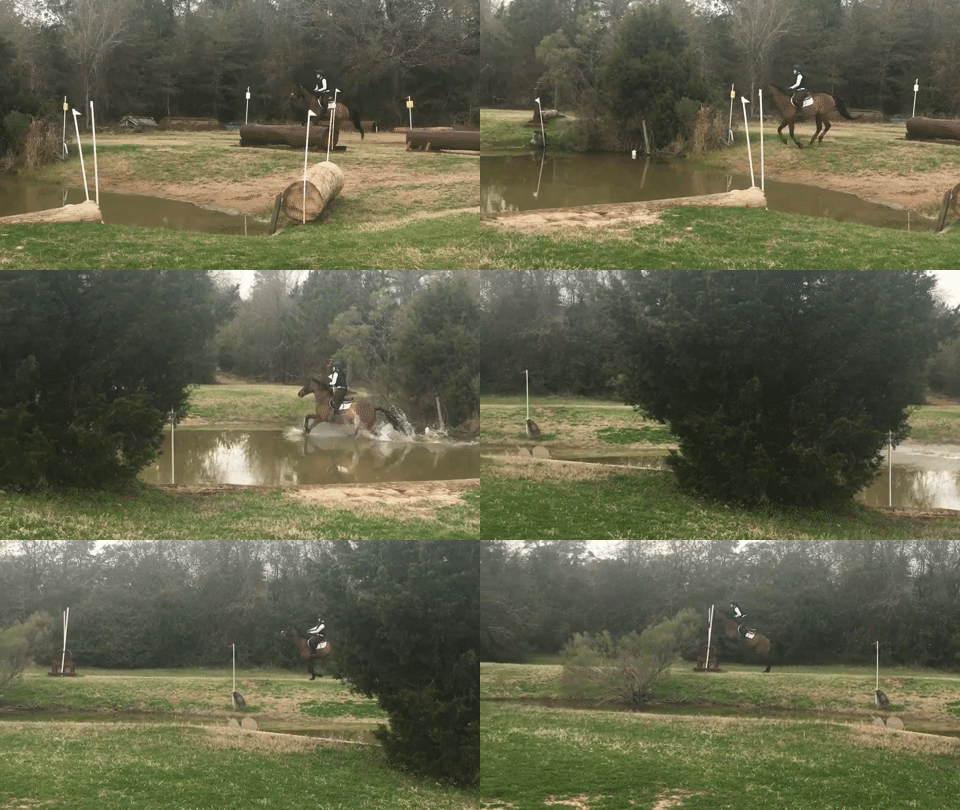
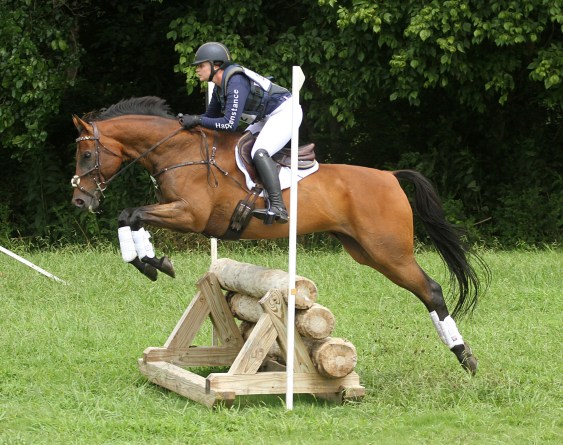
We mounted up and set off to warmup, and Henry felt great. The first few fences were the same as my first few fences always are, with me trying to remember the bolder ride and finding more impulsion again. From there we went to the water, which was a bit deep to jump directly down into, so we made a creative route through, taking the novice log in, skimming the edge, and jumping the Prelim skinny out.

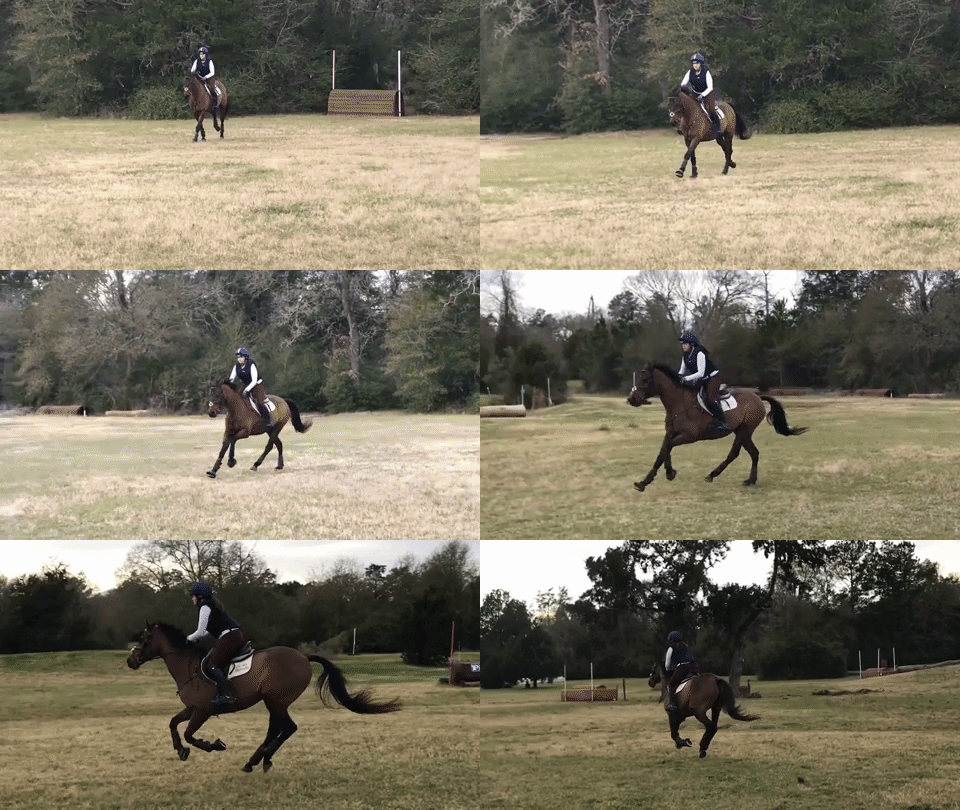
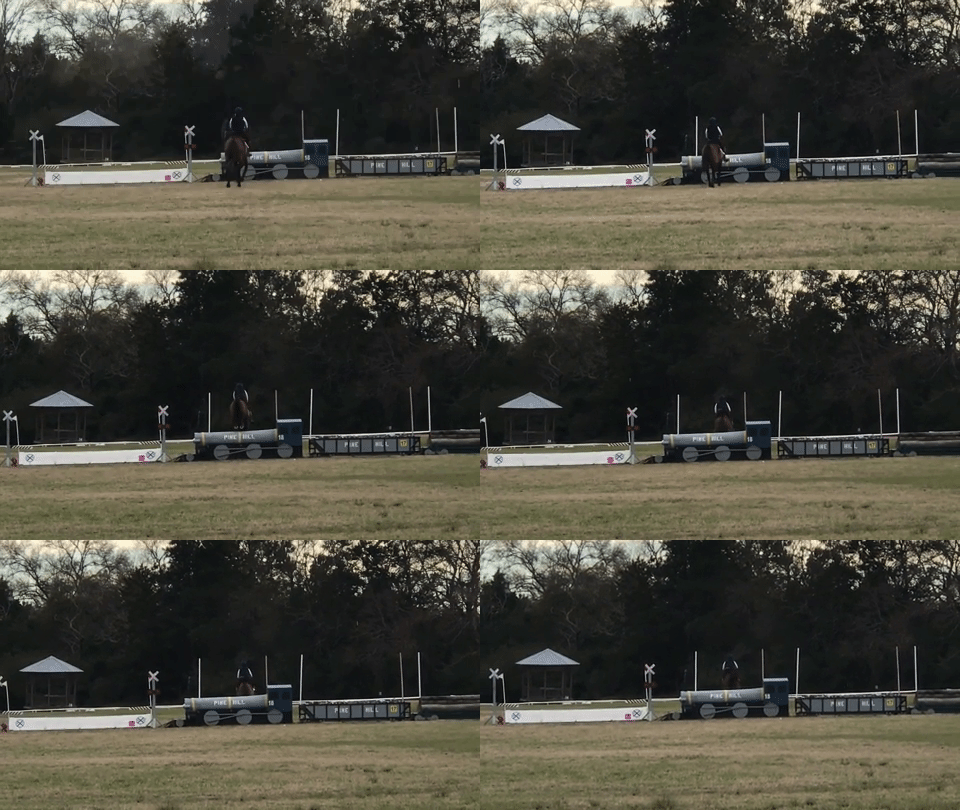
After that we strung a few galloping fences together. I’m trying to up the ante on the speed between the jumps a bit, since things are definitely different in that regard between Training and Prelim, but I’m still kind of learning just when I need to sit up and rebalance, how MUCH I need to rebalance, etc. More speed always changes things. This is my big learning curve at the moment, really. Timing of the half-halt to change the balance, and also still allowing him to carry more impulsion and cover more ground. Everything at Prelim is designed to be ridden like you’re attacking it, but you still have to attack it with a lot of balance and respect – if that makes any sense? I need to set something up so I can practice this at home more and get used to the different feel.

Moar zoomies between the jompies
and then you put the jompies in between the zoomies

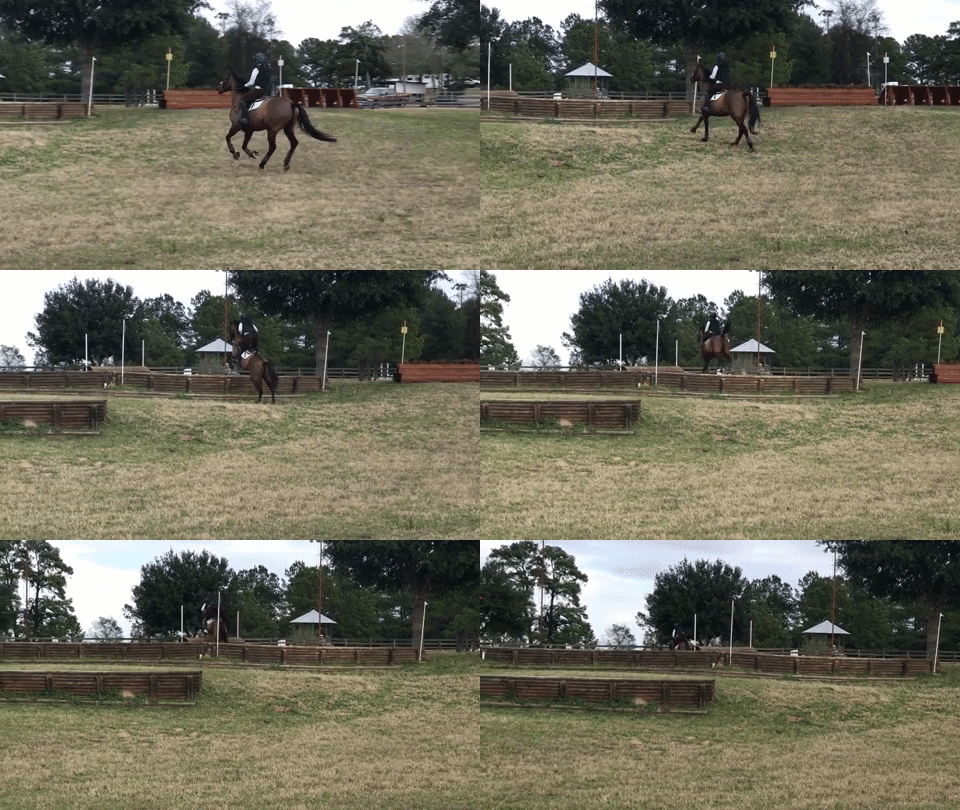
The ground back in the woods was still quite wet, so we just stuck to what we could do in the front field. Luckily there’s still plenty up there to keep you busy, including some of the bank complexes. Prelim has a bigger Irish bank back in the woods (the one that Henry used to have a serious mental come-apart about, but skipped right over last month like it weren’t-no-thang and made my heart so happy) and a smaller downhill bank combination up front. At first I was struggling to get Henry up in front of my leg, which… newsflash, shit don’t work that well when a horse is behind your leg on XC. He’ll keep going and keep jumping, but it ain’t cute. It was very odd for him. He wasn’t responding the way he normally does when I close my leg. I ended up having to give him a couple taps on the butt to get his impulsion back, and then everything jumped much better.

hopping back up the other way

When I got off I thought he looked like maybe he wasn’t feeling the best, and when he didn’t seem interested in eating a treat, my suspicions were confirmed. I dosed him with some omeprazole and coaxed him into eating some grass, and he started to perk back up. I think his tummy was bothering him towards the end of the schooling, which would explain the lack of his typical impulsion. So – back on ulcer meds he goes for a while. Bye money.

I’m glad we were able to beat the rain and get back out there and school a bit. I have a few things work on over the next week before we head back out for our next Prelim run!

Just A Few Awesome Things

First of all, huge thank you to everyone that has donated so far to the Little Orphan Annex Memorial Award fund. I was completely blown away by the response, and we were able to meet our minimum goal within just a few hours of yesterday’s post going live. The generosity and compassion of the horse community never fails to amaze me.

It’s happening!

Several of you contacted me and said you would like to contribute but need a few more days, so I’m going to leave the pool open through the end of this weekend. If we raise enough to hit the next sponsorship level, we can up the ante of the cash award. If we don’t, whatever is leftover will still end up in RRP’s pocket. Next week we will get started on the details, firm up the contract, and get everything paid for, so that we can start advertising and promoting the award ASAP. We are so thrilled to be able to do this for Hillary and for chestnut mares everywhere, so thanks again for making it possible!

Ok, second thing of the day – the blogger gift exchange. I already posted about what I received, but since I was a little bit last minute about sending out my own gift, I haven’t yet posted about what I gave. Mostly I want to pimp a friend’s small business real quick, because when I see young people (jesus I sound old) busting their butts to make it, I want to help them out. Sofia is in her first year of college at Texas A&M, rides with my trainer, and does vinyl work on the side for some extra cash. She’s pretty cool aside from liking Cardi B and Drake waaaaaaay too much (both of which Sofia had to explain to me on the way to Chatt. I got a Cardi-cation that definitely did not stick because now all I remember is that she was originally a stripper before she was a rapper? Anyway.). Sofia has made a lot of shirts for us within our group, from polos to cross country shirts to vests to special team shirts. My favorite are the lightweight v-neck tech shirts, with our barn logo on the front and horse’s name printed down the sleeve. They are SUPER CUTE for cross country, or just on their own.

chatt2xc1
One of my own XC shirts with Henry’s show name on the arm

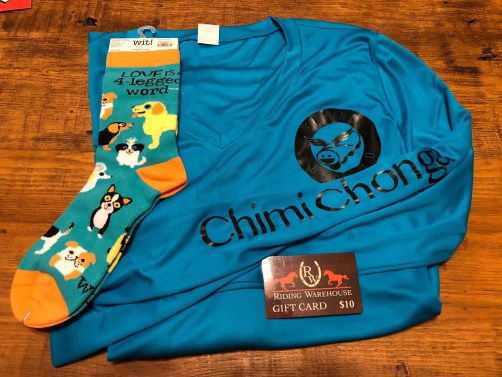
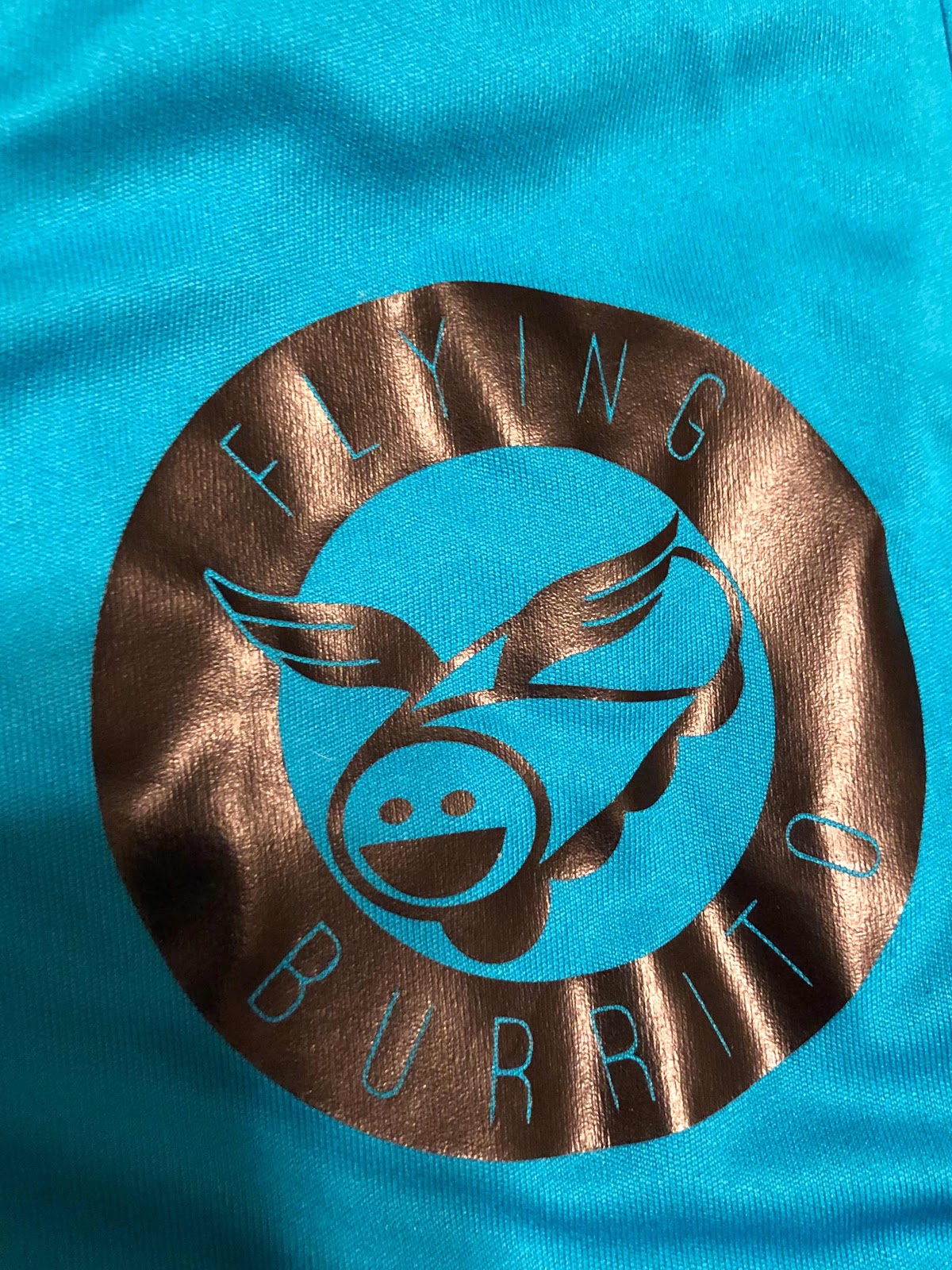
For the gift exchange I had a special one made for Bette and her horse Chimi, who’s show name is Chimi Chonga and instagram hashtag is #theflyingburrito. I found a logo, modified it a bit, and Sofia put it on the chest, with his name on the sleeve. This is like the 4th or 5th shirt I’ve ordered from Sofia and she always does such a great job. These v-necks are only $25, too! So if you want some cute shirts (or other vinyl related stuff) made and also want to help toss some money at a horse-poor college student, I highly recommend Sofia. You can contact her through Instagram.

betteshirt
Shamelessly stealing Bette’s photos of the shirt because I’m dumb and forgot to take any myself
the logo

We’re going XC schooling this afternoon and I’m in a rush to wrap this up so I can get to work, but last but not least, if you need to be entertained and have not read the comments on this Eventing Nation post, it really delivers. Also, shout out to Allison (and Alisha) on that thread… the real MVP’s.  With such quoteables as “Thank you for coming to my TED talk.” and “This is my hill and I will die on it”, I dunno you but we should be friends.

Image result for the real mvp gif

Maybe someday we should have a discussion about young horses and jumping. Today is not that day. I definitely didn’t get enough sleep for that.

Little Orphan Annex Memorial Award

Bloggers, thoroughbred enthusiasts, and mare lovers – today I need your help!

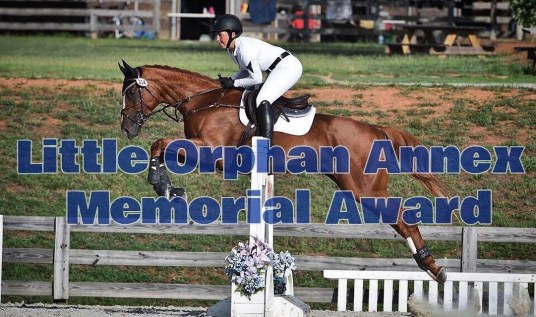
As some of you may know, fellow blogger and barnmate Hillary lost her lovely TB mare Annie (Little Orphan Annex) at the end of last year. Losing a horse is never easy, and it’s especially heartbreaking to lose one so young and full of promise. Annie was an OTTB, a chestnut mare, and while she could be spicy, she was also a fantastic athlete, forgiving partner, and beloved friend.

annie2

To honor the bond that Hillary and Annie had, and to commemorate the impact that this special horse had on so many of us, Beka and I thought it would be a great idea to sponsor a special award at this year’s Retired Racehorse Project makeover show. This award would be called the Little Orphan Annex Memorial Award, and it would be a cash prize given to the highest scoring chestnut mare of the competition.

After speaking with the folks at RRP, they are totally on board with our idea and this is something that we can absolutely do! However, the minimum amount required to secure sponsorship for a special award is $1500. While that’s a bit steep for just a few of us to come up with, I know that there are a lot of Hillary, Annie, thoroughbred, and mare fans out there that might be interested in pitching in towards this award as well.

Image result for retired racehorse project

The award sponsorship INCLUDES advertising across several different platforms, including social media and print, so it would be publicized in several places between now and October. For those of you who may not be familiar with RRP, here are a few important tidbits from their website:

The Mission

RRP exists to facilitate placement of Thoroughbred ex-racehorses in second careers by increasing demand for them in equestrian sports and serving the farms, trainers, and organizations that transition them.

The Impact

Since it’s 2010 founding RRP has inspired thousands to choose an OTTB. Thanks to 135,000 Facebook fans, 94,000 website hits, constant press coverage, and sell out crowds at horse expos, the popularity and value of OTTBs are on the rise.

We felt that RRP was the perfect program to support in Annie’s memory, given her and Hillary’s background. And just like RRP aims to increase the demand for the thoroughbred as a sport horse (something they have definitely succeeded in doing!), we are hoping that this particular award will incentivize Makeover participants to seek out and buy chestnut mares. Often times they get a bad rap, and being a “chestnut mare” can carry a lot of unfair and unwarranted stigma in our industry, especially if they’re a thoroughbred.

Our RRP liason tells me that many participants DO specifically make buying decisions based on special awards, so it’s a realistic secondary perk of doing this. At the very least, we hope that this will offer a little extra thank you to a makeover trainer that decided to give another special chestnut mare a chance to prove herself, just like Annie did.

annie1

Because I knew that we would have to go “public” with this to make the minimum sponsorship dollar amount, I’ve already told Hillary of our idea. There were a lot of tears, and she was really moved by what she said was “an absolutely perfect way to honor Annie”. Hillary is aiming to attend the Makeover show this year, so we’re hoping she will be there in person to see this award given out.

CLICK HERE TO SUPPORT THE LITTLE ORPHAN ANNEX MEMORIAL AWARD

If you want to leave your name along with your contribution, I will make sure that it gets included in a card that we can give to Hillary when the award is officially paid for. If you’d rather donate anonymously, that’s totally fine too. Any amount that you’re able to contribute is greatly appreciated – every dollar counts. If we are lucky enough to exceed the minimum $1500 goal, all extra funds will be put toward RPP!

Thank you for being a part of what I hope is something really special!