How’s this for a throwback Thursday? I got an email in my inbox from Photobucket the other day, which I totally forgot I even had. Ten plus years ago that was where I uploaded all my pictures, but it’s been forever since I even logged into that account. Looking back through all those albums was a trip! Here were a few of my favorites… I hope you find them as entertaining as I did.
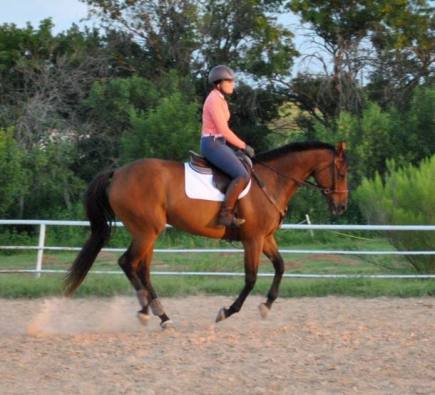
Quinn (the horse) 2006-ish. Never again, hunter ring. Never again.
Max, the reason I can no longer go to horse auctions.
Nova, around 2003 or 2004 I think. Those custom Journeyman chaps were my high school graduation present.
Sadie and her “brother” Weston. Sadie was the UGLIEST weanling ever.
Puddles, aka MsRidiculous, circa 1998. Fastest Children’s Eq round of the day, I’m sure…
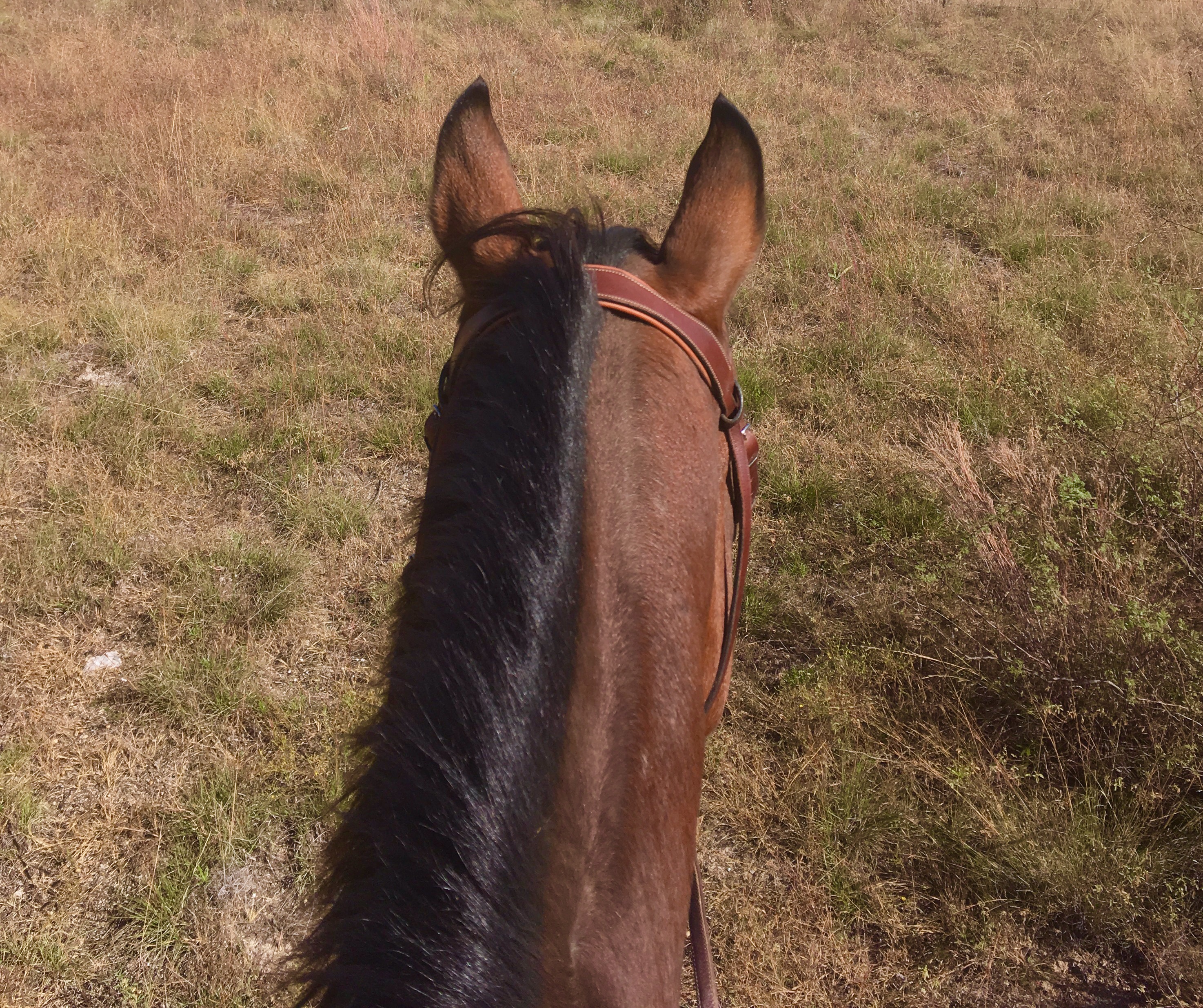
I’ve been a mane sniffer for a long time, y’all.
Almost falling off Charlie when he tripped in the Training water at MCP in 2002. Back then Training just had a flagged entry and a small jump out. Level creep is real.
17yo me, with Monte the Argentinian “warmblood”. Yes I had a tattoo choker.
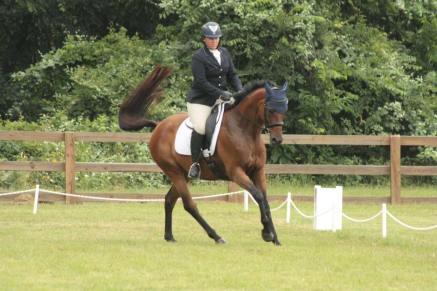
My first warmblood inspection – BWP in 2003
Bo, the horse that first got me into the Danzig line (Henry is also a Danzig). Note that rad hunt cap.
Sadie’s dam, just a few months before Sadie was born. Mule ears are genetic.
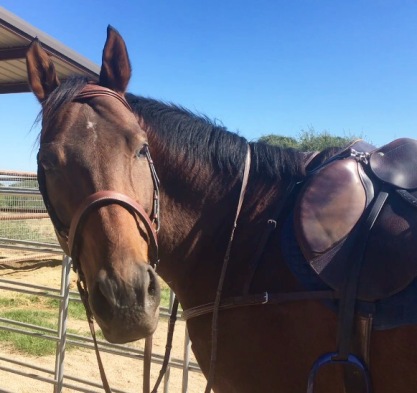
That time I had a western horse…
Sadie as a 2yo, learning the ways of the world with her first saddling.
Yesterday I took a half day off of work so I could move Henry to his new babysitter barn. Best case scenario, he still has another week or two until he can go back into regular turnout, and he has to be on soft footing for a couple months, plus a few other short term high maintenance care issues that add up to a lot of supervision, so I essentially had to find somewhere that can babysit him 24/7 for a while.
I have to give a huge shoutout and many thanks to Equicare for taking such good care of Henry for the past 5 weeks. He looks fantastic, is happy, and didn’t lose a stitch of conditioning despite his layoff. It was icing on the cake when I showed up yesterday to pick him up and they had cleaned my trailer, bathed him, and had all of his stuff cleaned up and ready to go. Great service means a lot, and they went above and beyond several times. They’re really great, everyone local to me should check them out.
Henry loaded, traveled, and unloaded well, except for all that screaming for his Equicare BFF Chico, the mini horse. Really Henny, of all the available equines to fall in love with, it was the mini?
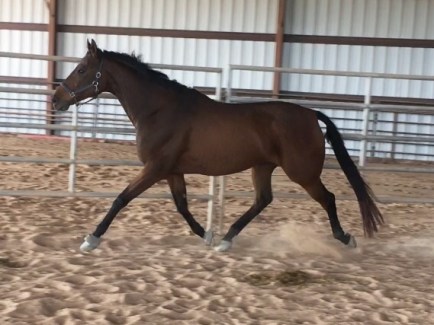
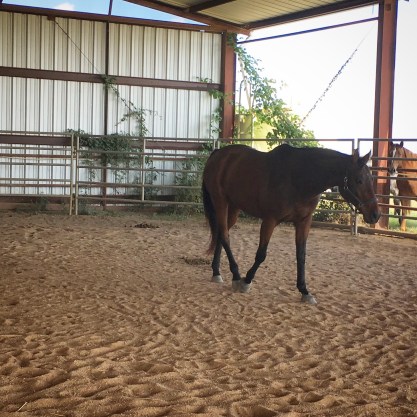
He’s getting eased back into turnout slowly, so he went in the round pen yesterday afternoon. I really expected him to be a lunatic but he mostly just walked around and then tried to make friends with the mares over the fence.
note nosy mares
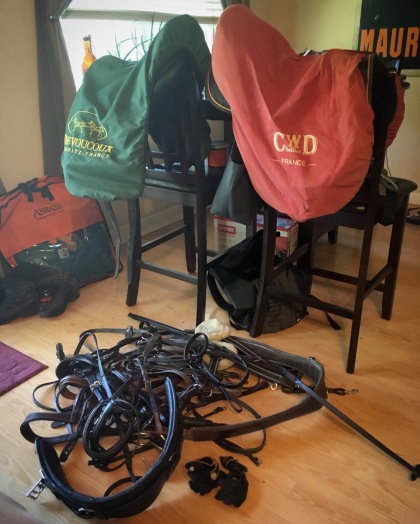
I did make him trot a few laps for me so I could see him move, then left him alone to roll and hang out and stare off into the distance wide-eyed (he’s particularly good at that). Then I unloaded all of my stuff, which quickly took over the tack room. Sorry, everyone else. The sad part is, there’s a lot more at home and in my trailer, I just figured I’d start with the bare minimum.
my bare minimum takes up an entire corner of the tack room
He’s getting new shoes today, and then hopefully I can get on and see how he feels. It’s finally supposed to rain a little bit over the next week, which would be great. This barn has a HUUUUGE hilly (for Texas) hay field to ride in, and the soil is pretty sandy. If we could get some rain, it would be soft enough to ride out there. I’m beyond ready to get back into the swing of things, and I think Henry is too.
Ah, gadgets. What a can of worms that topic is. I’ve used my fair share of them in my life, although granted I haven’t touched any in a really long time and don’t particularly care to. But fear not, I’m not here to lecture anyone on the evils of draw reins or german martingales. I’m here to talk about what a struggle it is to try to fix a horse that has been over-gadgeted, or gadgeted incorrectly.
UGH
Draw reins especially are very common. More in h/j-land than in eventing or dressage, but you still see them a lot. It’s not even uncommon to see them on the racetrack. I’ve gotten more than one horse OTT that had the tell-tale “break at the 3rd vertebrae, duck the nose behind the vertical” signs of one that has spent time in draw reins. But all of them have paled in comparison to Henry.
When I first got him, anything more than the lightest feather touch of contact would send him practically nose to chest. To the point where sometimes I wondered if he could actually see the fence he was about to jump, it was so extreme. Of course, you can chunk the reins at a horse like that all you want, but that doesn’t fix the problem. Once one learns that the answer to contact is to come BTV, it’s a very hard thing to undo. Add on top of that a horse that’s really mouthy about the bit and fussy in general, and I had quite the issue. He didn’t like contact, he didn’t like pressure, and he was more than happy to go around BTV.
fine dude, lets start without a bit
First I had to take the bit away completely and just get him more rideable in his body. Six months later I was able to add a bit back into the equation, and while it was for sure a thousand times better, his immediate reaction to contact was always to tuck his nose in. He thought that was the right answer, and how to make the pressure go away. We struggled with it for SO LONG… what contact we could manage was really a fake contact, he wasn’t truly in my hand. We could fake it enough to put in a fairly passable dressage test, but it wasn’t really correct.
king of the fakers
To be honest, I never thought we would fix it. I never thought that tendency would go away, it was so deeply rooted in him. It really didn’t hit me until one day this past summer, when we were struggling with a few things in a lesson and his reaction was to come ABOVE the bit (like a normal damn horse, hallelujah)… he hasn’t ducked nose to chest in a while. In fact, if you didn’t know how he used to be, I don’t think you’d be able to tell by riding or watching him. We’ve finally made it to square 1.
oh, put your tail down, drama queen
NOW he can finally learn real contact. NOW he can really be ridden forward into the hand. NOW he can balance himself properly. NOW he is tremendously more rideable. Sure, he still hasn’t really mastered impulsion plus contact, not completely, but the BTV tendency is gone. He no longer seeks nose-to-chest as his safe refuge. He’s finally at the point where most horses start out… it only took 2.5 very long years. The struggle, it has been very very real.
It was only for about 20 minutes, mostly at the walk, with maybe 5 trot circles. The rehab place hasn’t finished their ring yet, and there’s not much cleared flat space, so I couldn’t really do much. I think Henry felt pretty good but I’m reserving judgment for a time when I can get a better ride in.
He’s so hairy
Which should be sometime this week, since he’s moving to his new place tomorrow. He’s a week overdue with his feet though, and his shoes are barely hanging on, so hopefully I can get the farrier out ASAP. He’s still got one more day of aquatred and spa time, then it’s back to the real world. Sorry Henny.
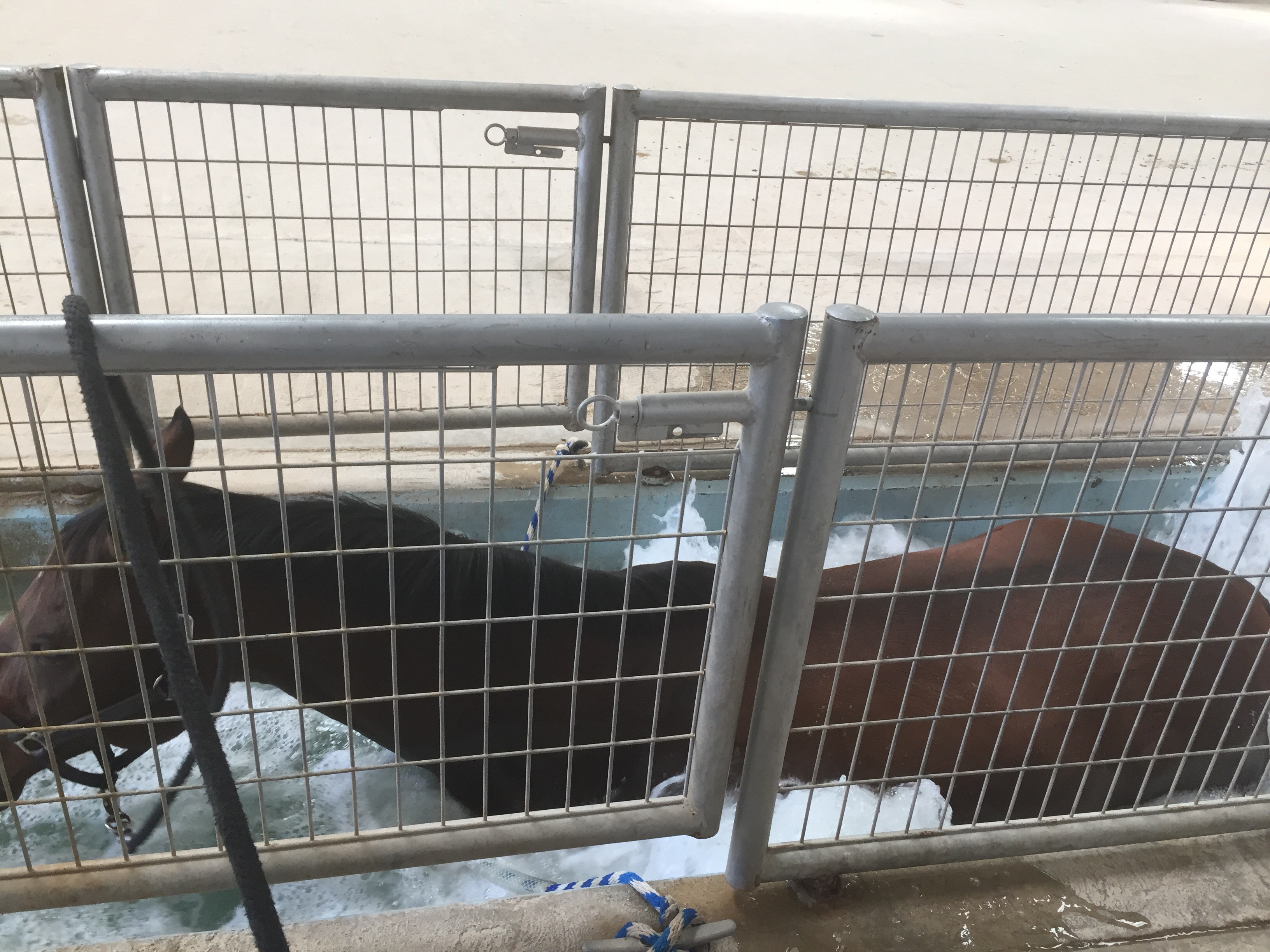
He’s up to 30 minute sessions, with all the resistance jets
The rest of my weekend was dedicated to a few less exciting but equally important things.
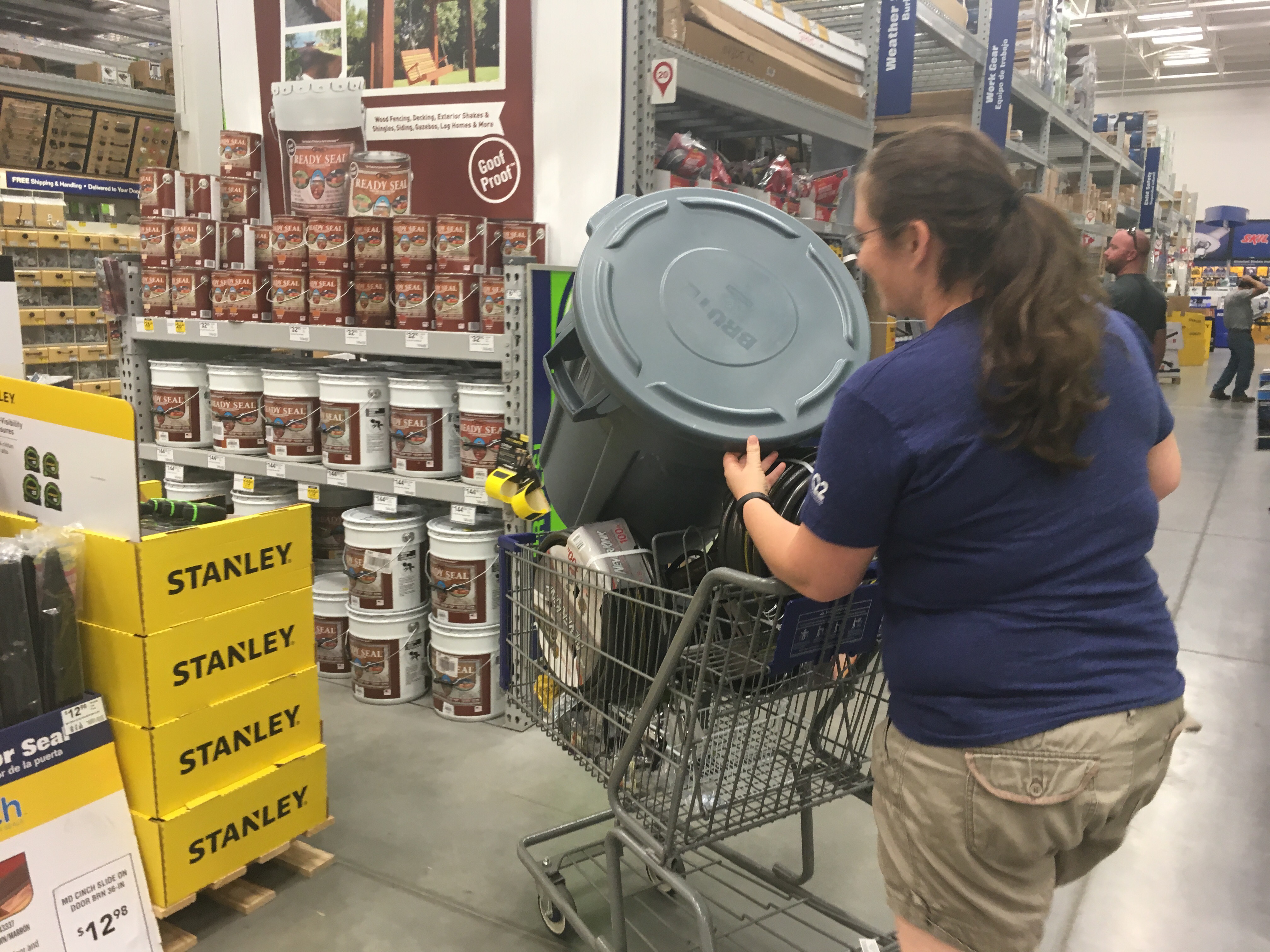
1) Helping a friend get a bunch of stuff for her new horse property (well, I really just laughed at her as she ran her overstuffed cart into all the aisle displays at Lowe’s. Lesson here: choose a better friend than me.) and haul it home for her in my truck.
Just one of many displays she ran into while I cackled and took a picture. Friend of the year, I am.
2) Cleaning all the things. First I cleaned and conditioned all my tack, which took a ridiculously long time.
There is never enough.
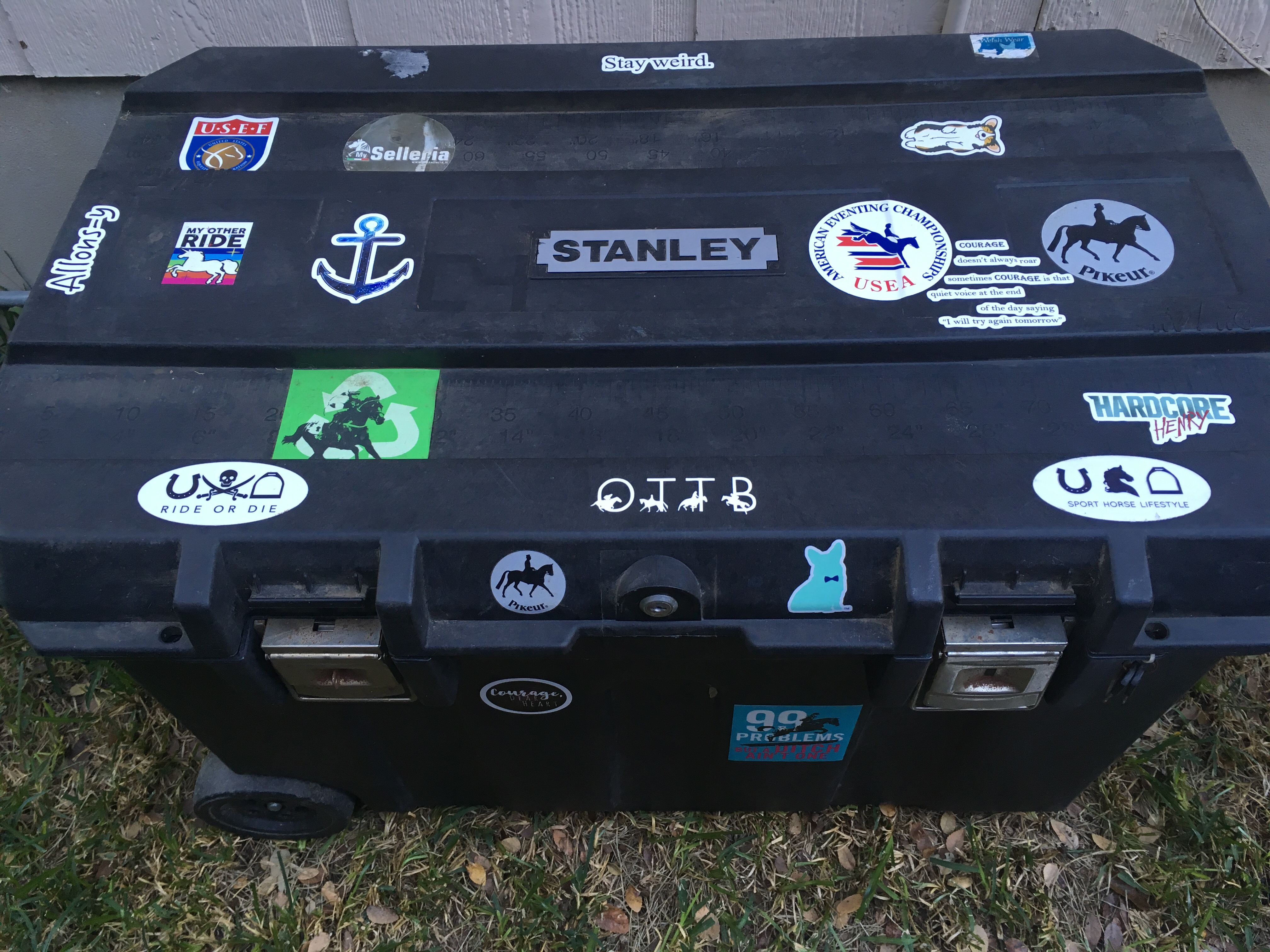
I also completely cleaned out, washed, and reorganized my tack trunk. It’s amazing how the wildlife completely took over in just a month’s time, there were cobwebs everywhere. I think I came across at least 15 different species of spiders.
So fresh and so clean clean. Stanley needs more stickers, a few did not survive the washing.
Saddle pads, fly mask, and XC boots also got washed too. Everything is now cleaned and packed and ready for the new barn tomorrow.
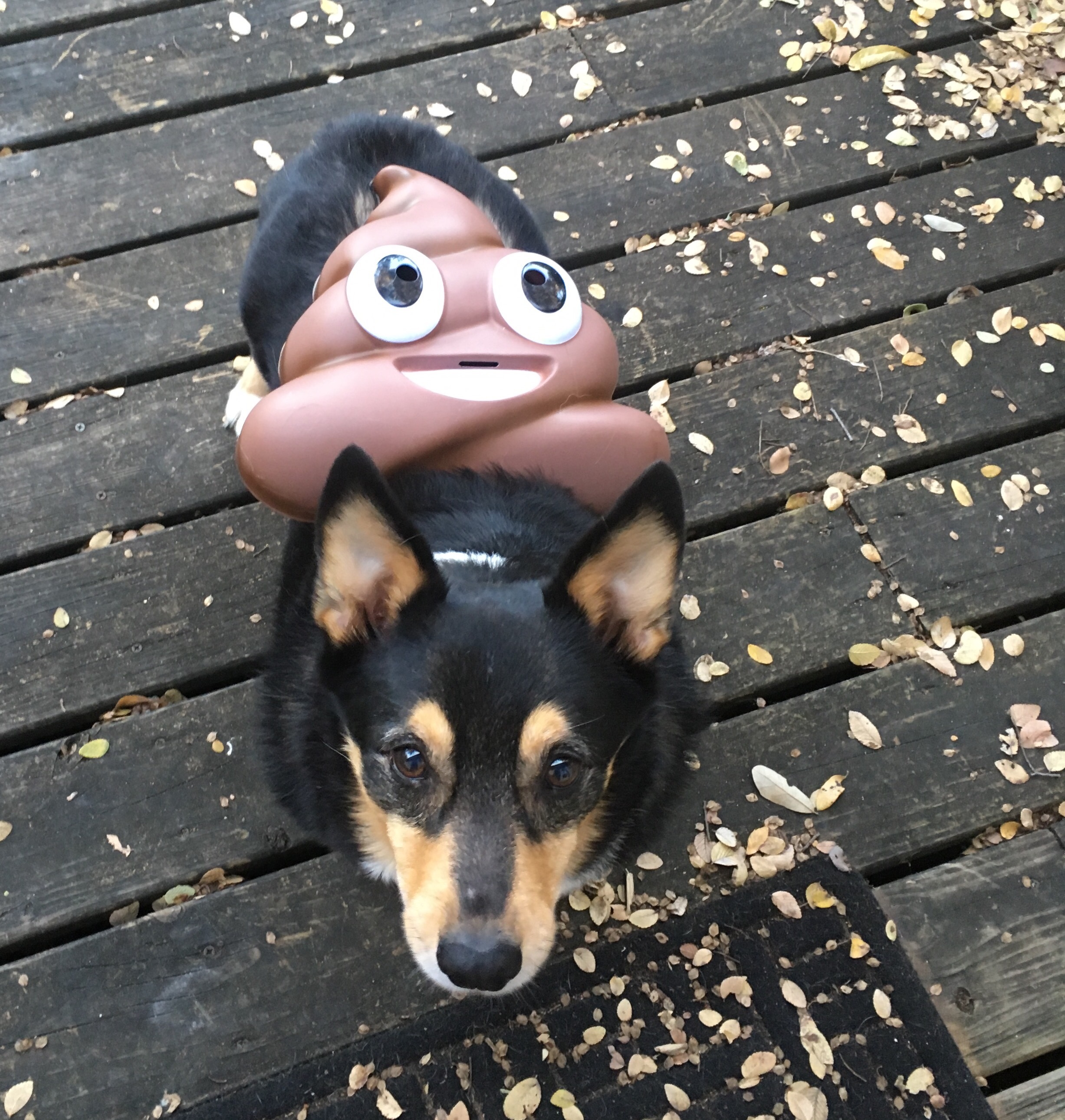
3) Getting stuff ready for HALLOWEEN. It’s my favorite holiday, and we always have a party at our house on Halloween night. I made lots of food and wrangled some last minute costumes (I haven’t been very good at the whole preparation thing lately) for myself and the dogs. They’re going as emojis that match their personalities.
He’s a little shit. But his cuteness cancels it out.
Next time someone gives me the stink eye in the grocery store after I’ve been at the barn, I’m just gonna pretend like I’m haute couture instead of a hot mess. The equestrian trend still seems to be hanging in there, and this season has delivered a couple of real winners.
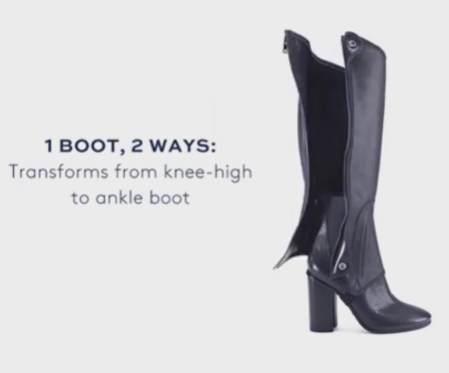
For instance, Tory Burch, who made paddock boots and half chaps that aren’t actually paddock boots and half chaps. Or, in their words, “1 boot, 2 ways”! And they’re $625. And you can’t even ride in them. Stop it.
Time to put on your half chaps and paint the town, I guess?
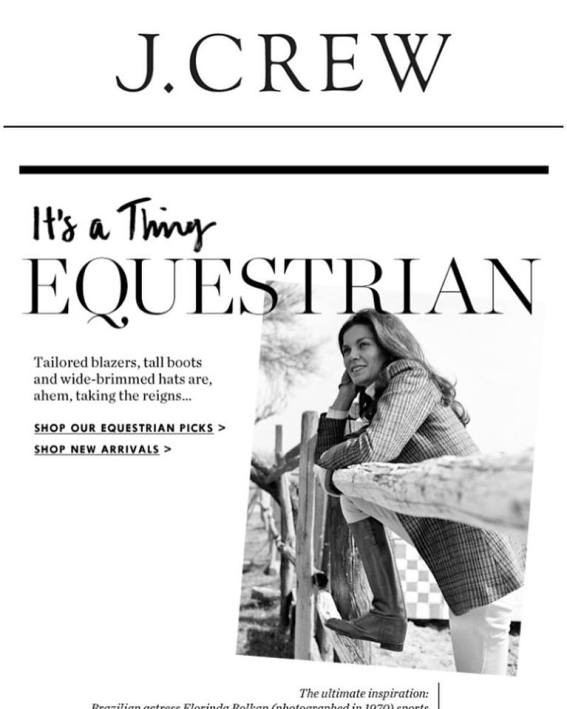
Then there’s J. Crew. Aside from the fact that they have completely unrealistic ideas of “barn hair”, they also don’t know how to spell reins.
I dunno about y’all but I totally dress like that and stare longingly into pastures.
They also think that this giant red scarf/blanket thing is very equestrian chic. Because I dunno about y’all, but I always wear a big red cape when I ride.
Not sure how to wear it? No worries, Ralph Lauren also thinks that a red cape is very equestrian, and they show us how it’s done.
Too bad nobody told them that a pinque coat has to be earned, not purchased. Faux pas, Ralph Lauren, faux pas!
But Riding Warehouse has a fall clearance sale (up to 75% off!) going on, if you want actual riding clothes that serve an actual purpose and are not stupid expensive.