
The eagle has landed! And by eagle I mean gray TB mare, Gospel Carlotta. I’m calling her Lottie.
Before we can officially embark on the Lottie adventures, I feel like I must introduce her properly. And because you’re on the blog space of a pedigree nerd, that introduction surely must include a deep dive into her breeding and heritage. Who is she, where did she come from, and why did I like that pedigree so much? Let us begin.
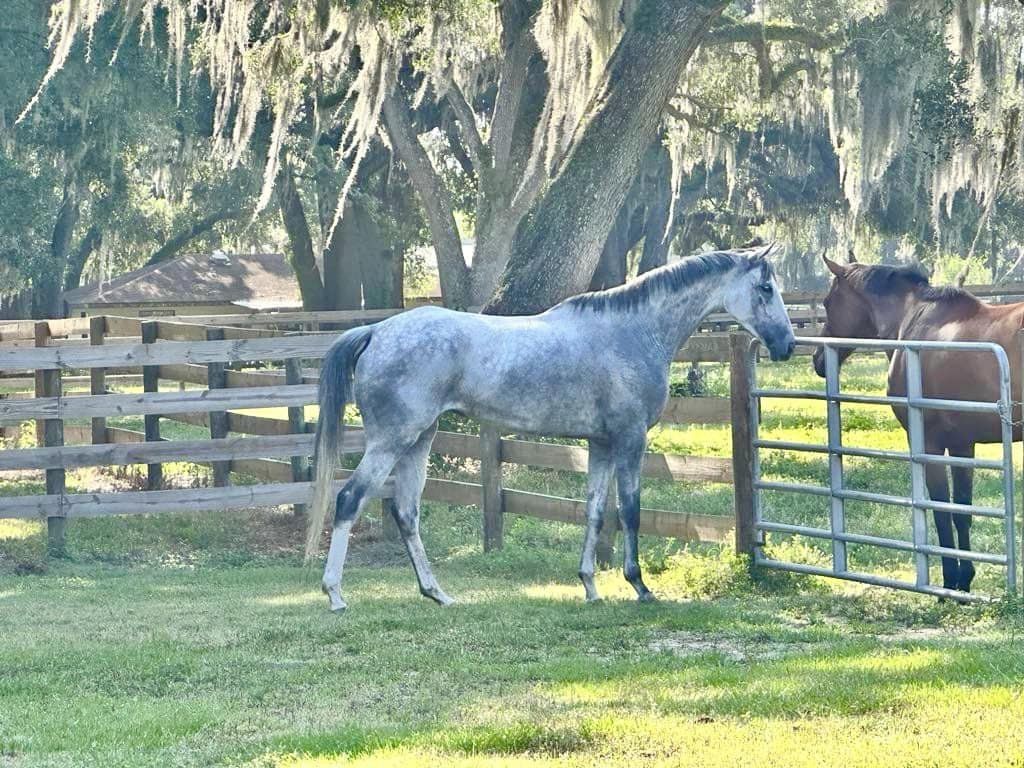
Lottie is 7 years old, raced 29 times, was bred and has been owned her entire life by Oklahoma breeder/trainer/owner Steve Williams. He also trained her throughout her entire career, and that’s who I bought her from. She has always been based out of his farm in Oklahoma, and only raced at Oklahoma racetracks. She won once at Remington Park, twice at Fair Meadows, and once at Will Rogers.
I’ve contacted the track photographers about trying to get win photos but am still waiting to hear back. Her running style was always to come from far back – she was often just a hair slow to break, and would tuck in until the far turn, where she either fired or didn’t, and either was able to pass horses or not. She won a lower end Allowance in 2021 but has mostly been running in cheap claiming races. Her last race was on April 2nd, where she finished last of six.

Her sire, Gospel Tiz Key, never raced and never stood at stud publicly. He was bred in Kentucky by Adena Springs and sold as a 5yo “race or stallion prospect” to Steve Williams. Gospel Tiz Key only had about 30 offspring, all between 2017 and 2021 and all bred by Steve, who uses the Gospel prefix.
Gospel Tiz Key is by Tiznow, who won the Breeder’s Cup Classic twice and earned 6.4 million dollars in his career. He’s been a really successful sire of racehorses including Midnight Bourbon, Tourist, and Colonel John. He’s also got a few good sporthorses to his credit, being the sire of Mia Farley’s 5* horse Phelps and 3* horse Tiz Ready. His sons have produced a lot of sporthorses too: Outrageous Limit is the sire of 4* horse Outrageous Dance and 3* horse Teki to the Limit, and Colonel John is the sire of 4* horse Lovely Assistant. Those are just the FEI horses… there are tons more at the national levels. Tiznow’s full brother, Tizbud, has also produced a PSG/Int dressage horse, Big Variety.
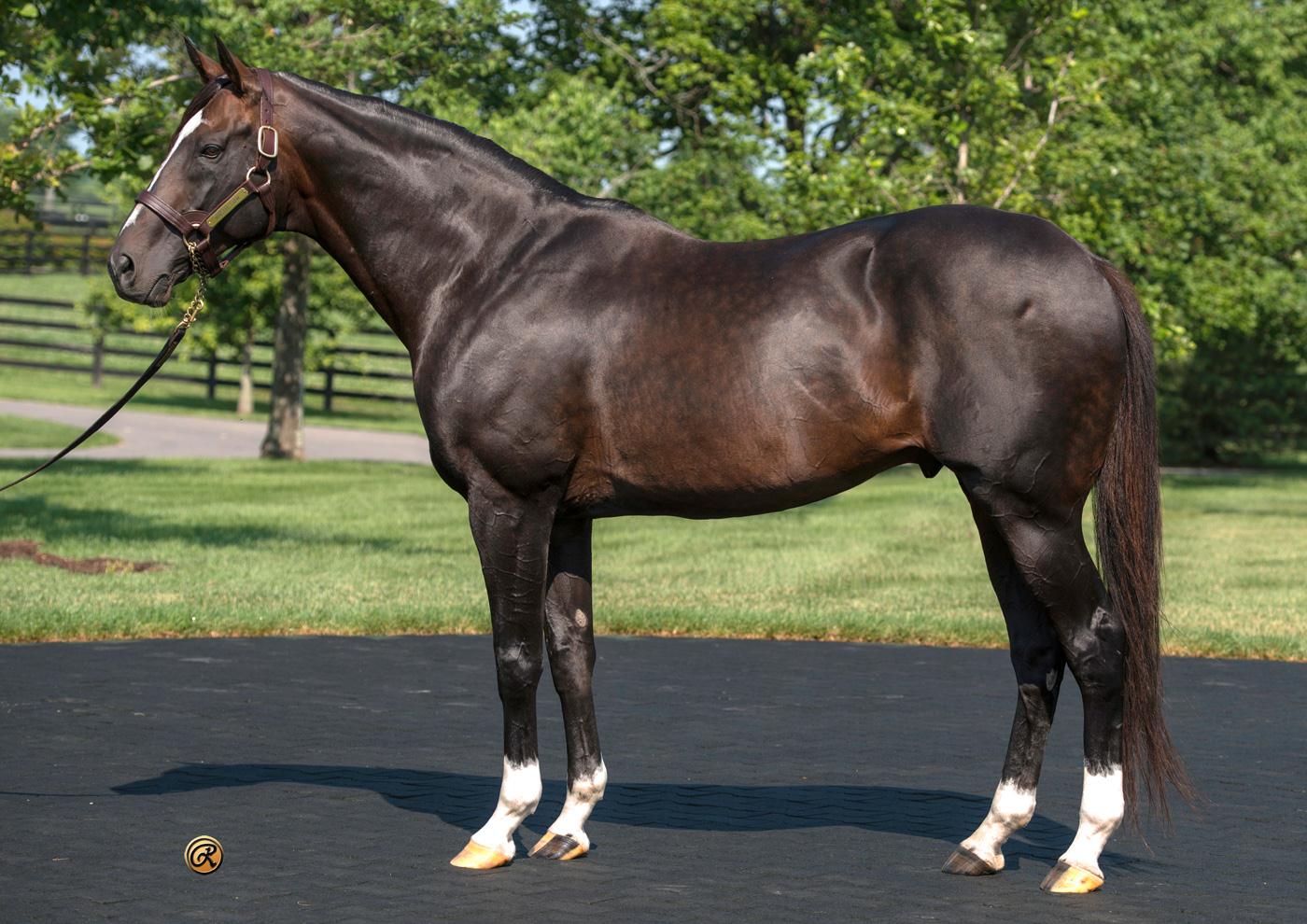
Gospel Tiz Key’s dam, Honey Ryder, was also an excellent racehorse. She won multiple graded Stakes throughout her career, including a win in a Grade 1 and a 2nd and 3rd place finish in the Breeder’s Cup Filly and Mare Turf, earning over 2.7 million in her career. She was exclusively a turf horse, and Bloodhorse described her as “a true distance specialist, she won as far as 1 1/2 miles, and her average winning distance was about 10 1/2 furlongs.”. In 2008 she sold in foal to Giant’s Causeway for $1.75 million. Unfortunately none of her offspring ever showed anywhere near her level of racing talent despite being sired by some top stallions.
Honey Ryder’s sire, Lasting Approval, was a stakes winner, also finishing second in the Grade 1 Hollywood Derby. He was a reasonably successful sire both in the US and later on in Argentina, and Honey Ryder was his top earner. Lasting Approval was by the stallion With Approval, who produced some 3* and 4* event horses.
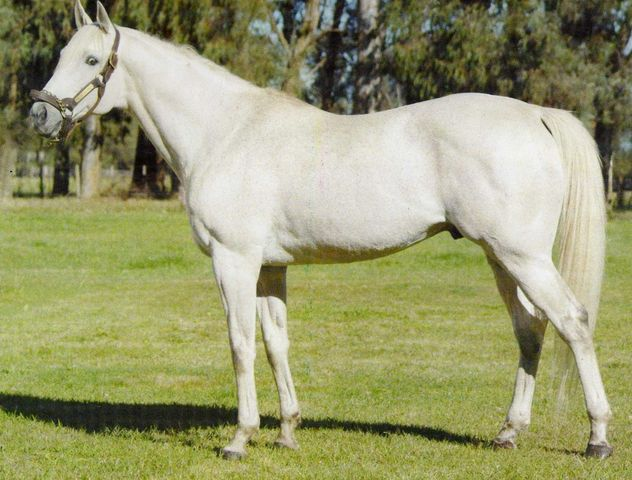
Lasting Approval’s dam was La Gueriere, the best female offspring of a mare named Lady Winborne, who was part of a very famous line of mares.
Moving to the bottom side of Lottie’s pedigree, her dam Nikimoto was…. not a very good racehorse. She made two starts as a 3yo and never hit the board. They tried to sell her in foal to Showing Up but bidding only got up to $3200 and didn’t meet the reserve. Then they ended up selling her in foal to Einstein for only $1300, to Steve. Overall she had 6 foals, with none being particularly successful racehorses. Lottie is her most successful offspring with $61k in earnings.
Nikimoto’s sire was the well-known Macho Uno, who won the Breeders Cup Juvenile and earned 1.8 million.
Macho Uno is known for throwing good movers and jumpers (no surprise considering he’s by Holy Bull out of a Blushing Groom mare!) and is the damsire of 3* horse Uno Concerto.
Nikimoto was out of a mare named Sunday Sensation, who sold for $155k as a yearling but only had 2 wins and $86k in earnings. She produced a few foals here in the US before being sold to Korea. Sunday Sensation was by the stallion Royal Academy, who raced in the US, Ireland, and England. He won the Breeder’s Cup Mile and was second in the Irish 2000 Guineas.
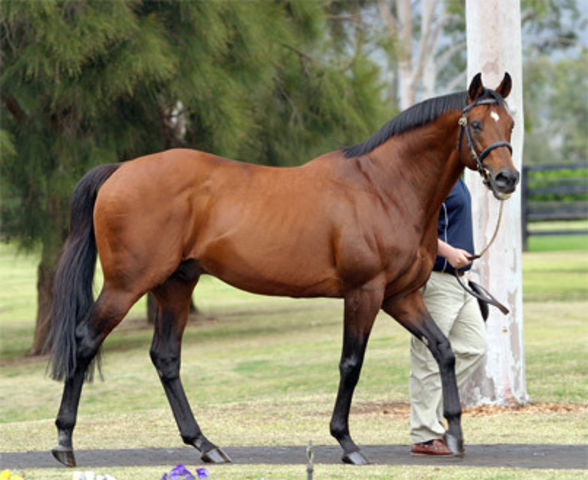
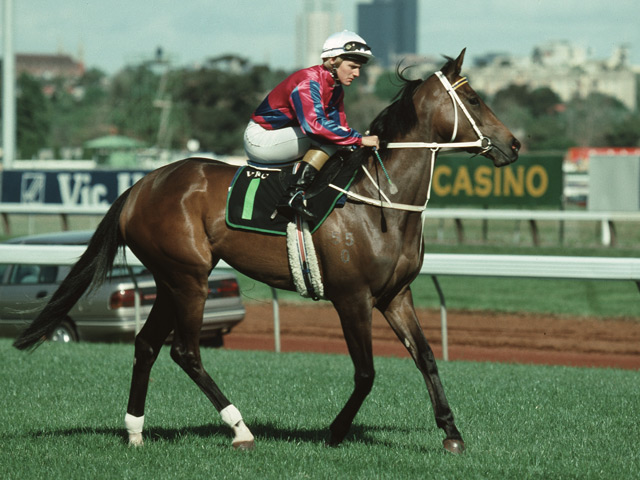
Royal Academy was also shuttled all over the world throughout his breeding career, from Australia to Japan to the US to Brazil to Ireland. He sired more than 160 stakes winners that earned over $120 million, leaving a particularly strong influence in Australia – he’s the grandsire of Australian phenom race mare Black Caviar.
Royal Academy’s dam, Crimson Saint, was a very famous producer – she was the dam of several big name horses including the mare Terlingua, the dam of Storm Cat and Pioneering.

Outside of the racing world, Royal Academy has also left his mark. He’s the second sire of 5* horses Twilightslastgleam and Ferro Point, as well as second damsire of 5* horse SAP Talisman.
Sunday Sensation’s dam was the Australian-bred Arborea, who won multiple stakes races including the VATC One Thousand Guineas. She had 3 foals in Australia before being exported to the US, where she had 7 foals, and then went back to Australia and had 4 more foals. LOTS of foals. Unfortunately none of whom were superstars on the racetrack.
You may have noticed that there are a whole lot of gray horses in Lottie’s pedigree. Indeed, both of her parents are gray. Which means there’s a possibility that she herself is homozygous gray. I’ll definitely be doing some DNA testing on her and I’m curious to see what her color panel is, including her base color. For those who aren’t familiar with how the gray gene works (gray is actually not a coat color, it’s a modifier… horses aren’t born gray) here’s a rundown.
The gene responsible for turning a horse gray is one that acts to slowly de-pigment the horse over time. The gray modifier gene is actually the loss of color. Gray horses are all born another color and progressively lose pigment throughout their lifetimes, while still retaining their dark skin color. A gray horse can be born with any coat color or pattern.
Graying happens due to the presence of a dominant gene (known in equine genetics as “G”) on the twenty-fifth chromosome. Gray is epistatic, which means the gray gene overrides the normal coat color: if a horse has a gray gene, it WILL eventually be gray. A gray horse must have at least one gray parent, as the gene is not recessive and cannot “hide” or skip generations. Lottie had two gray parents, so she could have inherited the gene from one or both of them.
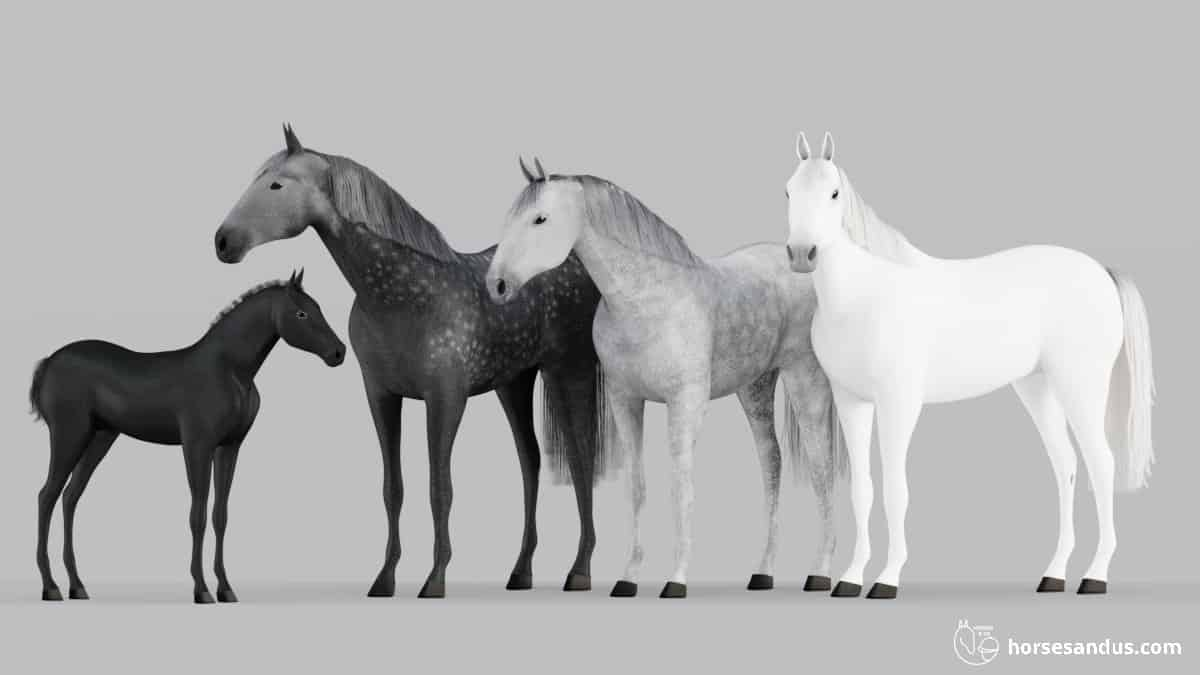
Horses that possess the gray modifier gene will eventually look almost white all over. As they age and each season’s coat sheds out, they will become lighter and lighter. The speed at which this happens is extremely variable – some horses are light at a very young age, while others may take a decade or more.
Additionally, during the depigmentation process some horses will retain small flecks of pigmented hairs and have a “flea‐bitten” appearance, while others will retain pigmented hairs outlining lighter-colored areas and have a “dappled” appearance. Some horses go through both stages while others go through neither… the greying process varies widely from horse to horse.
If Lottie has one copy of the gray gene, then there’s an automatic 50% chance that any foals she had in the future would be gray (unless I bred her to a stallion that was also gray… that ups the chances). If she has TWO copies of the gray gene, then any foal she has will be gray, 100%.
That’s pretty much all there is to know about Lottie so far, at least on paper. More updates next week as she settles in and I get to know her more!
 breedrideevent.com
What horses in her pedigree tend to jump out at you right away? And when considering a horse, does it matter more to have more horses that jump out as positive or to have as few potential “problem” horses as possible? Like how do things usually balance out, in your experience?
Always love learning more about what gets you excited (or not) about a given horse!
LikeLike
With her it was Tiznow, Macho Uno, and Royal Academy. They’re three of my favorite more modern sire lines. Sir Ivor and With Approval are good bonuses to me, too.
If I’m buying a gelding I care a little bit less about the pedigree (there are some lines and combinations that I will generally avoid no matter what, but it matters less on an “end product”) but with a mare I really like to see a pedigree that grabs me, since there’s potential for me to breed any mare I end up with.
What I have noticed most is that if I really love a horse, it tends to have a pedigree I like, and vice versa. And I tend to be attracted to turf lines – they have the build and the gallop.
What I didn’t include in this post (forgot, whoops!) is that she’s from TB mare family 2-d, which is the same as Danehill, Halo, Kitten’s Joy, Spectacular Bid, and Arctic Tern – all sires that have produced well for sport.
I do wish that there were some top performance horses from her closer-up direct mare family, but it’s really all been racehorses (that I’ve been able to find anyway… there for a while the direct mare line was in Australia and that’s been more tricky to track down!).
She also has no inbreeding, which is not seen very often in a TB. On paper she’s really interesting for sport!
LikeLiked by 1 person
She is beautiful!
LikeLike
Ooooh so pretty. Love the explanation on the behind the scenes of greys. I know the basics but so cool to learn more!
LikeLike
Thank you for the detailed information! I learned some things. 🙂
Looking forward to Lottie’s next steps.
LikeLike
What a pretty girl! You’ve remarked before that you don’t consider grey to be a plus for you, but I gotta say I’m a sucker for those dapples, even if they’re only going to last a few years. In Argo’s farewell post, you also remarked that you find buying and selling horses really stressful and you’re not looking for another turn-around project. Are you looking at Lottie as a breeding candidate, as well as a fun project to keep you busy?
LikeLike
My draft paintaloosa cross must have the grey gene. His dark areas were almost black as a foal. Some are now fading to almost white. Other dark areas are getting more white hairs and looking roany. It’s really interesting to watch.
LikeLike
If he’s part Appaloosa, he may also have the “varnish” gene, which causes gradual roaning out of colored coats on Appaloosas. The end result looks very similar to grey, but it’s a totally different gene!
LikeLike
Love the Tizbud shout out. As the full brother to Tiznow, he was the cheaper, west coast option for mare owners. I had one of his babies and just loved him.
LikeLike
I don’t remember where I read it, but I’ve read that flea-bitten greys tend to be heterozygous (and heterozygous grey horses are less susceptible to melanomas). This tracks with the flea-bitten greys I’ve known, as they’re all heterozygous (only one grey parent so no chance of homozygosity). The only non-flea-bitten grey that I know parentage, is (untested but likely) homozygous, as all of her 10 foals that I know about have been grey (and all studs bred to her were not grey).
LikeLike