
As I mentioned early last week, my only big purchase from Black Friday was a pair of Freejump stirrups. These days I’m spending more time in the saddle, jumping higher, and going for longer/faster conditioning rides, which have taken quite a toll on my already bad knees. My increasing pain over the last few months pushed me to research other stirrup options, and with the Freejumps being on sale for a ridiculously good price, I couldn’t resist the temptation.

It wasn’t just a random, spur of the moment decision though. By the time all was said and done I looked hard at 4 different companies/irons and reached out to them asking questions related to my own particular issues or preferences. Only 2 of those companies responded, one of which seemed to just copy and paste the information that was on their website, which answered precisely none of my questions, which is why I asked them in first place. The other was Freejump, who forwarded me data relating specifically to the questions I was asking, and followed up with a phone call from one of their reps, discussing my particular issues, explaining the differences between the models, recommending which one might suit my needs best, and even offering to find me some stirrups to take on trial.
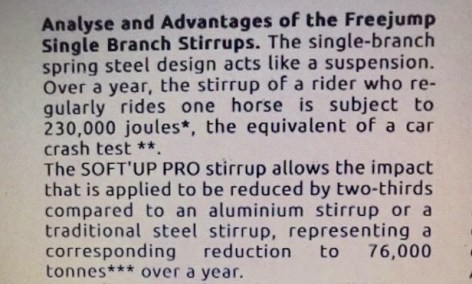
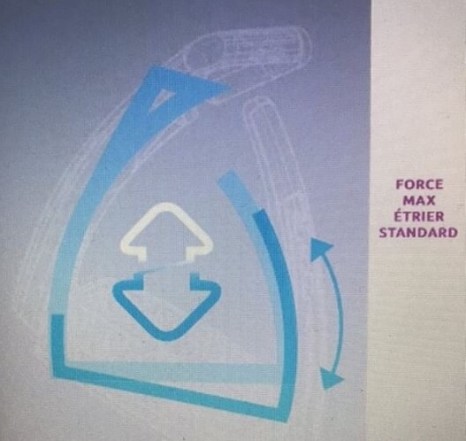
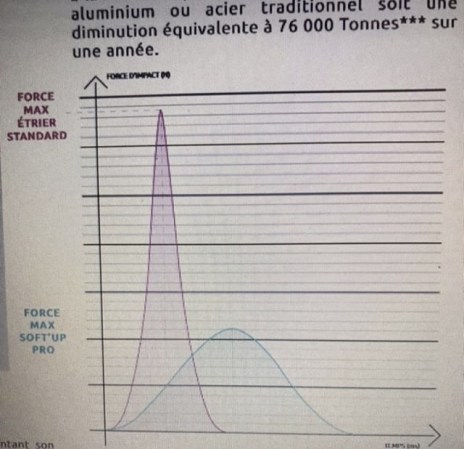
I really wanted an iron that would help a bit with shock absorption, but was still quite solid under my foot. I’d used the jointed irons in the past and found them to feel unstable, so I was hoping for something with just a little bit of “give” to help ease some of the pounding on my knees. Before I talked to Freejump, I really wasn’t aware of how they were built or why. I knew they were safety stirrups, due to the open and flexible outer branch, but I didn’t realize that they were built on a metal core, also designed to offer some flexion upon impact.
The two models I had been looking at were the Soft’Up Pro, the ones with the offset eye that hang perpendicular to the horse, and the Soft’Up Classic, which is built more like a traditional iron. The main difference is the top – offset eye vs traditional eye – although the newer Classics also have additional stud grips built into the footbed. More grip was definitely appealing, but given the fact that most of my pain was knee related, the offset eye made more sense. The rep also said that most eventers seem to prefer the Pro, since, if you do lose a stirrup, it’s hanging right there at an angle that makes it very easy to pick back up.

I was originally planning on taking Freejump up on the offer of a trial pair, but when I saw them on sale at Riding Warehouse, with only one pair of navy remaining, I decided to just buy them. I could always return them if they didn’t work out, and I didn’t want to miss out on a super good price (or the only color that matters in the whole world).
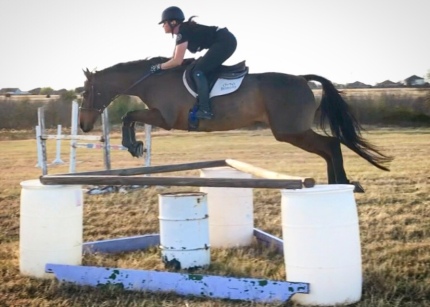
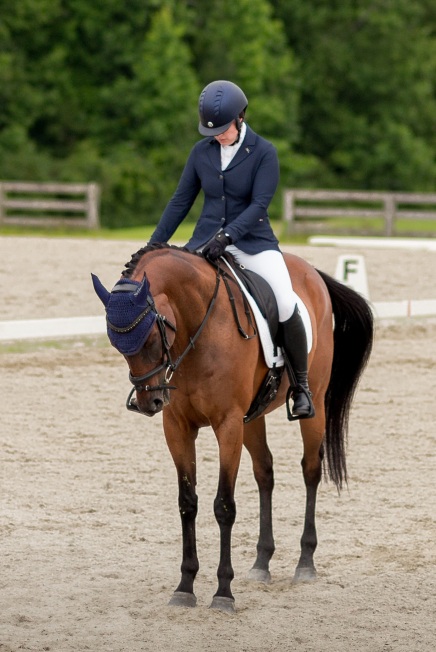
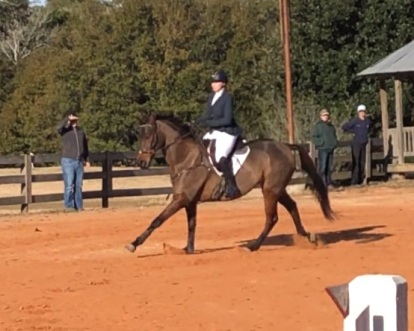
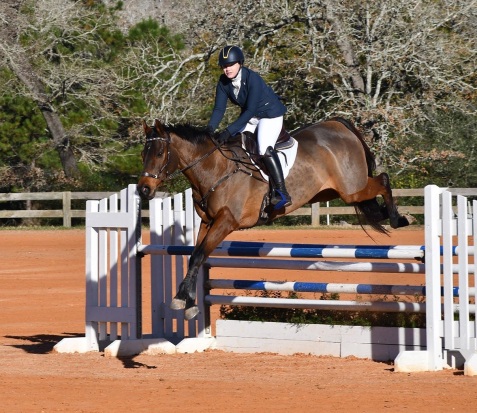
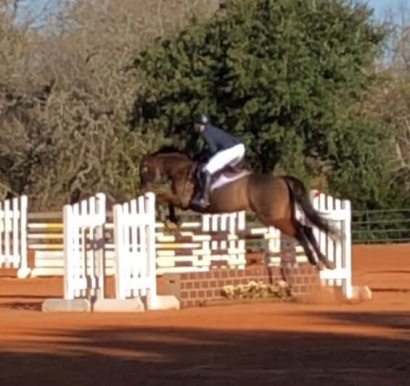
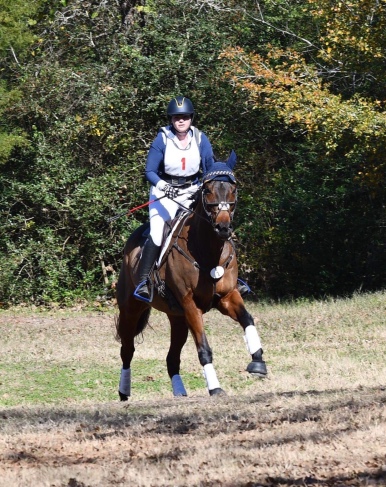
They went on my saddle last Monday, and in the course of the last week and a half I’ve jumped in them, gone on a couple long trots, had a gallop day, and used them for a show. It’s been a pretty good little trial run. A lot of people have been asking me how I like them so far, so here are my first impressions.
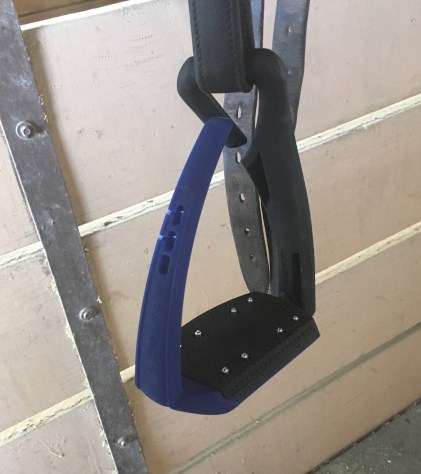
First off, I was kind of surprised by their weight. I’ve previously ridden in Royal Riders in some capacity over the last 10 years (they used to be on my jump saddle, then moved to my dressage saddle when I got the Lorenzinis) and the thing I liked least about them was that I felt they were too light. That’s the main reason I’ve steered away from composite irons ever since. The metal core of the Freejumps makes them feel much closer to a traditional metal iron than a composite, which to me was a plus. I want my stirrups to hang down next to my foot if I lose one, not be flopping all over the place like a fish.
The footbed was also interesting, much grippier than the cheap composites, but not as abrasive as the cheesegrater footbed. The metal studs sit higher than the other grippers, giving a little bit more traction on the bottom of the boot. To me they could still be a bit grippier (maybe the Classic footbed with it’s extra studs has more?) but they’re at least AS grippy as a cheesegrater pad. Sometimes I think they’re more grippy, sometimes I think they’re the same… jury is still out on that one. I think the way that they hang and the way they’re made helps them stay with your foot a little bit more, making them seem grippier than the footbed itself might provide.

The first thing I thought when I put my foot in them was that they felt comfortable, which, my next thought was “that’s a very weird word to describe stirrups”. It’s accurate though. That offset eye, plus the angle and shape of the footbed… your foot just seems kind of drawn to them, settling into the perfect spot. I also felt right away like it was easier to put my heel down. Whether that’s the slight flexibility of the iron or because of the way the footbed is made, I’m not sure, but it’s definitely without a doubt easier to drop weight into my heel and keep it there.
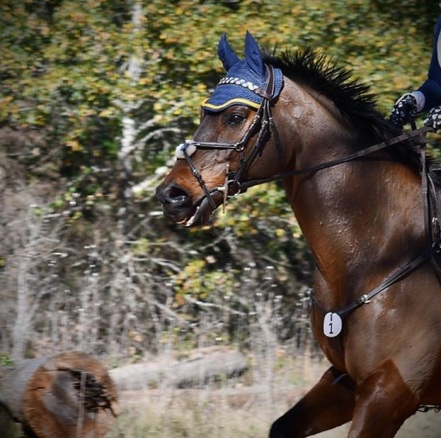
Where they’ve really impressed me so far, though, is on conditioning days. Typically during our long slow trots or gallops I have to shove my feet “home” in the stirrups to prevent my ankles from burning, and my knees are always SCREAMING the next day. That first gallop day though… I never shoved my feet into the stirrups at any point, and while my left knee (the worse one) was a little sore the next day, it was nothing compared to before. I think now I can finally raise my stirrups a hole for XC without feeling like my legs are broken.

So far I’m very pleasantly surprised, to be honest. I was hoping that a stirrup change would help, but I didn’t really expect it to help that much. I was looking for just a little bit of relief, and I’ve gotten way more than that, and gotten it immediately. For anyone that has been eyeballing Freejumps, I fully recommend that you ask questions and do some research and try them out, especially if you have bad knees and/or ankles. My only reservation at this point is longevity… I have no idea how they will hold up over time. Like any composite, or any iron that isn’t one solid piece, I fully expect them to have a more limited lifespan than a traditional solid metal iron. If I’m this much more comfortable on a day to day basis, though, it seems a fair trade.











 breedrideevent.com