
If you’ve read this blog more than like… once before, it’s probably no secret that I am a huge nerd about all things breeding related. I tend to watch every live stream with a pedigree database open in another window, looking up every horse. For WEG I decided to take it a few hundred steps farther and make an actual spreadsheet, so I could see all the horses together and pull some stats. It’s possible that I spent far too many hours doing this, but I regret nothing.
These stats are for just the eventing horses at WEG. I threw out the couple of horses that I could not find any reliable damline information on, lest they skew things incorrectly – they aren’t included in any stats. That left us with a field of 81.

Why it’s important to look at the pedigree and not the registry
Irish Sporthorse and Selle Francais are the most represented breed registries with 14 horses each. Of the 14 Irish horses, only 5 of these are of “traditional” Irish breeding – ie some mix of Irish Draught and Thoroughbred, with no European warmblood. One is WB x TB with no traditional Irish blood, leaving the remaining 8 to be some mixture of ID/ISH x TB x WB.
On the flip side, all 14 of the Selle Francais registered horses have Selle Francais blood, with only 3 of those not being completely of French descent.
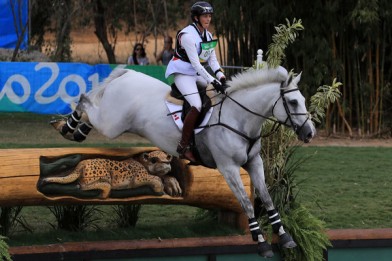
Several of the same stallions show up repeatedly throughout the field
Heraldik xx shows up in the pedigree of four different horses, three times as the sire (the most of any in the field) and once as the damsire.
Contender shows up five times: four times as the sire’s sire and once as the sire’s grandsire. His son Contendro is the sire of 2 horses and the sire’s sire of one.
Irco Marco shows up 4 times, two of which are through his son Irco Mena.
Diamant de Semilly, Jaguar Mail, and Jumbo are represented by two direct offspring each.
Quidam de Revel and Landgraf show up somewhere in the first four generations a remarkable 6 times each. Ramiro shows up 5 times in the same span.
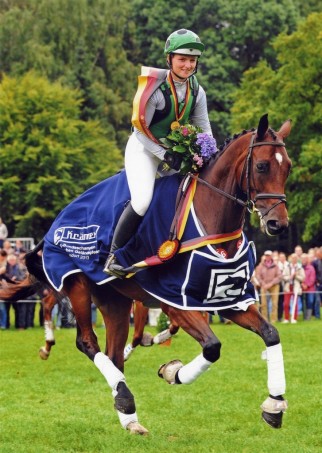
Thoroughbred/Arab/AA blood is still important
The average “blood” percentage for the WEG field is 62% (highest – 100%, lowest – 27%).
72% of the field has at least 50% blood.
37% (30 horses) have at least one FULL thoroughbred parent.
Of those 30 horses, 17 are F1 crosses between a WB and a TB. 7 have the thoroughbred parent as the sire, and 10 have the thoroughbred parent as the dam.
Five horses are full thoroughbred.
The most represented American thoroughbred is Danzig, showing up in the first 4 generations in 5 different horses. Sir Gaylord and Nijinsky also make multiple appearances.
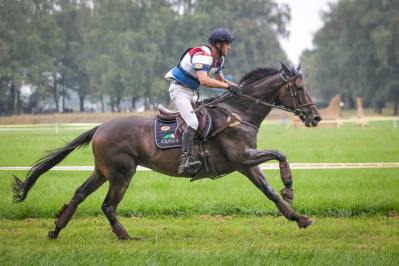
- Henri Z, by Heraldik xx
The influence of the registries known to produce mostly showjumpers is evident
47% have Holsteiner blood in the first 4 generations of their pedigree.
41% have Selle Francais in the first 4 generations of their pedigree.
19% have both Holsteiner AND Selle Francais in the first 4 generations.
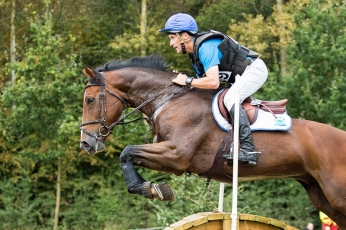
The FEI Young Horse classes have a pretty high success rate
51% of the field (42 horses) competed in FEI Young horse classes – ie 1* for 6yo’s and/or 2* for 7yo’s. Of those, 28 horses (so 34% of the entire field) competed at the World Young Event Horse Championships at Lion d’Angers.
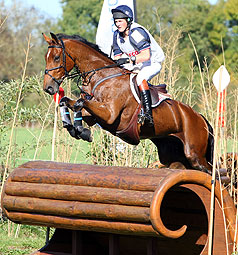
My general takeaways:
The average blood percentage is lower than I would have thought. I want to break down a “real” top level event like Burghley or Badminton… I have a feeling the average blood percentage would be higher for an event like that.
Having been a pedigree stalker for a long time, none of the stallions that show up over and over again are surprising to me. However, I was a little surprised at the strong showing from the Selle Francais in general. There are more than I thought.
The F1 cross of a warmblood stallion to a TB mare has kind of gotten a bad rap in this country for being a lower quality cross, but these stats show that it certainly can and does work when it comes to breeding event horses.
The fact that Holsteiner blood shows up in the first 4 generations of almost half the field yet only 6 of the horses are actually registered Holsteiner shows how important these bloodlines have been across a wide variety of warmblood registries.
Lastly, despite the fact that some of us may wince at the idea of a 6yo competing 1* or a 7yo competing 2*, clearly it works when it comes to producing upper level horses. Over half of these horses have come up through that path and continued up the levels to find success. And 1/3 of them having competed at Lion d’Angers – that’s a big chunk!
If anyone is actually still reading by this point… what are your takeaways from this? Anything surprising?









 breedrideevent.com