
I got quite the kick out of one particular part of William Micklem’s last article where he shared his thoughts on breeding event horses:
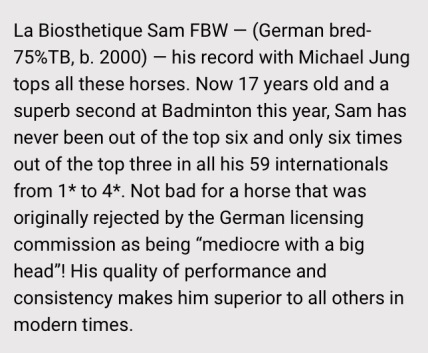
Yep, you got it, the warmblood registries were not big fans of Sam. This is specifically referring to when he was presented as a 2yo for stallion licensing, where he was rejected with the overall impression being “He is nondescript, his head is too big, he has no presence and has a funny jumping technique”. Of course, this all worked out in Sam’s favor in the end, because it set him on the path to end up with Michael Jung, but it’s funny to hear the impression that a whole lot of breeding specialists had of him (and they were not necessarily wrong at the time) when he was a young horse.

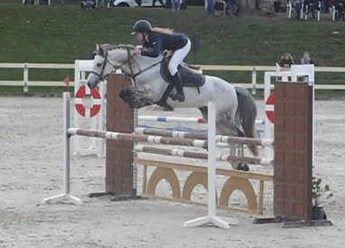
Sam was a late bloomer, and of course even now there isn’t much about him that would immediately WOW most people. He’s fairly plain and not a particularly flashy mover or jumper. But he’s got a ton of heart and a huge desire to please, and that, more than anything else, is what has made him one of the best event horses of all time.
Sam’s story is also just one of many examples of why I personally don’t put much stock in inspection scores, especially for babies. There’s definitely a lesson in Sam’s story for all of us with foals or young horses. Don’t get me wrong, this isn’t a slam on the judges and inspectors at all – in most cases they are supremely well qualified, with an abundance of experience. This is just an observation of the nature of horses and how hard it can be to see their true potential.
For dressage horses, there’s a lot you can see in a young horse. The gaits will be there at least in their raw form, although the conformation can change a bit, and of course you can’t tell what the horse’s mental capacity for the work will be. For jumpers, or especially eventers, I think it’s very very hard, even impossible, to judge the potential of a horse that young, especially if they are a late bloomer.
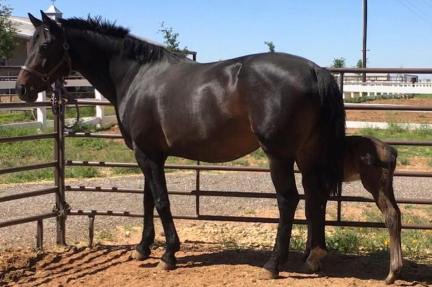
I’ve been to a lot of inspections, especially foal inspections. Many people, especially new breeders, put a lot of emphasis on the scores, getting really excited about a good score or extremely disappointed with a bad one. But really, there are a lot of variables at play here. First and foremost, the judges can only give a score for what they see in those few minutes on that particular day. If the foal is in a funky stage of growth, or if they’re tense, or if they just won’t show any trot… the scores will suffer, obviously. It doesn’t mean the quality isn’t there, it just means they can’t see it. The premium foals, the ones who score the highest, are usually the well-developed, pretty ones who decide to trot around with lots of spring in their step on that particular day. Does that translate to a successful sporthorse? I mean… maybe… but not directly.
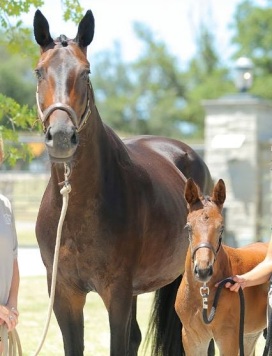
And with jumpers and eventers, of course they don’t actually get to see the foals jump at all, since they’re so young. The judges can see the canter (if the foal stops bouncing around like Pepe LePew long enough to show some real canter, that is), which can be some indicator of power, but does the horse have the ability? The scope? The technique? The heart? The boldness? The rideability? None of that can be seen on that day, and those are the most important qualities in a jumping horse.
Foal inspections are fun and important, don’t get me wrong. It’s fun to braid, get everyone bathed, and show them off. And of course I do think it’s VERY important for the breed registries to get out there and look at what is being produced. To see the mares, see the offspring, possibly make some breeding suggestions, point out potential future stallion candidates, and see what bloodlines are working out well. That’s selective breeding at it’s finest, after all, and it’s what has made the warmblood registries so incredibly successful at producing sporthorses. It’s also a great feather in the cap of a breeder if their foals score really well.
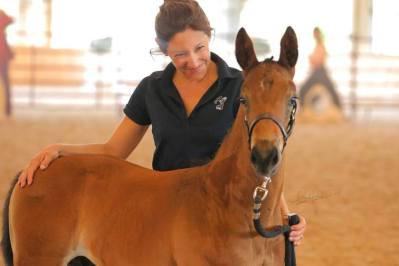
But am I, the average amateur who bred a horse that is destined for packing my ass around mid-level eventing, going to place a ton of emphasis on what score Presto gets at his foal inspection? No. Honestly, his probably won’t be high, and that’s ok. He’s just not the typical “premium” type. I bred him to do a job, not to get a good foal score. We’ll go out there, and he’ll probably bounce around like a cracked out monkey, and we’ll take our score, listen to the comments, thank the judges profusely for their expertise, and get his brand. Will any of that have any bearing on his future? No. He will be a gelding and a riding horse, not breeding stock.
The same theory applies for young horses classes, too. Hunter breeding, dressage breeding, future event horse… even the beginning of their career under saddle. It’s just a day in the life of that horse, not a be-all-end-all declaration of it’s future. It’s not fun to hear the negative, especially if you know the horse is better than that, but it’s all a part of the game.
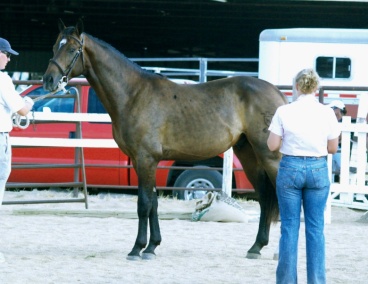
Time will tell what kind of quality we really have, just like it did with Sam. So to anyone else out there with foals, or young horses that are starting out in their show careers – if you get good scores and placings, enjoy them. If you don’t, don’t sweat it. Relish the horse you’ve got, and savor the journey you’re on. Remember, this is only the beginning. Sam wasn’t born a superstar either.







 breedrideevent.com