
I think I promised this one to several of you a long time ago, but I finaaaaally just got around to it. Oops, sorry. Trying to play catch-up this month!
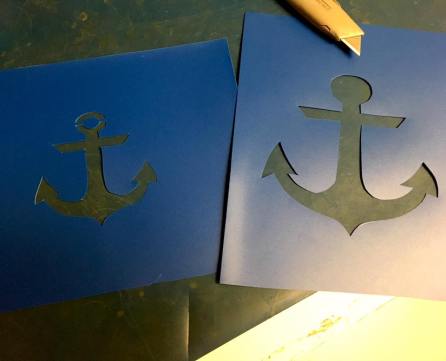
If you follow me on Insta you probably noticed one of the approximately 4000 pictures I posted of Henry’s butt from the jog-ups in Arizona. He sported an anchor, for our trainer’s barn, Anchor Equestrian. I love customized/unique quarter marks, outside of the standard checkerboard or sharks tooth pattern. I did, after all, put a unicorn on my horse’s butt for AEC’s last year.
I made the original anchor stencil very hastily the day before we left for AZ. I didn’t really have the materials I wanted, nor did I have any clue if my sizing was right, so I just made it out of thick paper. Of course, when you put a damp brush on paper, it doesn’t last long. The stencil made it through AZ, but got left behind in the trash can. I liked the anchor though, so I set out to make a more permanent, longer lasting version.
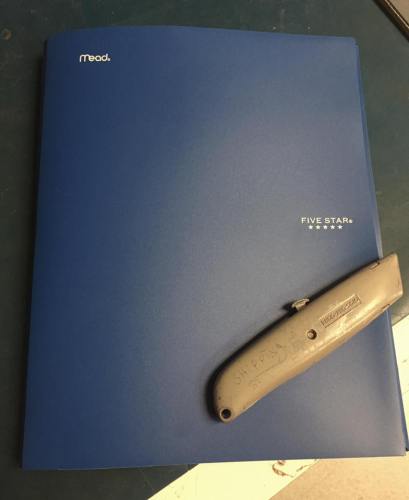
What you need:
- Some kind of thin plastic. I cut up a plastic folder that I bought for a whopping $1, but any plastic that is thick enough to hold it’s shape and thin enough to cut with a box blade/x-acto knife will work. I’ve used a broken rubbermaid bin before.
- a box blade/x-acto knife for cutting
- a printer
- a pen
- a surface on which to cut. I have a couple cutting mats (I have no idea how things like this find their way into my life) but otherwise just find a sacrificial surface. The garage floor, a bunch of newspaper, whatever. Or spend $5 and get a cutting mat, which makes things a little easier and smoother. Your call.
I have all of these things lying around except for the plastic folder, so my total investment here was $1 and about 10 minutes of my time for 2 stencils. My stencil is obviously fairly basic… the more elaborate you get with the pattern, or the more curves you have, the more complicated it gets.
My first step was cutting the folder down to a usable piece of plastic. It was simple, I just flayed the pockets off, cut the middle binders off, and ta-da – two perfect pieces.

Then I was off to Google image search to find exactly the right shape. You can do just about anything you want, even freehand (if you’re more artistic than I am). Just remember – this is going on a horse’s butt by way of a damp brush, so if you try to get super elaborate, not all of the detail will show up in the end.
I printed two – a larger anchor the same size as the prototype I’d already made, and then a smaller one.
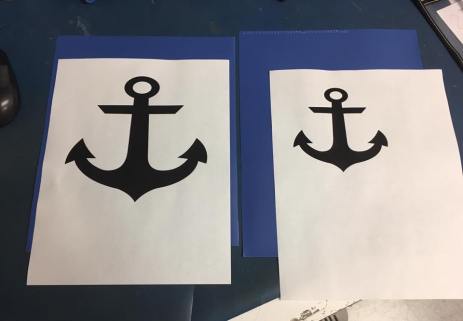
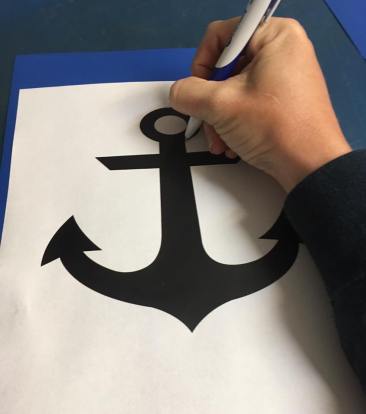
Your method for getting the pattern onto the plastic is personal choice. Trace paper works fairly well, especially if your plastic is lighter colored. I am more of a bull-in-a-china-shop type, so I just take a pen and trace firmly around the edges of the pattern, leaving an impression in the plastic.
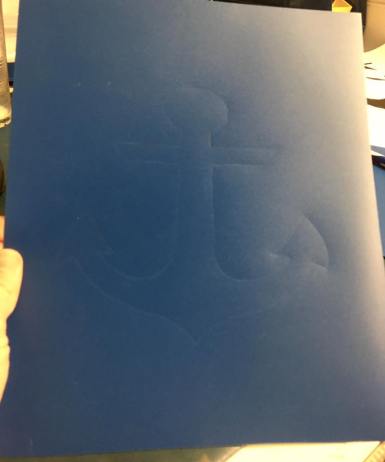
Next up is the fun part – cutting. I should probably have some kind of disclaimer about adult supervision, how razor blades aren’t toys, blah blah blah. Just don’t cut your damn finger off, ok? It’s pretty simple, just follow your lines. I don’t really worry about getting everything exactly symmetrical… it’s going on a horse’s butt, after all. Get it reasonably close and stop obsessing, no one will be able to tell once it’s on.
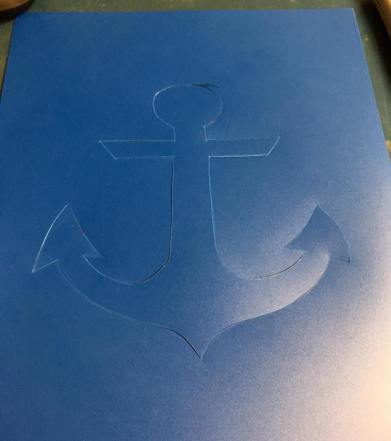
I did my two stencils slightly differently, to show you what to do if you have a non-cutout area within a larger cutout. For my bigger stencil I just made the top part of the anchor into one big circle, without an inner circle.
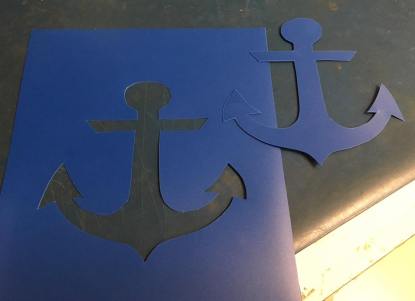
For the smaller stencil I left the inner circle at the top of the anchor. This isn’t rocket science… just leave a couple of little “connecting” pieces attached to the inner part. Definitely plot these out and draw them on before you start cutting so that you don’t accidentally forget one. Once the quarter mark is on the horse you can just go touch up the little lines where the connecting pieces were.
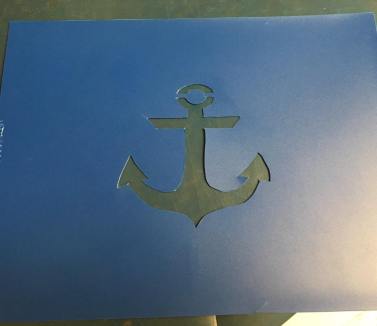
Once you’re done cutting you just pop the inner parts out and voila – you’ve got a waterproof stencil! Extra bonus: if you body clip in the winter, keep the cutout part as a template for a clipped-on quarter mark. Put some double-sticky tape on the back of it, tape it on where you want it, and clip around it. Really easy.
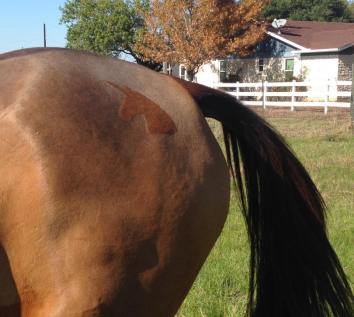
When you’re ready to use your stencil, brush the hindquarters with a damp brush (a shorter, stiffer one works best), then line the stencil up where you want it and brush downward over the stencil. Lift the stencil off, being careful not to drag it across your fresh quarter mark, and you should have your perfect pattern.





 breedrideevent.com